


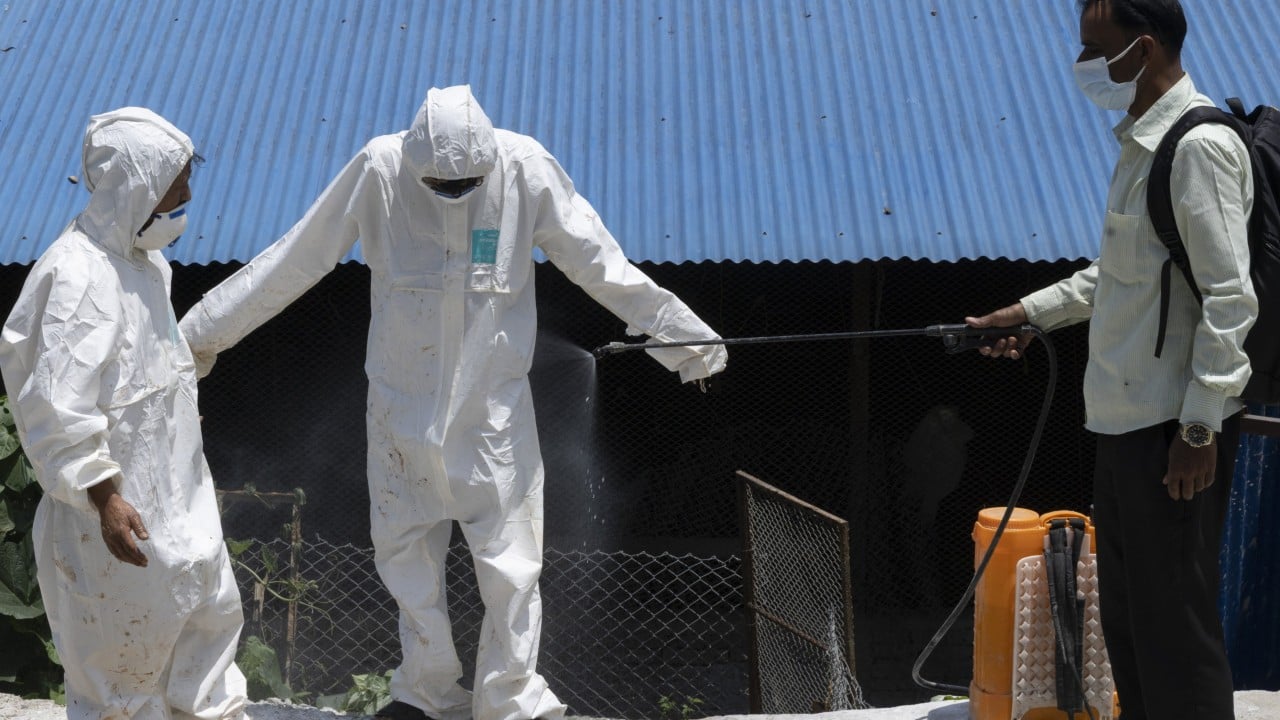
Nepal Intensifies Bird Flu Cull Amid Mounting Fears of Pandemic Potential
POLICY WIRE — Kathmandu, Nepal — A staggering 600,000 birds have been culled, and approximately one million eggs destroyed, as Nepal grapples with a burgeoning ...

POLICY WIRE — Kathmandu, Nepal — A staggering 600,000 birds have been culled, and approximately one million eggs destroyed, as Nepal grapples with a burgeoning H5N1 bird flu outbreak. The avian influenza, which began its spread in the eastern regions of the country, has now firmly established itself across the densely populated Kathmandu Valley, ringing alarm bells among global health researchers.
The severity of the outbreak is already palpable within the nation’s capital. Among the direct consequences of the virus’s aggressive march is the indefinite closure of Kathmandu’s sole zoo, a measure taken to mitigate further spread and protect both animal and human populations within the urban environment. This action underscores the growing concern among authorities.
This particular strain of H5N1 first emerged in eastern Nepal in March, steadily migrating westwards before reaching the metropolitan Kathmandu Valley around mid-June. Its arrival in such a concentrated area is considered a significant development, as health experts say it raises the risk of human exposure.
What distinguishes the current situation in Nepal and elevates it beyond a mere agricultural crisis are the pronounced fears among scientists regarding the virus’s capacity for evolutionary change. Experts are closely monitoring the outbreak for any signs that the H5N1 virus might mutate into a form transmissible between humans. Such a development could transform a regional animal health challenge into a global public health emergency, reminiscent of past pandemic scares.
Avian influenza viruses like H5N1 are primarily known to circulate among birds. While human infections have occurred historically, they’re typically the result of direct and prolonged contact with infected poultry. The danger lies in the virus acquiring genetic mutations that enable it to spread efficiently from person to person, similar to seasonal human influenza strains.
Nepal, a nation with close agricultural ties to its immediate South Asian neighbors and a significant rural population, faces inherent challenges in containing such an outbreak. Poultry farming is a vital economic activity for many families, making widespread culling operations not only logistically complex but also economically devastating for affected communities. The scale of the current cull – hundreds of thousands of birds and nearly a million eggs – speaks to the broad impact this virus is already having on the country’s food supply chain and economy. (Reporting based on wire reports)
What This Means
The H5N1 outbreak in Nepal serves as a stark reminder of the persistent threat posed by zoonotic diseases – those that can jump from animals to humans. The scientific community’s anxieties regarding potential viral mutation are well-founded, given historical precedents with other influenza strains that have undergone significant shifts. The densely populated nature of the Kathmandu Valley, coupled with the virus’s demonstrated ability to spread rapidly across geographical areas, provides a challenging environment for containment efforts.
For Nepal, this event immediately translates into significant economic strain for its agricultural sector and a heightened public health vigilance. The immediate, decisive culling efforts, while devastating for farmers, are a crucial public health measure aimed at breaking the chain of transmission and reducing the viral load in the environment. However, the long-term implications hinge on whether surveillance systems can detect any genomic shifts in the virus promptly.
More broadly, the situation underscores the need for robust global disease surveillance, particularly in regions where human-animal interfaces are common and viral circulation is high. While an H5N1 human-to-human pandemic remains a hypothetical concern rather than a certainty, its potential consequence is sufficiently severe to warrant extreme caution and preparedness. The closure of public facilities like zoos highlights a precautionary principle that could be rapidly adopted more widely should the risk escalate. How effectively Nepalese authorities and international partners can monitor and manage this specific outbreak may offer critical lessons for future pandemic prevention strategies worldwide.