


Football Fever: When National Spirit Hijacks Geopolitical Order
POLICY WIRE — Kansas City, USA — An anonymous police cruiser, siren muted, rolling through downtown Dallas. Inside, several uniformed officers aren’t pursuing suspects; they’re pantomiming rowing a...

POLICY WIRE — Kansas City, USA — An anonymous police cruiser, siren muted, rolling through downtown Dallas. Inside, several uniformed officers aren’t pursuing suspects; they’re pantomiming rowing a longship, locked in a digital ‘Viking Challenge’ with ecstatic Norwegian football fans. It’s a tableau utterly incongruous with traditional law enforcement — but then, little about the current World Cup, or really, any global football spectacle, ever adheres to a script.
We’ve become accustomed to the collective euphoria, haven’t we? But this year, the fervor’s morphed into something else entirely: a global, uninhibited carnival, where national identities are momentarily subsumed by—or fiercely projected onto—the whims of a leather ball. It’s not just a game anymore; it’s an unscheduled public holiday, a geopolitical disruptor, and a very peculiar mirror reflecting our modern, interconnected — and perhaps slightly unhinged — world. Consider the nuns. Because who expects to see a cloister of devout women in habits erupting into a frenzy over a Martinelli goal? It happened. They were Brazilians, of course, and their nation’s enduring, almost religious, connection to the ‘beautiful game’ found yet another surreal expression. They weren’t just watching; they were participating, screams — and all, just like millions worldwide.
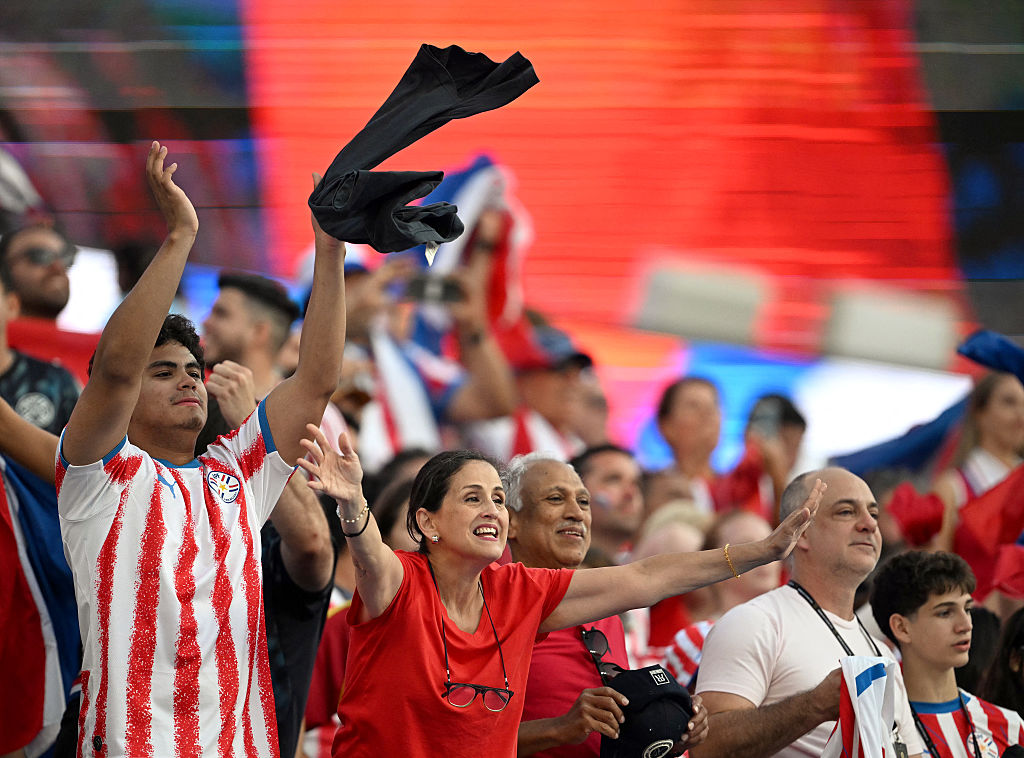
But that’s mere emotional overflow. The real institutional seismic shift hit tiny Paraguay. Their stunning upset victory against a European giant didn’t just rattle the football world; it shut down a country. President Santiago Peña, often pre-occupied with delicate regional diplomacy and domestic economic woes, swiftly declared a national holiday. ‘Today, we aren’t just celebrating a victory; we’re celebrating the indomitable spirit of Paraguay,’ Peña’s press secretary relayed from Asunción, the president reportedly too busy leading street celebrations to provide an immediate quote. ‘Our people have earned this collective moment of pride — and release. Let the joy flow.’ And flow it did, through streets awash with ecstatic humanity, momentarily forgetting their usual battles against economic headwinds—a country with a GDP per capita hovering around $6,000, according to the World Bank’s latest figures, found its unified purpose in a penalty shootout.
Meanwhile, thousands of miles north, in Kansas City, Missouri, local authorities aren’t waiting for a match result to declare a festive siege. They’re proactively preparing for a ‘yellow tide’ of Colombian supporters. First, it was the Argentinians, painting the city celeste and white; now it’s the Colombians’ turn to convert Arrowhead Stadium and its environs into a vibrant, raucous extension of Bogotá. And Dallas, with its aforementioned police-Viking escapade, became an unexpected focal point for Norway’s traveling faithful. Local Dallas Police Chief Reuben Sanchez, reportedly amused by the viral footage, commented dryly, ‘We’ve seen it all here, but coordinating synchronized oar-thrusts with an incoming international fan base? That’s new. We’re here to maintain public order, but we also recognize the unifying power of these moments — within reason, of course.’ You’ve got to admire their flexibility, wouldn’t you say?
This whole spectacle — this bizarre, chaotic eruption of global identity — doesn’t respect borders. And it doesn’t care much for sober political analysis, either. Even in Pakistan, where cricket is practically enshrined as a national religion, and the headlines often swirl with economic anxieties or complex geopolitical maneuvers involving powers from Beijing to Washington, the World Cup exerts an undeniable pull. You’ll find barbershops tuned into matches, conversations drifting from rupee depreciation to a dramatic goal, and families huddling around screens late into the night. It isn’t the all-consuming passion seen in Latin America, no. But the universal language of triumph and despair, broadcast on every channel, still manages to cut through the noise, offering a momentary, collective escape, however fleeting. It’s a reminder that even the most earnest, policy-driven discourse often coexists uneasily with the sheer, unbridled drama of humanity’s biggest shared pastime.
What This Means
This seemingly innocuous delirium isn’t just about fun — and games; it hints at profound socio-political implications. The declaration of national holidays, the widespread public engagement—even the police participation—reveals football as a potent, albeit temporary, vehicle for national cohesion, often eclipsing deep-seated divisions. Governments, conscious of public sentiment, wisely leverage (or simply surrender to) these waves of emotion, understanding their capacity for both distraction and unity. Economically, while a spontaneous national holiday might disrupt productivity in Paraguay for a day, the ancillary benefits—increased tourism, merchandise sales, and an intangible boost to national morale that could spur future investment or stability—are often seen as offsetting. For host nations and cities like Kansas City, these spectacles are a gold rush for local businesses, a calculated gamble on international visitor spending. More broadly, it underscores the persistent, almost primordial, human need for collective experience, for narratives of triumph and defeat, and for heroes on a global stage, regardless of whether that stage is a battlefield, a trading floor, or a football pitch. These ‘mad’ moments aren’t random; they’re vital releases, providing a brief, essential counterpoint to the relentless grind of everyday life and policy-making.