

Theology Meets Geopolitics: Taiwan Strait’s Faith-Fueled Flashpoints
POLICY WIRE — Kinmen, Taiwan — The sea off Kinmen can seem a peaceful, unassuming expanse. Boats, fishing nets, a hazy horizon. But don’t let it fool you. It’s a simmering kettle, really,...

POLICY WIRE — Kinmen, Taiwan — The sea off Kinmen can seem a peaceful, unassuming expanse. Boats, fishing nets, a hazy horizon. But don’t let it fool you. It’s a simmering kettle, really, a 160-kilometer stretch of water—or about 100 miles—where the chill geopolitical currents of Beijing’s ambition regularly collide with the stubborn reality of Taiwan’s self-determination. And sometimes, this grand, high-stakes drama boils down to an individual; a single Taiwan Coast Guard officer, perhaps, finding something beyond patrol manifests or international law to lean on when the Chinese behemoth casts its shadow.
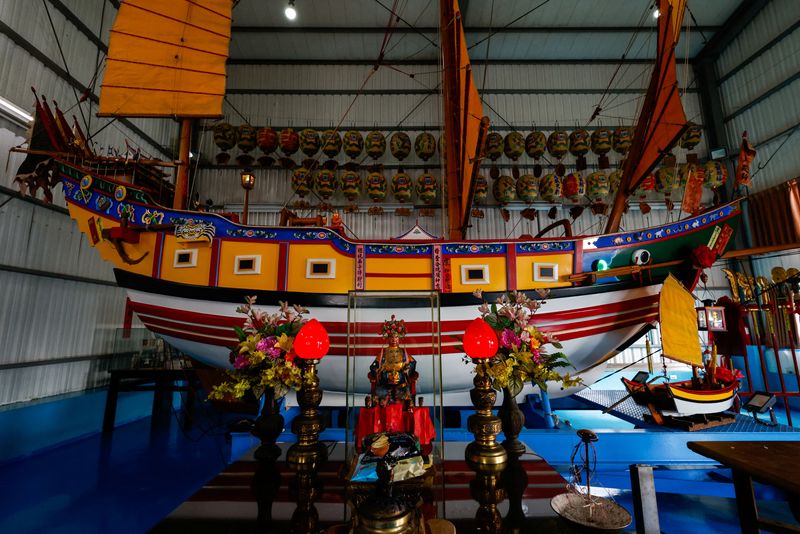
It’s an interesting angle, isn’t it? Not missiles, not carrier groups, but faith. Specifically, the ancient pantheon. Imagine, one of Taipei’s guardians of the maritime boundary — a sort of last line, mind you — turns to deities for fortitude. It feels almost absurd in an age of precision-guided everything, yet here we’re. It’s a human response to an inhumane pressure cooker; a small island nation facing down a titan that won’t ever truly let go of its claim. Beijing calls it a ‘sacred — and inalienable part’ of China. Taiwan calls it home. And somewhere in the middle, a uniform-clad figure asks for a blessing from Mazu, Goddess of the Sea. You can’t make this stuff up, not really.
This isn’t just about an officer, though. It’s a microcosm of something larger. A whole nation grappling with an existential threat, often finding comfort in what’s tried — and true. President Tsai Ing-wen, for all her stoic political demeanor, hasn’t shied away from referencing Taiwan’s spirit. She’s famously declared, “Taiwan stands on the front lines of democracy, and we will defend our way of life.” She understands, one assumes, that resilience isn’t always forged in weaponry alone, but also in the collective psyche—in those unspoken, ancestral comforts. But Beijing sees things rather differently, of course.
“We reserve all necessary measures to thwart interference by external forces and all separatist activities,” asserted Wang Wenbin, spokesperson for China’s Ministry of Foreign Affairs, in a recent press briefing, the usual boilerplate veiled threats wrapped in diplomatic paper. For Beijing, the very idea of Taiwan’s independent identity, let alone its spiritual leanings that buttress that identity, is anathema. This isn’t just about rocks and sea; it’s a battle over narratives, over history, and frankly, over what’s considered legitimate.
The situation in the Strait, particularly around Kinmen, a chain of Taiwanese-held islands just miles from the mainland coast, has become increasingly fraught. Chinese Coast Guard vessels and fishing fleets regularly skirt or breach Taiwan’s claimed waters, prompting these nerve-wracking, non-lethal standoffs. Taiwan reported 125,750 such ‘grey zone’ incursions by Chinese vessels and aircraft in 2023 alone, a figure compiled by its Ministry of National Defense, stark evidence of a relentless psychological campaign.
And what does this mean for everyone else? It’s not just a regional spat. This tension — this simmering conflict of wills, backed by disproportionate military might — has ramifications across the globe. Take the Malacca Strait, for instance, a narrow choke point through which a colossal chunk of global trade, including critical energy supplies for nations from Japan to Pakistan, must pass. Any major conflagration here in the Taiwan Strait would send seismic shocks through that maritime artery, jacking up prices, slowing supply chains, and threatening the fragile economies of countless nations in South Asia and the broader Muslim world.
Taiwan isn’t some obscure island; it produces an astonishing 92% of the world’s most advanced semiconductors. A full-scale invasion or blockade would shatter global industries, not merely inconvenience them. But here’s the rub: despite the profound implications, there’s this strange, almost fatalistic sense that washes over you talking to folks on the ground. Like they’ve been living under this Sword of Damocles for so long, what’s a little extra faith between skirmishes?
But Washington’s not oblivious. They’re ramping up military aid, training, — and strategic partnerships. And it’s clear they don’t want a fight. Nobody does, really. Not unless you’re perhaps a hawkish ideologue in Beijing’s corridors of power, perhaps watching America’s commitment to global leadership — and their strategic patience — being tested on multiple fronts (you might wanna check out America’s Eroding Pride: A Nation Questions Its Foundational Myths for some thoughts on that).
What This Means
The curious case of faith in the Taiwan Coast Guard isn’t just an anecdote; it reflects a broader political calculus in Taipei. The invocation of indigenous religious traditions, often woven into daily life, is a subtle yet potent assertion of Taiwanese identity, distinctly separate from mainland China’s state-sanctioned secularism (or controlled religious expression). It’s a defiance, quietly delivered. Beijing, for its part, continually underplays Taiwan’s autonomy, branding any perceived push for independence as dangerous separatism, effectively framing the spiritual connection to the land as a threat to its ‘One China’ principle. This clash of narratives is playing out not just in naval exercises but in cultural assertions. The economic implications are equally staggering: global commerce, heavily reliant on the Strait for shipping and high-tech components, finds itself hostage to this geopolitical deadlock. Instability here would ripple through Asian markets, from bustling Karachi ports reliant on steady trade flows to the intricate supply chains for tech giants everywhere, amplifying fears of economic disruptions globally. Because, at the end of the day, when you’ve got economic engines firing all cylinders and then suddenly a regional conflict locks everything down, everybody pays a price, regardless of their position on maritime deities.