
Arizona’s Voting Gauntlet Faces Supreme Scrutiny: A Democratic Reckoning?
POLICY WIRE — Washington D.C., USA — It wasn’t a bombastic declaration from a podium or a late-night social media screed. No, this play, this particular gambit, is far more subtle, tucked away in the...

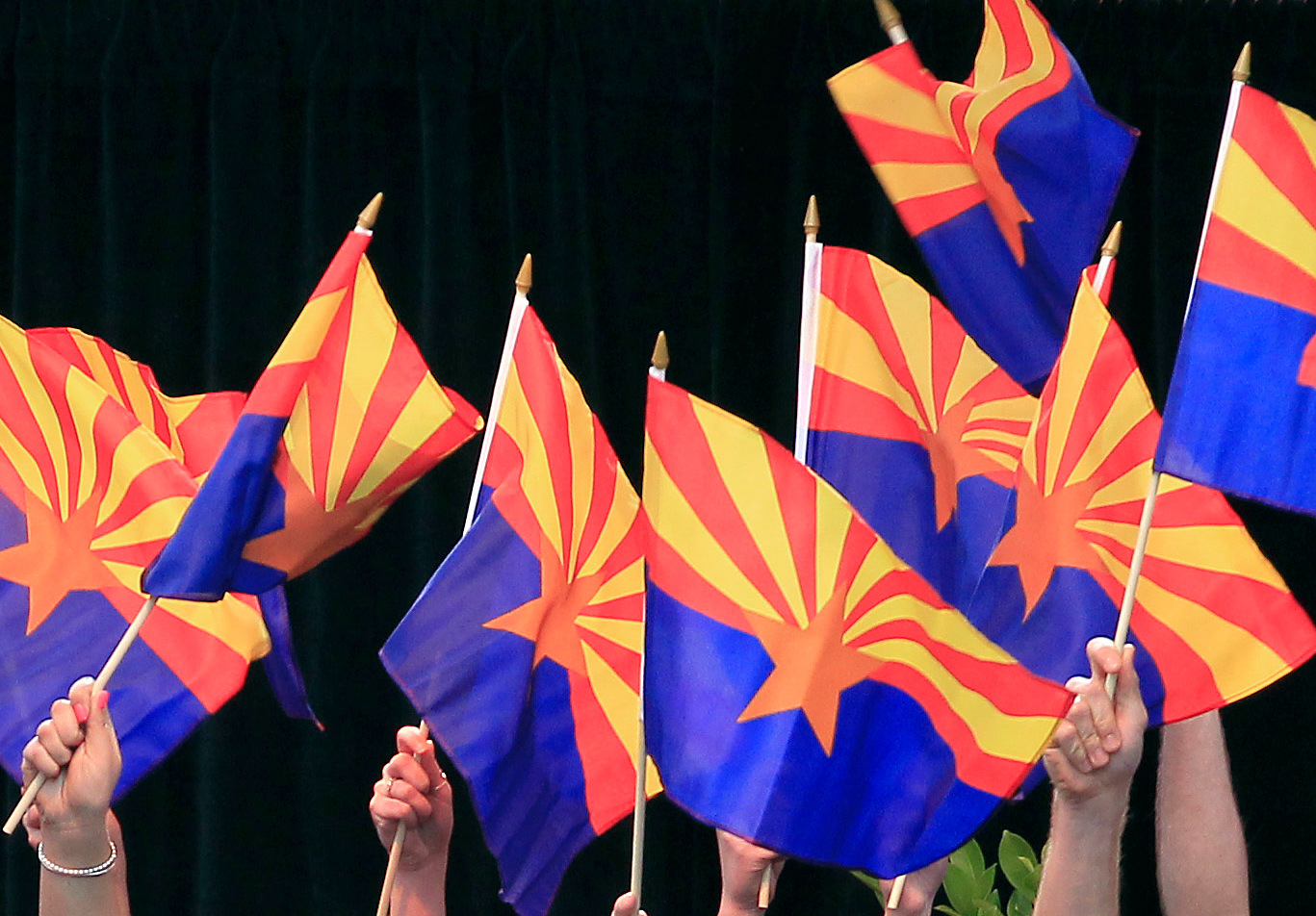
POLICY WIRE — Washington D.C., USA — It wasn’t a bombastic declaration from a podium or a late-night social media screed. No, this play, this particular gambit, is far more subtle, tucked away in the thickets of legal briefs and whispered arguments within the nation’s highest judicial chambers. The U.S. Supreme Court is set to quietly, but assuredly, wade into the fraught waters of election law, a move that promises—or threatens—to redefine the very access points to American democracy for millions. They’re about to hear an appeal concerning Arizona’s voting regulations, a case that has all the hallmarks of a protracted struggle over who votes, how they vote, and who gets to decide it all.
Republicans, reportedly with strong backing from figures whose electoral ambitions remain — shall we say — undiminished, are pressing the High Court to restore or bolster what they argue are essential safeguards for election integrity. The specific bone of contention centers on certain provisions within Arizona statutes. We’re talking about rules for ballot collection, folks, and the state’s approach to what some call out-of-precinct voting. It’s granular stuff, yes, but its downstream effects? Enormous. And because American elections can often swing on margins as thin as a razor’s edge, these seemingly bureaucratic disputes morph into full-blown ideological skirmishes. [QUOTE_PLACEHOLDER]
Opponents of the laws aren’t just crying foul; they’re sounding the alarm, claiming these regulations disproportionately suppress minority voters. It’s a tale as old as the franchise itself, isn’t it? One side clamoring for what they term security, the other insisting on access. The Court’s justices, a rather ideologically aligned group these days—or so it often appears from the outside—are now in a position to shape these goalposts, potentially for generations to come. Legal scholars have spent months, perhaps years, dissecting every word of this upcoming battle.
But the stakes here aren’t merely parochial. A decision reinforcing stringent voting criteria in Arizona could ripple across the country, encouraging similar legislative pushes in states already keen to tighten election procedures. Consider the implications: if a state is allowed to impose rules that significantly reduce turnout for specific demographic groups, doesn’t that fundamentally alter the representation we claim to hold so dear? And with the US voter turnout hovering around 66.8% of the voting-eligible population in the 2020 presidential election—a modern high, but still far from universal engagement—further barriers only stand to deepen the disaffection many already feel from the political process. (Source: United States Election Project).
It’s easy to dismiss these battles as distinctly American, yet the global gaze is very much fixed upon us. Countries in South Asia, for instance—nations like Pakistan, grappling with their own complex electoral landscapes and nascent democratic institutions—observe such legal wrangling with an acute interest. When the self-proclaimed standard-bearer of democracy fiddles with the very mechanics of the vote, when its institutions wrestle so publicly over questions of fairness and access, it sends a clear message. Or rather, several, often contradictory ones. They’ve got their own struggles with transparency, voter registration, and electoral interference; America’s judicial sagas over its franchise often become case studies, sometimes cautionary tales, for evolving democracies trying to find their footing in volatile regions.
They’re not just watching the letter of the law here. Because it’s also about the spirit. It’s about whether democratic participation is expanding or contracting. This case isn’t just about Arizona; it’s a barometer for American democratic health, plain — and simple.
What This Means
This upcoming Supreme Court decision isn’t merely another entry in the voluminous ledger of American jurisprudence. Its implications—political, economic, and geopolitical—are broad and significant. Politically, a ruling favoring the stricter Arizona laws would represent a substantial victory for a segment of the Republican party deeply committed to what they term electoral security, often at the expense of ease of access. It could empower legislative majorities in other states to pursue similarly restrictive measures, reshaping voter demographics and participation across the electoral map.
Economically, the impact might seem less direct, but it’s certainly not negligible. An electorate that perceives its voting rights are being diminished could lose faith in the system, potentially leading to social instability or decreased civic engagement. And instability, let’s be blunt, is rarely good for business or sustained economic growth. Foreign investors, for example, often value the stability and predictability of robust democratic institutions when weighing market opportunities. Perceptions of eroding electoral fairness in the United States could, over time, subtly—or not so subtly—chip away at its reputation as a safe, predictable environment for capital. It’s about trust, both at home — and abroad. An undermined democratic process could translate into weakened confidence in American governance, making our financial markets seem a touch less invincible, and our leadership on the world stage a tad more hypocritical. It impacts everything, truly.
This case also stands as a potential landmark for judicial activism, or judicial restraint, depending on one’s perspective. It highlights the increasingly powerful role the Supreme Court plays in shaping fundamental aspects of civic life. The Court’s willingness—or reluctance—to intervene aggressively in what was once largely seen as a state legislative purview on election mechanics will send a strong signal about the boundaries of federal judicial oversight. And you can bet the global powers are taking notes.
It’s a stark reminder, in fact, that the messy, sometimes unglamorous, work of upholding or altering democratic processes can still occur not through revolutionary fervor, but through the calm, methodical deliberation—or division—of nine robed figures. For India’s digital juggernaut and other developing nations looking for stable models, these judicial decisions become key metrics in assessing global democratic resilience.