


Berlin’s Unscripted Foul: When Global Rulebooks Bend and Ambitions Falter
POLICY WIRE — Berlin, Germany — Trust, it’s a fickle thing. Not just among nations, but within the meticulously constructed frameworks designed to govern everything from international trade to,...

POLICY WIRE — Berlin, Germany — Trust, it’s a fickle thing. Not just among nations, but within the meticulously constructed frameworks designed to govern everything from international trade to, apparently, who progresses in a high-stakes football tournament. One minute you’re dictating terms, feeling the firm ground of established order beneath your sensible shoes. The next, a flashing screen and an anonymous voice are upending your entire worldview—or, at least, your immediate sporting prospects.
Germany, it seems, isn’t just navigating a challenging geopolitical landscape; it’s now grappling with what many in Berlin are calling a symbolic double foul, delivered via a video assistant referee (VAR) decision that felt less like a correction and more like an existential nudge. The stakes? A spot in the knockout round against Paraguay, but for some, the implications felt—perversely—much larger. But don’t misunderstand, this isn’t about mere sporting grievance. It’s about the erosion of faith, the arbitrary application of rules, and how quickly perceived injustices can poison the well, even on the most unlikely of stages. Because when the world’s most disciplined economy, the very engine of European stability, starts questioning the rulebook in a football match, one can only wonder what quiet anxieties are truly being stirred back in the chancellery.
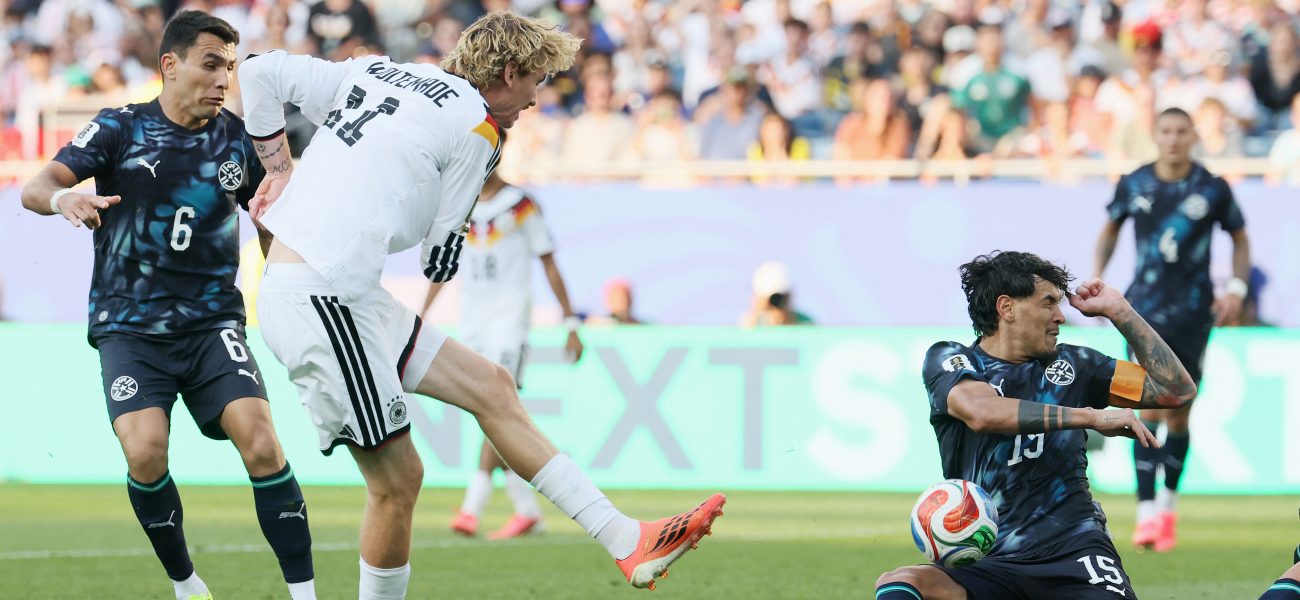
The DFB squad found itself in an unscheduled penalty shootout for its very progression, courtesy of a performance against Paraguay that left much to be desired, certainly—but also thanks to two moments of digital scrutiny that tipped the scales decisively. First, a shot from substitute Woltemade, seemingly blocked illegally by a Paraguayan hand in the box, was waved off after VAR review. And then, a few minutes later, what should have been a German go-ahead goal, a towering header by Jonathan Tah, was chalked off after another VAR intervention flagged a perceived foul on the goalkeeper by Waldemar Anton. Two moments, swiftly reviewed, abruptly reversed, leaving the Germans—and a substantial portion of Europe—shaking their heads.
“We played hard, we created chances, and we fought for every inch,” stated German Foreign Minister Annalena Baerbock, her voice taut, though not directly commenting on the match specifics. “But when the goalposts seem to shift mid-game, or decisions appear… subjective, it certainly doesn’t breed confidence in the process. We advocate for clear, consistent rules in all spheres, global sports included.” It’s a carefully worded statement, yes, but her frustration with perceived arbitrary rulings, whether in a FIFA arena or a UN chamber, is palpable.
The global game, like global politics, often claims universality, an impartial adherence to the letter of the law. But it’s in the application, the interpretation of split-second decisions, that human frailty—or something less charitable—becomes starkly apparent. The parallels weren’t lost on some analysts observing from Karachi to Cairo. Pakistan, a nation intimately familiar with the subjective interpretations of international powers, routinely finds its strategic patience tested by external forces. Or consider nations in the Muslim world, many of whom chafe under economic policies or sanctions regimes they view as selectively applied. The frustration over the VAR decision isn’t just about football; it’s a symptom of a larger, global disillusionment with systems that claim objectivity but deliver outcomes that often seem, well, pre-determined.
And it’s a sentiment echoed, albeit from a different angle, by officials like Argentinian Ambassador to Germany, Adalberto Krekler. “We Latin American nations understand what it feels like to be on the receiving end of European frustration, sometimes perceived as righteous, sometimes perhaps not,” he offered wryly in a recent policy briefing. “These moments of perceived unfairness, whether on the pitch or in economic discussions, they stick. They inform future interactions. They remind everyone that the global stage, too, has its own complex system of subjective judgment.” Indeed, for a region that often feels unfairly scrutinized on everything from environmental policy to economic stability, the shoe’s now on the other foot. The question of whether there’s parity in how various nations, or their players, are treated remains open. A recent survey by the European Council on Foreign Relations, conducted last year, found that nearly 70% of German respondents felt their nation’s economic interests were often overlooked in multilateral agreements favoring larger blocs like the US or China, reinforcing a quiet unease about global fair play.
What This Means
This whole episode, however minor it might seem in the grand tapestry of foreign policy, inadvertently exposes Germany’s raw nerve. Berlin has staked much of its post-war identity on upholding multilateral institutions and a rules-based international order. They’re champions of diplomacy, meticulous adherence, — and predictable processes. When even a game that simulates combat and competition can be thrown into disarray by discretionary reviews, it fuels an underlying anxiety that the world’s unscripted drama might increasingly eschew any objective referee at all. It signals to Berlin that even their most ardent commitments to a stable, predictable global system aren’t immune to sudden, perhaps politically inconvenient, reinterpretations.
For Germany, this incident isn’t about a missed opportunity on the field; it’s a symbolic representation of a growing apprehension that its efforts to shape a fair global order are perpetually vulnerable to a kind of capricious intervention. It certainly won’t derail Berlin’s foreign policy—they’re too pragmatic for that—but it’s another pebble in the shoe. It reinforces the idea that even when you play by the book, there’s always an invisible hand, or a distant voice, capable of rewriting the narrative right when it matters most. It makes for good drama, sure. But for policy makers trying to build trust in a fracturing world, it’s just one more headache. Don’t believe me? Just ask the team trying to figure out if Berlin’s Baltic blitz strategy truly shifts sands, or just kicks up more dust for a debate.