
Baghdad’s Green Zone Cracks Open: Lawmakers Snared in Stunning Anti-Corruption Sweep
POLICY WIRE — Baghdad, Iraq — The Green Zone, that once-impenetrable fortress of Baghdad where power brokering is as thick as the air pollution, felt a tremor this past weekend. But it wasn’t from...

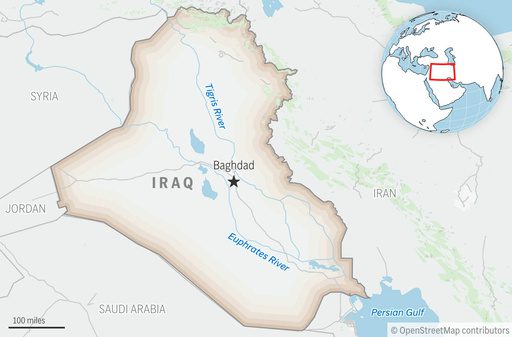
POLICY WIRE — Baghdad, Iraq — The Green Zone, that once-impenetrable fortress of Baghdad where power brokering is as thick as the air pollution, felt a tremor this past weekend. But it wasn’t from any incoming fire; instead, it was the sound of a carefully orchestrated door-kick, signifying something rare in Iraqi politics—accountability, or at least its sudden, jarring pantomime. A surprisingly audacious raid by security forces swept up dozens of high-ranking officials, including currently serving parliamentarians, on serious corruption allegations. This wasn’t just another Friday night; it was a shake-up that smells of freshly printed authority.
It began not with the usual pomp, but with a statement from a recently jailed figure, former Deputy Minister of Oil Adnan al-Jumaili. And, believe it or not, his words—spoken from a holding cell—apparently catalyzed the entire affair. On Sunday, security forces sealed off every entry point to the capital’s heavily guarded government and embassy compound before swooping in. They went inside. Because why wouldn’t they, if they finally had the political will to do so? This wasn’t some minor dust-up; this was big league stuff, right in the heart of what many locals call the swamp.
Iraq’s state-run Iraqi News Agency reported Sunday that the net caught “members of Parliament whose immunity had been lifted.” That’s not a small detail; that’s the mechanism through which the formerly untouchable suddenly become, well, touched. The agency later announced a stark number: 47 people had been arrested in the corruption probe. This isn’t small potatoes. They even released 15 names, a roll call that includes 12 current lawmakers, one former legislator, a past advisor to former Prime Minister Mohammed Shia al-Sudani, and another top-tier oil ministry honcho. Some of these arrested lawmakers belonged to al-Sudani’s Shiite political bloc, while others hailed from the influential Sunni party, the Azm Alliance.
The specific misdeeds aren’t clear yet—that’s often how these things go—but the undercurrent is palpable. Judge Diaa Jaafar, a key figure from Iraq’s central anti-corruption court, put out a statement laying out the framework for all this drama. He stated that the investigation into al-Jumaili actually started back in October “following the court’s receipt of a number of reports alleging that several candidates had spent exorbitant sums of money to support their election campaigns, exploiting state resources and with the support of influential figures in the previous government.” It paints a picture, doesn’t it?
Jaafar continued, asserting that the investigation had peeled back layers of malfeasance, exposing legislators who were “exploiting state resources for electioneering and benefiting from government contracts, directly or indirectly, to obtain commissions and personal advantages for themselves and others.” Parliament Speaker Haibet Al-Halbousi, Jaafar confirmed, did his bit too, lifting the immunity of the accused members in the case, thus paving the way for those arrest warrants to be executed. It’s a bold stroke, even for Baghdad, which has a pretty high tolerance for political melodrama.
This all comes right after former Prime Minister al-Sudani was nudged aside following an internal Shiite coalition squabble, a move that led to Ali al-Zaidi, a businessman and fresh face in the political arena, becoming the consensus candidate—one, we’re told, [QUOTE_PLACEHOLDER] But his blessing might mean something else entirely when you’re wading into the sectarian mire of Iraqi politics, where [QUOTE_PLACEHOLDER] It doesn’t get much more Iraqi than that, frankly. One has to wonder if these arrests are less about cleaning house and more about housecleaning certain allegiances, solidifying the new power structure. This isn’t just a judicial action; it’s a political declaration.
What This Means
This mass detention isn’t merely a testament to Iraq’s enduring struggle with systemic graft; it’s a strategic maneuver reshaping Baghdad’s power chessboard. The target on influential Shiite and Sunni blocs hints at Ali al-Zaidi’s—the new prime minister’s—intent to establish a different kind of order, one perhaps less beholden to the factions that brought him to power. For the region, it’s a familiar story of institutional weakness and elite capture, where the public trust in governance consistently crumbles. You see it everywhere, from Karachi to Casablanca—corruption isn’t merely about stolen cash; it’s about stolen futures.
The implications are hefty. These arrests, catalyzed by a former official’s testimony, suggest a fracturing within existing power networks. It’s hard to believe this happens without a serious nod from higher up. The U.S.-backed al-Zaidi could be attempting to cement his authority, challenging the established patronage networks that have kept Iraq’s political landscape perpetually volatile since 2003. This isn’t just about punishing wrongdoing, it’s about sending a message: a new sheriff’s in town, and he’s not playing by the old rules—or at least he wants you to think that way. This kind of reckoning for the rule of law, however selective, can signal significant shifts. However, whether this wave is a genuine cleansing or just a calculated rebalancing of power remains to be seen. Given the long, difficult history, genuine reform needs to run far deeper than an overnight raid.