

Beijing Brands Itself Global Supply Chain Defender Amid Hormuz Tensions
POLICY WIRE — Beijing, China — China, often positioned by some Western nations as a disruptive force in global economic systems, is in fact a crucial defender o...

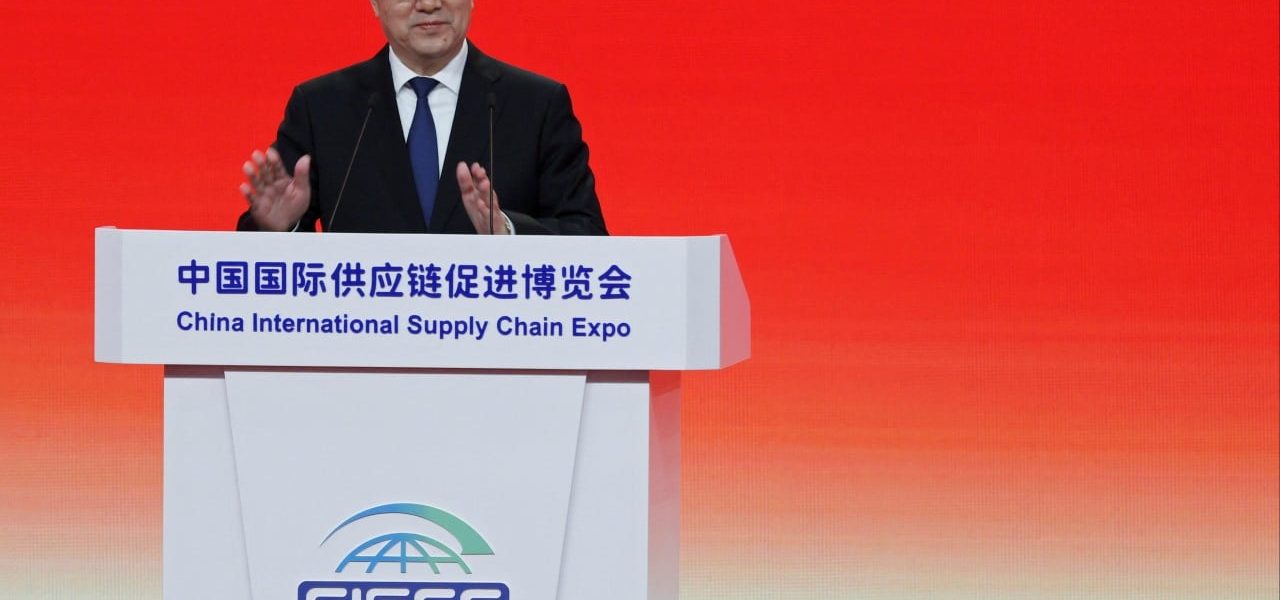
POLICY WIRE — Beijing, China — China, often positioned by some Western nations as a disruptive force in global economic systems, is in fact a crucial defender of stable global supply chains, according to Vice-Premier Ding Xuexiang. Speaking on Monday during the opening ceremony of the fourth ‘China…’ event (the exact name of which was not fully specified), Ding emphasized the country’s proactive role in navigating significant international flashpoints, specifically highlighting its efforts to stabilize energy and fertilizer markets during the ongoing Strait of Hormuz crisis.
His remarks directly address persistent criticisms from various Western capitals regarding China’s trade practices, state-backed enterprises, and the perceived strategic use of its vast manufacturing capacity. Ding’s statement frames Beijing’s engagement as vital for global economic equilibrium rather than a source of volatility. It’s a clear counter-narrative, presenting China not as a challenge to the international order, but as a bulwark against its collapse during times of stress.
The Strait of Hormuz, a narrow choke point between the Persian Gulf — and the Arabian Sea, is strategically critical. Roughly one-fifth of the world’s total oil consumption and a significant portion of its liquefied natural gas pass through it daily, making any instability in the region a grave concern for global energy security and commodity prices. Incidents or threats there have immediate repercussions for global trade, manufacturing, and food production, particularly for fertilizers whose supply chains are often intertwined with energy.
Vice-Premier Ding asserted that China’s consistent industrial output provides an indispensable ballast during such periods. “The fact that Chinese manufacturing never falters or fails at critical moments fully proves that China is a participant, a builder and a defender of the global supply chain,” Ding stated, drawing a direct link between the nation’s industrial resilience and global economic stability. This assertion suggests that Beijing sees its unbroken manufacturing capability as a public good, an argument intended to bolster its international image against accusations of economic coercion or unfair practices.
The sentiment from Beijing underscores a long-standing diplomatic push to cast China as a responsible global power, despite geopolitical tensions and trade disputes. While ‘the West’ often points to intellectual property theft, state subsidies, and market access issues, China routinely counters by highlighting its contribution to global growth and the stability of manufacturing output that underpins countless industries worldwide. This divergence in narrative often shapes international relations, influencing everything from trade agreements to technology policy.
The current global economic environment, characterized by geopolitical fragmentation, trade protectionism, and supply chain vulnerabilities exposed by recent crises, provides a fertile ground for such arguments. Nations are increasingly scrutinizing their reliance on specific supply sources and evaluating the resilience of global trade networks. In this context, China’s argument positions its manufacturing prowess not as a competitive threat, but as a necessary and reliable component of an interdependent global economy.
📄 POLICY WIRE WHITEPAPER PUBLISHED: PAKISTAN'S NATIONAL SECURITY POLICY PRIORITIES
👉 READ BY CLICKING HEREWhat This Means
This isn’t merely rhetoric; it’s a strategic reframing of China’s global economic role. Vice-Premier Ding’s comments reflect Beijing’s awareness of its immense economic influence and its desire to define that influence on its own terms. By emphasizing China’s stabilizing hand during a period of potential market upheaval — like that posed by disruptions in the Strait of Hormuz — the government aims to project reliability and indispensable strength onto the international stage.
The implication is that criticisms from Western nations, often rooted in concerns over fair competition or national security, are shortsighted and fail to appreciate China’s critical role in preventing larger-scale economic shocks. Beijing wants to shift the narrative from being perceived as a systemic rival to being an indispensable system stabilizer. For global businesses and policymakers, this push to control the narrative highlights the ongoing struggle for influence and ideological leadership in an increasingly multipolar world. It sets the stage for continued debate over the responsibilities and benefits of economic interdependence with the world’s second-largest economy.