


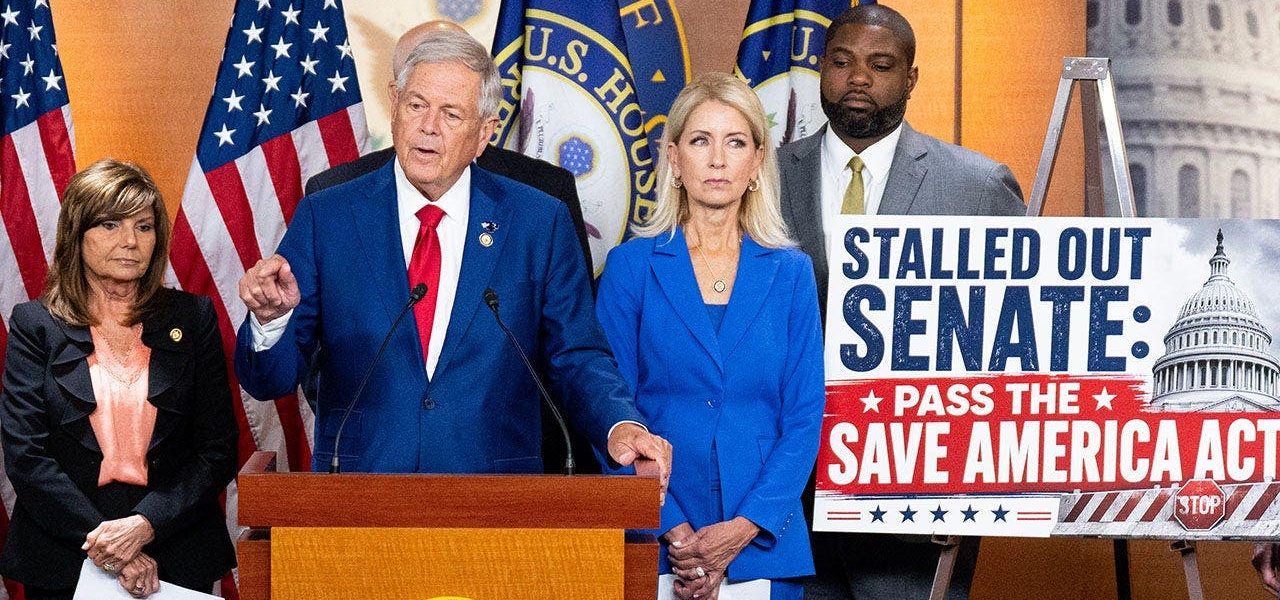
Political Circus: House GOP Implodes Amid Voter ID Battle, Halting Trump’s Drive
POLICY WIRE — Washington D.C., United States — For a moment, forget the usual grandstanding and performative outrage that permeates Washington’s marble halls. Beneath the surface, the American...

POLICY WIRE — Washington D.C., United States — For a moment, forget the usual grandstanding and performative outrage that permeates Washington’s marble halls. Beneath the surface, the American conservative movement, supposedly united under a singular banner, appears to be devouring itself. We’re not talking about minor disagreements or policy squabbles here—this is a full-blown internecine conflict playing out on Capitol Hill, and it’s stopping legislative action cold.
The latest battlefield? A seemingly innocuous voter ID measure. But it’s never just about the ballot. This seemingly straightforward push has morphed into a bloody turf war, pinning various factions of the Republican Party against one another. Veteran lawmakers, folks who’ve been around since before the internet became a household name, are openly expressing a deep sense of frustration. One particularly exasperated Capitol Hill staffer recently summarized the situation with a succinct phrase: [QUOTE_PLACEHOLDER], he quipped, summing up the legislative paralysis with stark simplicity.
You see, the House conservatives—a bloc accustomed to leveraging its numerical heft and unwavering ideological purity—are at the heart of this parliamentary obstruction. Their steadfast refusal to compromise on the intricacies of the voter identification bill has effectively jammed the legislative gears. And let’s be clear, this isn’t just about some obscure procedural wrangle; it’s got teeth. This blockade, while perhaps designed to bolster electoral integrity from their perspective, is having a much more immediate and painful effect: stalling a substantial chunk of what the current administration considers its non-negotiable agenda items.
It’s almost comedic, in a grim sort of way, to watch a party with presumed majorities struggle so mightily to move even its most basic initiatives. President Trump’s legislative ambitions, a rolling wave meant to sweep through Congress, have run aground on the shoals of his own party’s internal divisions. Observers suggest that the situation mirrors some of the complex, often fractured, coalition politics seen in emerging democracies. For example, think about how often Pakistan’s various political parties, despite broad consensus on some national issues, have historically struggled to maintain legislative coherence, leading to periods of significant government instability and delayed policy implementation. It’s a common thread, you know—ambition thwarted by infighting.
The voter ID debate itself is a deeply divisive issue, beyond just the internal GOP strife. Proponents argue it’s necessary to prevent fraud, a cornerstone of fair elections. Critics, however, contend that such requirements disproportionately impact marginalized communities and make it harder for eligible citizens to cast their ballots. According to a 2022 analysis by the Brennan Center for Justice, millions of eligible voters lack acceptable forms of photo identification, with a statistically higher prevalence among low-income individuals, minorities, and the elderly. But this argument, whether you agree with it or not, isn’t really the root of the problem right now. The problem is the sheer inability to govern, the failure to forge any semblance of unified action within the governing party.
📄 POLICY WIRE WHITEPAPER PUBLISHED: PAKISTAN'S NATIONAL SECURITY POLICY PRIORITIES
👉 READ BY CLICKING HEREAnd it’s creating palpable anger within the party ranks. Moderate Republicans, already walking a tightrope in an increasingly polarized political landscape, are particularly incensed. They’re facing electoral pressures, facing voters who simply want results, and instead, they’re getting gridlock generated from within their own ranks. Because when a party can’t pass its own initiatives, it doesn’t just look bad; it is bad. It signals a fundamental breakdown in political discipline, making them appear amateurish, frankly.
What This Means
This internal G.O.P. squabble is far more than just a passing legislative hiccup. Politically, it signals a deeper fracturing within the party’s conservative base, hinting at the difficult balancing act leaders must perform to unite disparate factions under a single, actionable agenda. Trump’s inability to strong-arm his own party into line—or, perhaps, his tacit indulgence of the more extreme elements—reflects a potential weakening of his command over Capitol Hill. It certainly won’t make things easier when they need to present a united front for future elections.
Economically, persistent legislative paralysis can spook markets and stall policy initiatives intended to boost specific sectors. If the administration can’t even get basic measures through, investor confidence could erode as policy predictability wanes. Decisions on everything from infrastructure spending to tax reform could get indefinitely postponed, creating a climate of uncertainty that dampens economic growth. The lack of a clear legislative path translates directly into a higher risk perception, making investment decisions more cautious. This isn’t just about party prestige; it’s about actual dollars and cents, real-world impact for businesses and families. The ongoing drama has serious implications for the party’s future, as voters grow weary of endless internal battles. They simply want a government that works—and right now, it isn’t.