


Oklahoma Trooper’s Rise: Trump Taps Unexpected Pick for ICE’s Thorny Path
POLICY WIRE — Washington D.C., United States — It’s an agency that hasn’t seen a Senate-confirmed leader since the Obama years, adrift in a constant political squall. But here we’re again,...

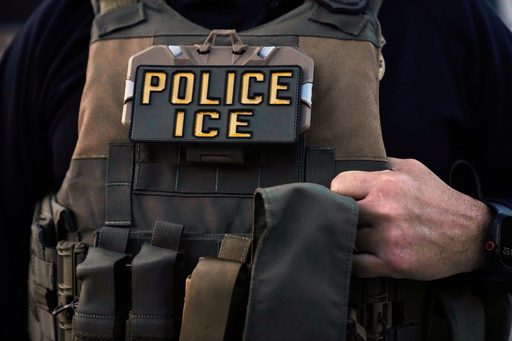
POLICY WIRE — Washington D.C., United States — It’s an agency that hasn’t seen a Senate-confirmed leader since the Obama years, adrift in a constant political squall. But here we’re again, staring down a new contender for the director’s chair at Immigration and Customs Enforcement, an organization frequently caricatured as the blunt instrument of American border policy. And this time, the pick isn’t a seasoned Beltway lawyer or a career federal bureaucrat; it’s Lance Schroyer, a former Oklahoma state trooper, propelled into the national spotlight from the state highway patrol by a president eager to fulfill promises.
President Donald Trump took to his digital soapbox — his Truth Social platform — this past Saturday to announce Schroyer’s nomination. He described him as a U.S. Marine and a [QUOTE_PLACEHOLDER] adding that Schroyer is a “proven leader with DECADES of experience locking up the worst of the worst.” Quite the endorsement, you’ll note. But then again, this isn’t just any government gig; it’s ICE, an acronym that, depending on your political bent, conjures images of either necessary border protection or an unchecked enforcement machine.
And where does a former Oklahoma trooper, however decorated, come from to land such a politically charged nomination? You needn’t look far beyond Secretary of Homeland Security Markwayne Mullin, a former congressman himself and also a native Oklahoman. Mullin, who started his top job in March, recently brought Schroyer on stage at a National Sheriffs’ Association event, gushing over his “good friend of mine” and mentioning DHS had already hired him. Funny how these things work, isn’t it?
Later Saturday, Mullin couldn’t praise Schroyer fast enough in an official statement, emphasizing the ex-trooper’s 29-year career and his work on a [QUOTE_PLACEHOLDER] with federal and state partners. Mullin made no bones about his expectations: [QUOTE_PLACEHOLDER] Clear as day, that message.
If he gets through the Senate’s wringer, Schroyer steps into a whirlwind. The public mood, remember, has soured big-time on Trump’s earlier immigration crackdowns. Those periods saw federal immigration officers swarming American cities to round up immigrants. But, hey, these raids weren’t exactly welcomed with open arms; tensions soared, leading to clashes—and ultimately, two U.S. citizens were fatally shot in Minneapolis earlier this year. But because the President ran on a platform of mass deportations, ICE is now undergoing a massive growth spurt, thanks to a $75 billion injection last year, which helped hire 12,000 officers and upped detention capacity. That’s a serious operational expansion.
Mullin himself has voiced a desire to keep his department out of the headlines. And, you know, maybe he’s even tried for a softer tone on immigration initially, but everyone in Washington knows he’s going to toe the line on the president’s deportation agenda. Claire Trickler-McNulty, a former senior ICE official, observed that past confirmed directors have often been attorneys, though a few state and local law enforcement folks have made the cut. But she noted his Oklahoma roots scream Mullin’s influence. “I think probably given the attention on ICE, he wants to feel like he has somebody he can trust in there,” she surmised.
📄 POLICY WIRE WHITEPAPER PUBLISHED: PAKISTAN'S NATIONAL SECURITY POLICY PRIORITIES
👉 READ BY CLICKING HEREAnd so we have this familiar political choreography. But this time, it comes with a slightly different twist. A new face, less baggage from previous administrations, might just be the play. John Torres, another veteran ICE official, pointed out Schroyer’s uphill battle for Senate confirmation, yet acknowledged his state and local background might actually be an advantage. “He won’t have any of that baggage, where they’re going to turn around and say, oh, well, he worked for this administration or that,” Torres explained. It’s an interesting gambit. After all, the previous ICE director, Todd Lyons, resigned in May, and David Venturella, from a private prison operator (of course), has been holding the fort as acting director. Venturella, according to a DHS official speaking anonymously, is expected to stick around until Schroyer is confirmed. But frankly, Senate confirmation for an ICE head has been like finding a unicorn lately, mainly due to the deeply polarizing nature of immigration policy.
What This Means
The choice of Lance Schroyer for ICE director signals a continuation, if not an intensification, of the hardline immigration policies advocated by the Trump administration. Politically, picking someone without deep federal ties — yet closely connected to a key cabinet member — offers a strategic two-for-one. It placates the President’s base with a [QUOTE_PLACEHOLDER] enforcer while attempting to sidestep traditional Senate gridlock, hoping Schroyer’s fresh face avoids the typical mud-slinging associated with federal incumbents. But this particular choice, straight from state law enforcement, tells us Trump values a certain type of operational experience over deep policy expertise for this agency, preferring raw enforcement chops over a nuanced understanding of immigration law’s federal complexities. That’s telling.
Economically, ICE’s expanded budget, evident in that hefty $75 billion injection last year and subsequent hiring boom, demonstrates a significant government investment into immigration enforcement, regardless of its director’s background. This massive expenditure suggests a sustained push for interior enforcement and deportations, creating ripple effects across various sectors—from legal services to border security technology, even private detention facilities. From a global perspective, particularly in the Muslim world and South Asia, such an appointment can easily be perceived through the lens of heightened scrutiny or a hardening of attitudes towards immigrants. Pakistan, for instance, a nation grappling with its own refugee crises — and significant diaspora abroad, watches U.S. immigration shifts with a keen eye. A perception of an even more aggressive ICE, symbolized by a military and state trooper background, could easily exacerbate concerns among diaspora communities and contribute to narratives of selective application of justice, potentially affecting bilateral relations and trust in international cooperation on other fronts. This isn’t just about domestic policy; it’s about America’s image on the world stage.