


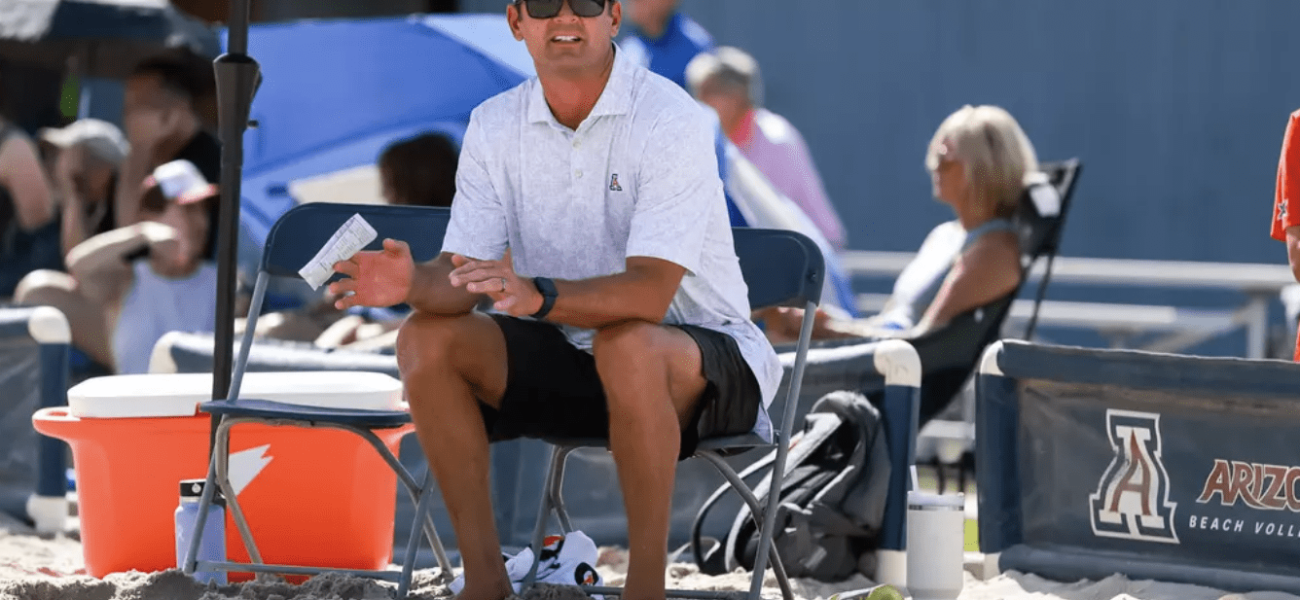
Arizona’s Gridiron Dreams Take Backseat: Beach Volleyball Coach Scores Unconventional Endorsement
POLICY WIRE — Tucson, Arizona — In an era of escalating collegiate athletic budgets and increasingly precarious university finances, an obscure coaching extension at the University of Arizona quietly...

POLICY WIRE — Tucson, Arizona — In an era of escalating collegiate athletic budgets and increasingly precarious university finances, an obscure coaching extension at the University of Arizona quietly illuminates a broader — and perhaps more curious — institutional strategy. While flagship football programs garner headline after headline, it’s the renewed tenure of beach volleyball coach Steve Walker that hints at the evolving, and sometimes confounding, fiscal priorities within higher education’s athletic industrial complex. Because, let’s be honest, few expected a two-year commitment to sand and sun to draw this much attention from, say, the state capital.
For more than a decade, Walker has overseen the Arizona Wildcats’ beach volleyball program, essentially from its inception. He was the chosen architect, tasked with building something from—well, from nothing more than a few courts and a handful of ambitious athletes. Now, the university has reaffirmed that faith, extending his contract through the 2028 season. It’s a modest salary bump, too; Walker is set to earn $110,000 annually for the next two years, a slight increment from his previous $105,000. It doesn’t scream ‘megadeal,’ does it? But then again, neither did the sport a dozen years ago.
This extension, while small in monetary terms compared to, say, a top-tier football offensive coordinator’s compensation, still represents a long-term institutional bet. The Arizona Athletic Department, per its recent financial disclosures, faces consistent budget pressures. Investing in programs like beach volleyball, despite their relatively niche appeal, becomes part of a broader strategy. But what strategy, precisely? Is it merely about diversifying competitive sports or about attracting a different demographic of student-athlete, perhaps those who don’t aspire to the packed arenas of basketball and football?
The numbers themselves tell a story, albeit one open to interpretation. Walker’s 242-117 record over thirteen seasons is certainly respectable—a winning percentage of nearly 67%. But consider the program’s NCAA tournament history: a single appearance in 2016. That year, Walker was Pac-12 Coach of the Year. It makes you wonder what metrics truly drive these decisions. Is it winning percentage, public relations value, or a blend of both, diluted by other institutional interests?
“We’re not just building athletic programs; we’re cultivating communities and global ambassadors,” asserted University of Arizona Athletic Director John Torkelson in a recent statement, referencing the extension. “Our success on the court and in the sand translates to broader institutional prestige, drawing a diverse array of talent, including—and I say this with intentionality—those bright minds from South Asia and the Muslim world who seek world-class education alongside dynamic opportunities. We’re about holistic student experience here.” Torkelson’s choice of language here feels deliberate, almost boilerplate, like he’s covering multiple bases with one serve.
Conversely, State Representative Eleanor Vance, a member of the Higher Education Oversight Committee, voiced a more pragmatic view. “Every dollar spent on these contracts needs to be scrutinized, particularly when tuition hikes are a recurring narrative,” she stated recently. “It’s not that we don’t value collegiate sports; it’s that we must ensure these investments provide tangible returns to taxpayers and students, not just ephemeral glory. $110,000 here, $200,000 there—it all adds up, doesn’t it?” Vance’s comments don’t seem like direct criticism of Walker but rather of the system as a whole. And she’s got a point.
📄 POLICY WIRE WHITEPAPER PUBLISHED: PAKISTAN'S NATIONAL SECURITY POLICY PRIORITIES
👉 READ BY CLICKING HEREThe retention of key players like Carlie Sisneros (who juggles both indoor and beach volleyball), and the strong pairing of Madeline Walker and Ashlyn Zilliken, who boasted a 19-7 record as a duo, might justify the investment from a pure team stability perspective. You don’t want to lose momentum—that much is plain. But for an institution navigating a constantly shifting fiscal landscape, these seemingly small contractual details can take on larger implications, particularly when budgets for academics face continuous trimming.
What This Means
This contract extension, far from being a mere athletic administrative formality, highlights a fascinating policy intersection. It’s not just about rewarding a coach; it’s about strategic allocation of public university resources within a competitive collegiate sports market. On one hand, you’ve got universities attempting to build diverse athletic portfolios, enhancing their brand beyond the traditionally dominant sports. This is part of the ‘experience’ economy in higher education, where comprehensive offerings attract students (and their tuition fees) from a wider demographic, even internationally. Expanding the university’s ‘global footprint’—which Director Torkelson obliquely referenced, linking athletic programs to attracting students from regions like Pakistan or other parts of the Muslim world—becomes an unstated policy objective. They’re trying to appeal to everyone. But is it working? It’s tough to quantify.
On the other hand, policymakers like Representative Vance are increasingly questioning the ROI (return on investment) of such expenditures. In a state that regularly debates funding for K-12 education and affordable university access, each dollar for non-revenue-generating sports becomes a flashpoint. This extension, though financially minor, could symbolize a broader institutional struggle: balancing aspirational athletic expansion with a fiscally responsible narrative that resonates with tuition-payers and legislators alike. The Arizona Wildcats just wrapped up a 1-3 run hosting the Big 12 Tournament—hardly a resounding success. This subtle endorsement, then, suggests confidence not necessarily in immediate trophy hauling, but in the long game of brand building and, perhaps, securing those valuable enrollment numbers down the road.