

For Iraqi Supporters, World Cup Joy Tempered by Sacred Grief in 2026
POLICY WIRE — Baghdad, Iraq — In what promises to be an extraordinary juxtaposition of national euphoria and profound spiritual reflection, soccer fans across I...

POLICY WIRE — Baghdad, Iraq — In what promises to be an extraordinary juxtaposition of national euphoria and profound spiritual reflection, soccer fans across Iraq are poised to experience the 2026 FIFA World Cup in a unique, emotionally complex manner. For the first time in four decades, the Iraqi national team will grace the global stage of competitive football. But for many, particularly within the country’s predominantly Shia Muslim community, the celebratory fervor of this sporting milestone will converge with the solemn observance of the Shia Islamic month of mourning, creating a poignant and historically charged period.
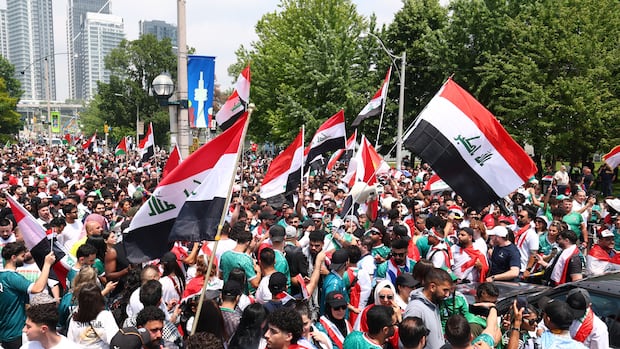
This balancing act between collective jubilation and personal grief marks a rare intersection of passions for Iraqi supporters, as noted by wire reports. On one hand, the appearance of the national squad in a FIFA World Cup is an event of immense pride and communal celebration, capable of momentarily unifying diverse segments of a society that has endured decades of conflict and instability. On the other, the designated month of mourning — a sacred time commemorating profound historical tragedies central to Shia identity — demands a demeanor of reflection, sorrow, and devotion.
The specific timeline that gives rise to this emotional confluence positions Iraqi fans at a crossroads, where the modern spectacle of international sports meets deeply ingrained religious tradition. This isn’t merely a matter of conflicting schedules; it’s a collision of deeply felt collective identities. The World Cup offers a powerful symbol of national aspiration and global recognition through athletic achievement, while the period of mourning reaffirms fundamental beliefs and historical narratives through rituals of remembrance and sorrow.
As general background knowledge, the Shia Islamic month of mourning refers primarily to Muharram, the first month of the Islamic calendar, culminating in Ashura. Ashura, observed on the 10th day of Muharram, commemorates the martyrdom of Imam Hussein, the grandson of the Prophet Muhammad, at the Battle of Karbala in 680 AD. This event is a foundational tragedy for Shia Muslims worldwide, marked by processions, passion plays, lamentations, and a general atmosphere of austerity and remembrance. During this period, it’s customary to refrain from joyful activities, weddings are postponed, and many dress in black as a sign of mourning. The contrast with the boisterous, celebratory atmosphere typical of World Cup viewing parties is stark.
The 40-year drought for Iraq in the World Cup is itself a powerful narrative. The nation’s football journey has been punctuated by periods of severe political interference, international sanctions, and domestic turmoil, often impacting player development and competitive performance. To qualify after such a lengthy absence represents a significant achievement, resonating deeply with national resilience and a collective desire for positive recognition on the world stage. For many, football transcends sport; it becomes a non-political arena where national identity can be asserted and celebrated without the complexities that often entangle other facets of public life.
However, the emotional gravity of Muharram and Ashura is immense for Shia communities, including Iraq, which is home to some of the holiest sites in Shia Islam. Observances are not superficial but deeply rooted in personal faith — and collective heritage. Balancing the spontaneous outbursts of joy associated with a goal or a victory with the internal and external demands of religious solemnity presents a psychological challenge for many individuals. Public displays of revelry might be seen as inappropriate or disrespectful by some, while the urge to celebrate a historic sporting achievement is equally potent.
📄 POLICY WIRE WHITEPAPER PUBLISHED: PAKISTAN'S NATIONAL SECURITY POLICY PRIORITIES
👉 READ BY CLICKING HEREThis scenario underscores the intricate tapestry of cultural and religious life in nations like Iraq, where ancient traditions continue to shape modern experiences. The ability of individuals to navigate such dual emotional landscapes speaks to a complex interplay of personal devotion, nationalistic pride, and the contemporary phenomenon of globalized sport. The potential for individual fans to alternate between watching a match in a state of suspended animation—perhaps muted cheering—and then engaging in solemn religious duties highlights a uniquely Iraqi experience in 2026.
What This Means
This intersection of World Cup enthusiasm and religious observance suggests several pathways for how Iraqi society might experience and express itself during the tournament. We could see a distinct toning down of typical football celebrations in predominantly Shia areas, or during specific dates within the mourning period, reflecting a deferential approach to religious custom. Stadiums and viewing areas within Iraq might see fewer overt displays of revelry than those associated with other nations, particularly during Muharram. Organizations planning public screenings or events during the World Cup may need to consider the cultural sensitivities surrounding the month of mourning, potentially adjusting their approaches to accommodate both national pride and religious respect.
Historically, communities find ways to reconcile such potent emotional demands. This might involve compartmentalizing these experiences – intense celebration in one moment, solemn reflection in another – or it could lead to new, uniquely Iraqi forms of expressing national sporting pride that integrate elements of reverence. The World Cup’s capacity to bring people together is well-documented, as is the unifying power of religious belief. How Iraq harnesses both, navigating a global spectacle through the lens of profound tradition, will be a compelling case study in cultural endurance and adaptation.