


Chargers’ Quentin Johnston: A “Make or Break” Season Under McDaniel’s Scheme
POLICY WIRE — Los Angeles, USA — For a player pegged as a top-tier prospect, NFL reality often hits like an unblocked blitz—fast, unforgiving, and leaving little room for error. Wide receiver Quentin...

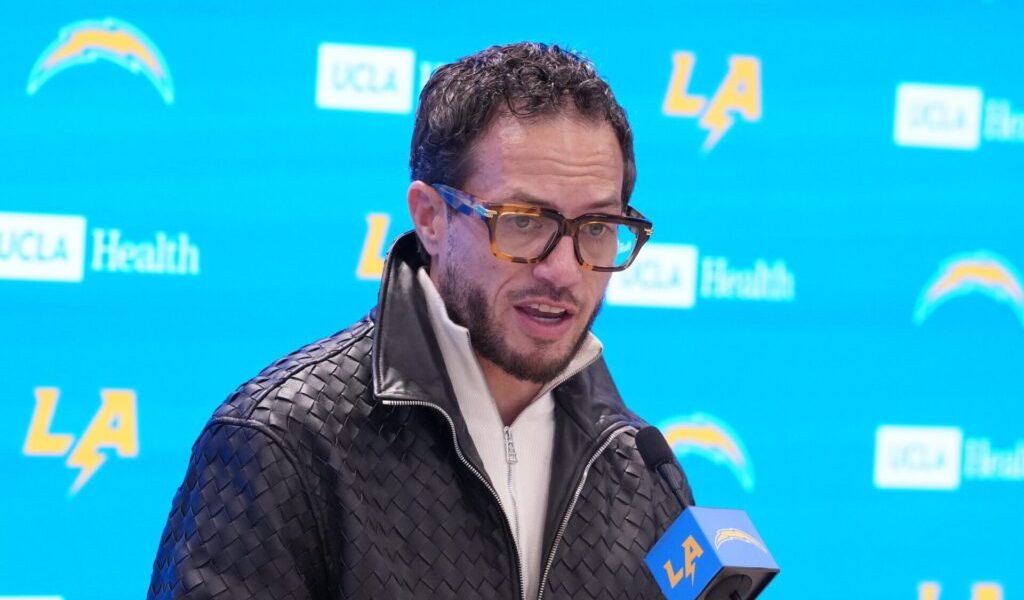
POLICY WIRE — Los Angeles, USA — For a player pegged as a top-tier prospect, NFL reality often hits like an unblocked blitz—fast, unforgiving, and leaving little room for error. Wide receiver Quentin Johnston, once considered a future star for the Los Angeles Chargers, finds himself staring down what most veterans call a ‘prove it’ year, even with two seasons still etched into his rookie contract. This isn’t just about catching footballs anymore; it’s about validating the immense financial investment and warding off the uncomfortable whispers of ‘bust.’ A fresh face, offensive coordinator Mike McDaniel, is the architect tasked with salvaging that promise. And, boy, is Johnston talking a big game about it.
It’s the eternal dance of player potential versus actual production. When a first-round pick – and Johnston was exactly that in 2023 – fails to immediately translate collegiate dazzle into professional dominance, the clock starts ticking. Fast. Coaches — and GMs, their careers hanging by threads, don’t typically do patience well. Johnston’s earlier outings have been, well, let’s just say a shade less than electrifying. He’s accumulated 494 receiving yards — and just one touchdown across his first two seasons. The brutal truth? Roughly 60% of first-round wide receivers since 2015 haven’t broken the 1,000-yard mark by their second year, a harsh metric of expectation versus output, according to analytics compiled by Pro Football Focus. That sort of data points to a systemic challenge in scouting, or perhaps, the sheer difficulty of adapting to the game’s highest level. But with McDaniel now calling the shots, the narrative is suddenly about “schematic fit,” a comfortable, jargon-laden blanket to wrap around prior disappointments.
“The scheme he has is set up for the yards after catch,” Johnston told reporters recently, a sentiment bordering on relief rather than revelation. “There’s not always a lot of room for that in this league, but just showing us different angles and stuff to get to the ball after the catch and turning, going across field and doing different stuff in the plays he has built for us.” It’s almost as if the prior schemes actively *discouraged* extra yardage. Imagine that. He sounded genuinely “lit up,” as he put it, by McDaniel’s focus on YAC – a college strength that mysteriously vanished in the pros. Now, it’s back on the menu.
And so, a flicker of hope. New coach, new offense, new lease on career longevity. This isn’t an uncommon script in professional sports; it’s practically an industry blueprint. When things don’t work out, you either trade the asset or bring in someone new to fix it. The Chargers opted for the latter. McDaniel, with his innovative offensive mind – proven over several successful stops – is supposed to be the saviour, not just for Johnston, but for a high-powered offense that somehow sputtered last season. Head Coach Jim Harbaugh, ever the pragmatist, offered his vote of confidence, albeit with a healthy dose of reality. “Quentin has the raw materials, no doubt about it,” Harbaugh remarked, a slight crease between his brows, “But this league, it doesn’t care about what you could do. It’s about what you will do, week in, week out.” You can practically hear the implicit “or else” hanging in the air.
This dynamic – the struggle, the second chance, the validation of a massive corporate gamble – isn’t just an American sports spectacle. It resonates globally, even in unexpected places. In bustling cities from Karachi to Cairo, the dramas of top-tier sports, whether it’s cricket, football, or America’s own gridiron export, captivate audiences. They reflect a universal hunger for underdog tales and the redemption arc, all packaged and sold by an increasingly interconnected sports economy. Because, make no mistake, Johnston’s performance directly impacts the Chargers’ market value, their appeal to sponsors, and their slice of a global sports revenue pie, which has seen petrodollars increasingly influence European football valuations. It’s all part of the same colossal machine.
📄 POLICY WIRE WHITEPAPER PUBLISHED: PAKISTAN'S NATIONAL SECURITY POLICY PRIORITIES
👉 READ BY CLICKING HEREJohnston feels the weight. “With that validation comes a little relief for myself, a weight I have previous years on my shoulders,” he confessed. You don’t often hear an athlete admit to carrying that kind of burden. But it’s true, isn’t it? The public perception, the media scrutiny – it’s heavy. His optimism feels earned, for now. It’s not just some PR spiel, you’d think. This isn’t just about catching balls; it’s about career, legacy, — and a massive pay cheque down the line.
What This Means
This saga of Quentin Johnston isn’t merely a fleeting sports footnote; it’s a telling microcosm of the relentless, unforgiving business that’s the modern NFL, and by extension, global elite sports. Player valuation, drafted high on potential, quickly becomes a speculative asset on the market. When performance lags, the pressure isn’t just on the athlete; it trickles up to coaching staffs, front offices, and ultimately, the franchise’s economic health. A “rehabilitation” project like Johnston’s under McDaniel represents a significant strategic gamble by ownership – betting that a change in leadership can unlock previously unseen value. From a broader economic standpoint, these dramatic player storylines – the rise, the fall, the quest for redemption – are expertly woven into the sports media complex, driving viewership, merchandise sales, and overall brand engagement, not just domestically, but across international markets that avidly consume Western sports. It’s a calculated cycle of investment, expectation, and narrative construction, all aimed at maximizing returns in an ever-expanding, multi-billion-dollar industry where players like Johnston are, in essence, high-stakes investments.