


Captaincy’s Unseen Edge: Iyer’s Ghostly Return and India’s Perpetual Leadership Dilemma
POLICY WIRE — New Delhi, India — In the manic merry-go-round of Indian cricket, where fresh faces appear and disappear with alarming frequency, the latest spin offers a genuinely peculiar spectacle....

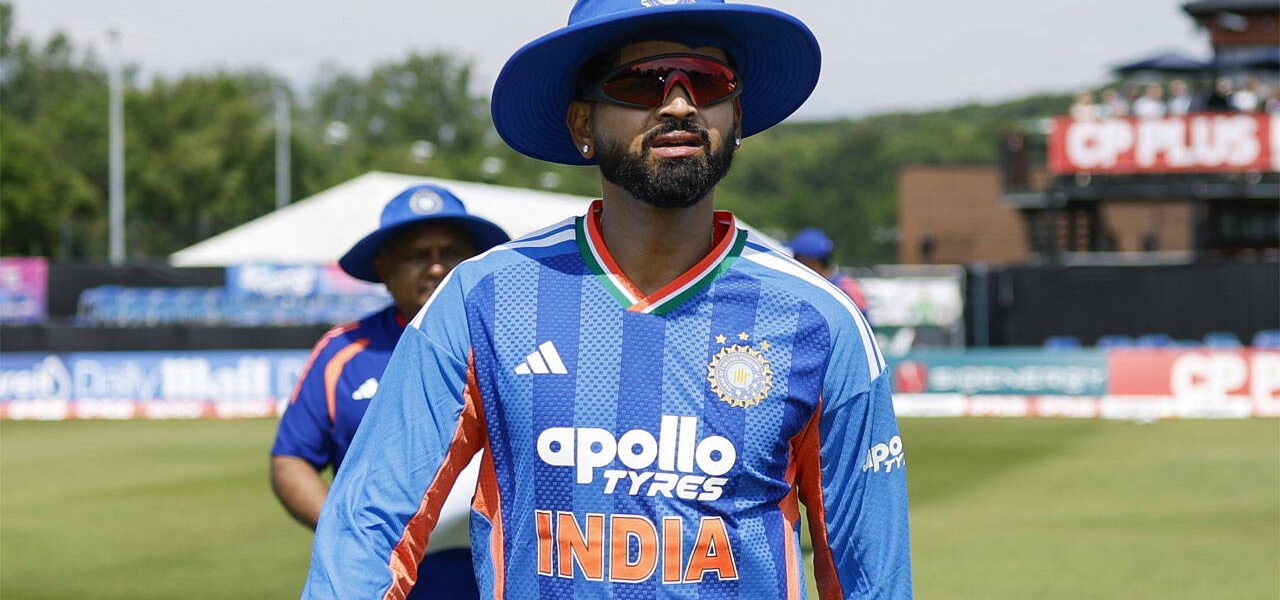
POLICY WIRE — New Delhi, India — In the manic merry-go-round of Indian cricket, where fresh faces appear and disappear with alarming frequency, the latest spin offers a genuinely peculiar spectacle. It’s not just a new captain; it’s a captain from a forgotten past, hauled back into the present with an air of understated inevitability. Shreyas Iyer, a name once firmly in the conversation, then conspicuously absent, now stands at the helm again—but not before carving out a statistic so utterly baffling it warrants a double-take.
And so, on a seemingly unremarkable Friday in Belfast, the 31-year-old stepped onto the field for the coin toss, having missed 63 consecutive T20 Internationals for India since his last outing in December 2023. That’s right. Sixty-three matches. Most players, after such a hiatus, might consider a second career, perhaps competitive cheese rolling. But not Iyer. He’s returned not just to play, but to lead. It’s a gap that makes even New Zealand’s Tom Latham’s 47-match absence before his captaincy debut seem, well, quaint. It makes one wonder if India’s team selection is less about form and more about a complicated game of musical chairs played at a cosmic scale.
But there’s a cold, hard logic beneath the apparent chaos. “India’s deep talent pool often translates into a precarious equilibrium for any individual player,” observed former national selector, Mr. Kishan Lal Sharma, speaking exclusively to Policy Wire. “One off-day, one injury, — and you’re in a queue stretching miles long. Iyer’s return is less a surprise, more a testament to the fact that when all the shiny new toys break, you sometimes need a reliable classic that just works.” He’s got a point. You don’t rack up 114 T20 captaincies across domestic — and franchise cricket, as Iyer has, by pure happenstance. That’s a serious amount of on-field decision-making, putting him far ahead of stalwarts like Rohit Sharma (80) and Virat Kohli (72) at their captaincy debuts.
It’s not just a record, it’s a policy statement—intentional or otherwise. “The sheer churn in our leadership speaks volumes about the constant pressure cooker this team operates in,” noted renowned sports commentator and pundit, Mr. Jamshed Khan. “They’re looking for solutions, but they’re doing it in plain sight, with the entire nation, and indeed much of the cricketing world, watching every misstep. Iyer brings a much-needed steady hand, at least in theory.” Because, ultimately, what India wants is a winning formula, not necessarily a logical progression for any single player. They’re willing to make unorthodox bets, bringing back experienced, if sidelined, captains when the youth movement hits snags.
The decision to field first on that unfamiliar Belfast strip was typical Iyer—calculated, perhaps a touch cautious. “It’s a new surface for us, and it’s the first time the majority of us have played over here,” he confessed at the toss, projecting an aura of measured pragmatism. His candor, though refreshing, didn’t exactly scream bold new era. It’s more of a, “let’s figure this out as we go” vibe, which might just be what this side needs, given the perpetual hunt for the next messiah.
And consider the backdrop: a surging Indian sporting identity, intricately tied to its cricketing prowess. This isn’t just about 22 men on a field; it’s about soft power, about national pride that ripples across regional lines. Every Indian win is celebrated with fervent enthusiasm that can often outshine economic or diplomatic gains in terms of public perception, especially within South Asia. Cricket remains the ultimate unifier—or divider—on the subcontinent, where India and Pakistan’s rivalry defines sporting narratives. An assertive, successful Indian team sends a subtle, yet unmistakable, message. But the precarious equilibrium of its team selections often makes that message feel less like a roar and more like a hopeful murmur.
📄 POLICY WIRE WHITEPAPER PUBLISHED: PAKISTAN'S NATIONAL SECURITY POLICY PRIORITIES
👉 READ BY CLICKING HEREWhat This Means
Iyer’s record-setting comeback to the captaincy isn’t just a sports footnote; it signals deeper systemic currents within Indian cricket. Politically, it reflects the enormous pressure on selectors to continually produce winning combinations, even if it means short-term recycling of talent. The constant search for the ‘right’ leader for limited-overs cricket highlights a national sporting apparatus under immense public scrutiny, always striving for global dominance—a proxy for broader national ambition. Economically, a strong, consistent Indian team translates directly into colossal revenue for the Board of Control for Cricket in India (BCCI), arguably the richest sporting body in the world, influencing everything from sponsorship deals to broadcasting rights that stretch across Asia and beyond.
For players themselves, this kind of churn reinforces a harsh reality: form and fitness are fleeting, and an opportunity, once missed, can resurface unexpectedly. It speaks to a pragmatism that sometimes outweighs developmental trajectories. The omission of young Vaibhav Sooryavanshi, despite his buzz, further demonstrates this preference for proven quantities over gambles in high-stakes environments. It’s a risk-averse play in a high-reward game, indicating a system prioritizing immediate results over the long, sometimes messy, path of nurturing future stars in every match.