

Seattle’s Unsanctioned Diplomacy: How the World Cup Became a Forum for Iranian Dissident Voices Amid VAR Controversy
POLICY WIRE — Seattle, WA — It wasn’t the cheers for a potential match-winning goal that echoed loudest in the streets surrounding Lumen Field that Friday night, though one came mighty close....

POLICY WIRE — Seattle, WA — It wasn’t the cheers for a potential match-winning goal that echoed loudest in the streets surrounding Lumen Field that Friday night, though one came mighty close. No, the dominant refrain belonged to a cacophony of dissent and defiant celebration that transformed a World Cup fixture into an unexpected geopolitical seminar. Iran, battling for survival in Group G, found its on-field drama overshadowed by the unsanctioned diplomacy playing out beyond the stadium walls.
For weeks, this contest against Egypt had been billed as a groundbreaking ‘Pride Match,’ timed to coincide with Seattle’s annual Pride Weekend. And you’d think the Rainbow Nation’s vibrant spirit would define the atmosphere. But it didn’t. Instead, an understated pride on the pitch, often bordering on desperation, faced off against a boisterous, multi-layered protest that ran the gamut from anti-regime Iranian demonstrators to pro-Palestine advocates and, yes, even those proclaiming a certain former U.S. president a ‘fascist.’ Over 68,000 fans packed into Lumen Field, according to local organizers, many of them Egyptian, blissfully unaware they were dancing through a crucible of competing narratives. This wasn’t just a game; it was an exhibition.
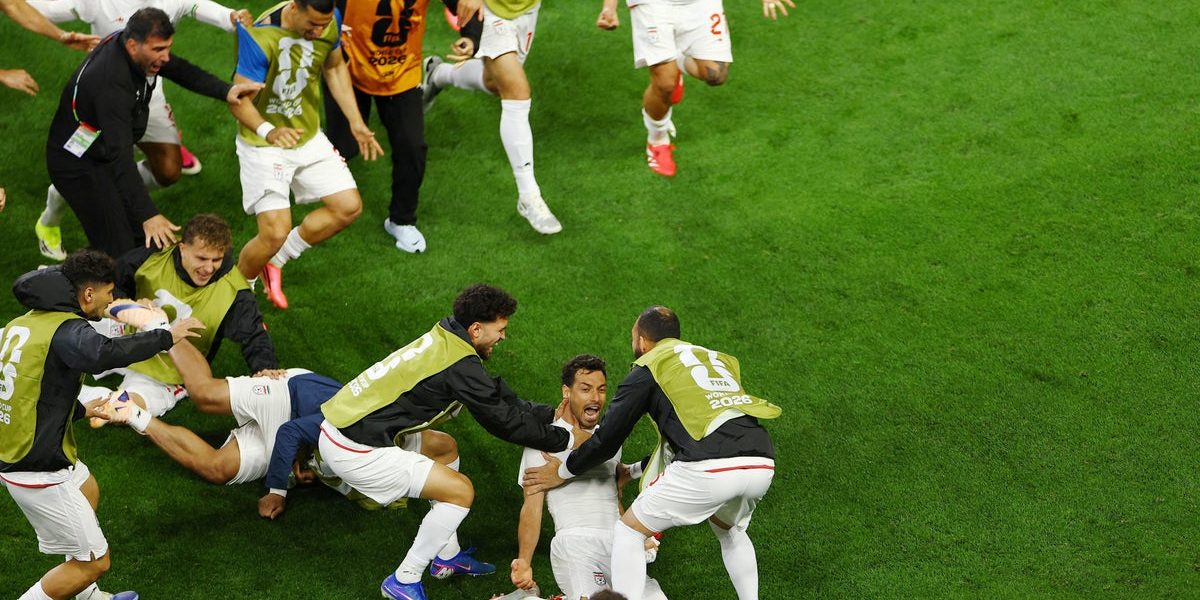
Team Melli’s heart-stopping encounter culminated in one of those moments football delivers with a cruel smile: a stoppage-time goal by defender Shojae Khalilzadeh, then the inevitable, deflating “after review” signal. VAR, that omnipresent, much-maligned arbiter, snatched victory from their grasp with the cold certainty of marginal offside, reducing what could’ve been euphoria into what seasoned observers call a classic, soul-crushing World Cup ‘what if.’ It’s like watching a tightrope walker, just a millimeter from the safety platform, plummet—except here, the fall is televised, analyzed, and endlessly debated.
“We fought with everything we had, not just on the pitch, but against expectations, against cynicism,” remarked a visibly weary Amir Ghalenoei, Iran’s head coach, after the match. “To have it decided by fractions, by a system that takes the raw emotion from the game… it’s a tough pill to swallow for my players, for our country.” His sentiment reflects a widespread frustration with how technology often amplifies rather than resolves controversy, especially when the stakes are global.
But the narrative extends far beyond the green turf. The stadium served as an inadvertent stage for the Iranian diaspora, whose voices grew louder than ever. Hundreds of pre-revolutionary Iranian flags swirled outside, a vivid counterpoint to the pro-Christianity preacher attempting to spread his word nearby. Across the street, amidst the Gastropub’s hum, anti-regime demonstrators chanted, embodying the ongoing struggle back home. It was Vancouver’s quiet drama, juxtaposed with Seattle’s standoff.
Because these protests, though localized to the World Cup host city, highlight the continuing pressures facing the Islamic Republic on the world stage. They aren’t just about football; they’re about identity, grievance, — and hope for change. Pakistan, for instance, a nation with its own complex relationship with both regional powers and global Islam, would surely have watched Iran’s precarious position with a blend of regional interest and quiet solidarity, understanding that cultural and political symbolism can often transcend mere sporting rivalry.
For Egypt, their path forward was clearer, having secured passage to the knockouts after Belgium’s dominant performance elsewhere in Group G. “This team has shown tremendous grit and heart, representing the pride of an entire Arab nation,” stated Hassan Mostafa, a spokesperson for the Egyptian Football Association, basking in the glow of progression. “Our journey isn’t over; it’s just begun.” They don’t have to deal with the agony of being “pencilled in” for an uncertain future, hoping the other groups play out just right.
📄 POLICY WIRE WHITEPAPER PUBLISHED: PAKISTAN'S NATIONAL SECURITY POLICY PRIORITIES
👉 READ BY CLICKING HEREThe game itself, a breathless, helter-skelter affair, had its share of visceral moments. Mahmoud Saber’s early goal for Egypt, a rebound finding its way through a desperate lunge, set the tone. Then, Iran’s captain, Mehdi Taremi, earning a penalty that was, alas, saved. Not to worry, though, as Ramin Rezaeian quickly salvaged parity from a tight angle, smashing it into the net just minutes later. They were chasing; they kept at it.
And that’s the thing, isn’t it? Football, with all its meticulously managed regulations, can still boil down to raw, frantic, beautiful human endeavor. That Taremi header hitting the crossbar, the block, the offside call — these aren’t just game incidents. They’re brushstrokes in a larger, messier portrait of international relations, cultural representation, and the ever-present tension between idealism and stark reality.
What This Means
The implications of this particular World Cup evening reach well beyond tournament brackets. For Iran, narrowly avoiding advancement isn’t just a sporting setback; it’s a missed opportunity to leverage global attention for soft power, to galvanize national sentiment positively, and perhaps to divert public discourse from domestic grievances. The continued public protests underscore how tightly sport and politics intertwine for the Iranian state, making their team’s performance a mirror for national perception. Economically, a deeper run would’ve brought tangible financial incentives, not just for the football federation but for potential tourism and investment interest in a region often viewed through a narrow political lens. For the larger Muslim world, watching two significant Muslim-majority nations compete on such a global stage, it’s a testament to football’s unifying (and divisive) power, creating shared emotional experiences across diverse populations. But it’s also a stark reminder that even in sports, the noise of real-world politics, like that which echoed in Seattle, can never truly be muted. The introduction of VAR, ostensibly to ensure fairness, ironically stripped away a moment of unbridled nationalistic joy, demonstrating how technological interventions can have profoundly human- and political-consequences.