

Beijing’s Latest Play: Lotus EVs Roll Toward Canada, Igniting Global Economic Tensions
POLICY WIRE — Ottawa, Canada — Forget the bombast and the grand summit photo ops. Sometimes, the truly consequential shifts in global power are heralded by something as seemingly mundane as an...

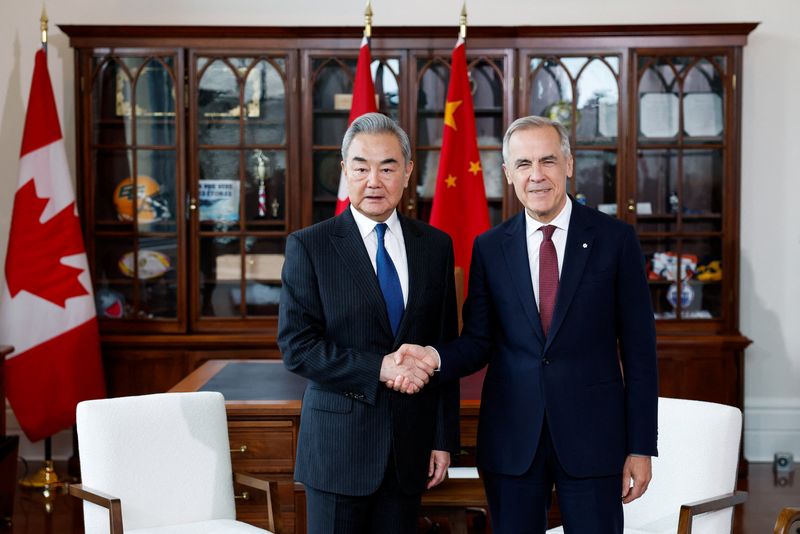
POLICY WIRE — Ottawa, Canada — Forget the bombast and the grand summit photo ops. Sometimes, the truly consequential shifts in global power are heralded by something as seemingly mundane as an overseas shipment. Word has it, China’s Geely plans to ship first Lotus EVs to Canada in July, a development quietly flowing from an understanding – or perhaps, a ‘deal’ – between Mark Carney and Xi Jinping, at least that’s what an ambassador says.
This isn’t about luxury car aficionados getting their fix a little earlier; it’s about a strategically potent signal from Beijing, delivered directly to North America’s doorstep. It speaks to a subtle, yet undeniable, recalibration of Canada’s foreign policy calculus, with economic pragmatism appearing to win the day. When an exclusive report hints at the kind of handshake that could be made under Carney-Xi deal, you sit up. Because, let’s be honest, those names don’t just get tossed around willy-nilly. [QUOTE_PLACEHOLDER]
Mark Carney, the former Bank of England governor and now UN climate envoy, has, it’s clear, continued to wield considerable influence behind the scenes. His engagement, alongside President Xi Jinping, on what exactly amounts to a pact for electric vehicle movement between China and Canada suggests something far grander than mere trade facilitation. It suggests strategic alignment, however nuanced, in the global sprint for clean energy dominance. This isn’t merely about selling cars; it’s about establishing technological footholds. For China, especially, market penetration in crucial Western economies means much more than profit margins.
But the precise details remain murky, tucked away in the diplomatic pouch. We’re only getting a whisper that an ambassador says such a thing is happening. Is it a quid pro quo? A softening of stances on other contentious issues, perhaps related to Canadian citizens detained in China or even the simmering anxieties over Chinese intellectual property theft? It’s impossible to tell, but one thing is for damn sure: there are no free lunches in geopolitics. Ever.
The burgeoning EV sector has become a primary arena for industrial competition, with China leading the charge. Global production data for 2023, for instance, revealed China’s electric vehicle sales comprised approximately 60% of the world’s total, a stark figure reported by the International Energy Agency (IEA). They’re not just building them; they’re dominating the market, from batteries to assembly lines. So, for a Chinese-owned European brand like Lotus – itself a symbol of British engineering now under Chinese stewardship – to spearhead this cross-continental delivery is layered with symbolism. It’s not just another brand; it’s an emblem of China’s growing, sophisticated global economic reach.
And it’s not a stretch to connect these dots to wider international implications, even extending into the South Asian region. Pakistan, for instance, like many developing nations, has its own fledgling EV industry, albeit heavily reliant on foreign—often Chinese—investment and technology. Beijing’s influence on the supply chains and standards being established in Canada and other Western markets invariably sets precedents, or at least benchmarks, for countries like Pakistan as they navigate their own EV transitions. What gets accepted in Toronto today might shape policy in Islamabad tomorrow, affecting everything from charging infrastructure to local manufacturing incentives. There’s a global race on, — and no one’s watching from the sidelines.
📄 POLICY WIRE WHITEPAPER PUBLISHED: PAKISTAN'S NATIONAL SECURITY POLICY PRIORITIES
👉 READ BY CLICKING HEREGeely, of course, isn’t just Lotus. They’ve got Volvo, Polestar, Zeekr, — and Lynk & Co in their stable, too. This isn’t a one-off for some niche market. This is a dry run. It’s China’s industrial might, packaged elegantly, rolling across oceans. And Canada, traditionally aligned closely with its North American Free Trade Agreement (now USMCA) partners, seems to be charting a course that allows for distinct economic engagements, especially when environmental targets are on the line. One might even call it a high-stakes, two-tiered strategy.
Because even as political rhetoric in North America often targets China, the economic reality is stubbornly intertwined. They’ve got the factories. They’ve got the scale. They’ve got the raw materials, or at least they control the processing. Ignoring that truth becomes a luxury few nations, not even those with deep alliances, can afford anymore. Especially when electric vehicles are presented as an essential component of climate policy. It’s hard to say no to that package when the planet’s future hangs in the balance.
What This Means
This prospective July shipment of Lotus EVs signifies a quieter, more transactional chapter in Canada-China relations, one that appears carefully orchestrated to bypass some of the louder diplomatic frictions. Economically, it provides a crucial ingress point for high-value Chinese products into the North American market, potentially easing protectionist pressures and hinting at a readiness by some Western nations to prioritize specific climate and economic goals over blanket geopolitical stances. Politically, the mention of a Carney-Xi deal implies a high-level, possibly off-the-record, channel for critical negotiations, suggesting Canada’s Liberal government is keen to leverage non-traditional diplomatic avenues. It’s a pragmatic dance around larger, thornier issues, allowing for a strategic win for both sides: Canada gets advanced EVs to help meet environmental targets, and China secures a valuable market presence and political capital. The implications for other allied nations, particularly in the Five Eyes intelligence alliance, are worth watching, as this move might test the cohesion of a united front against Beijing on trade matters. Ultimately, it reveals a fractured, but intensely practical, global economic landscape.