


Soccer’s Grand Theater: Germany’s Inevitable March Encounters Paraguay’s Quiet Uprising
POLICY WIRE — Foxborough, MA — It wasn’t the fireworks of a geopolitical summit or the hushed urgency of a central bank meeting, yet in the sprawling spectacle of the global game, moments like...

POLICY WIRE — Foxborough, MA — It wasn’t the fireworks of a geopolitical summit or the hushed urgency of a central bank meeting, yet in the sprawling spectacle of the global game, moments like these often carry their own peculiar gravitas. Sure, some might see a mere football match. But what we’re actually watching unfold, with all its human drama and statistical quirks, is a microcosm of the world’s layered aspirations—from the meticulously organized machine of German football to the unexpected pluck of an underdog nation.
Down on the field, where fortunes flip with a single boot, it truly feels like the hard work begins.
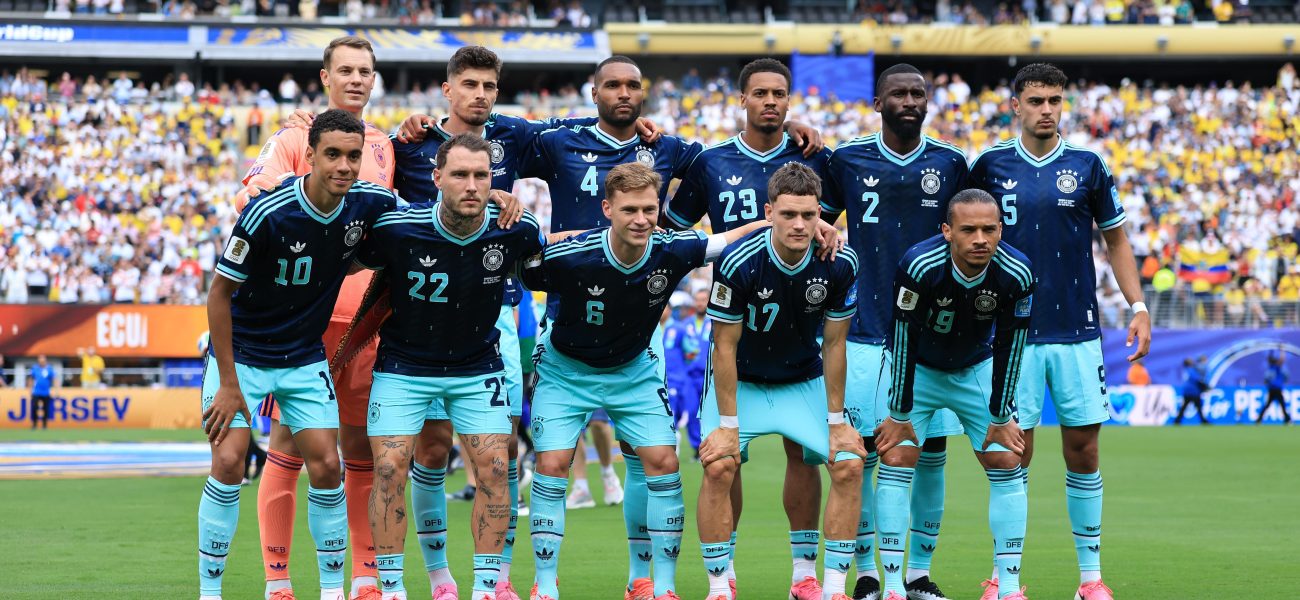
The German national squad is gearing up to face Paraguay in the World Cup Round of 32 on Monday at 4:30PM EDT in Foxborough, Massachusetts
, a fixture that, on paper, seems about as lopsided as a heavyweight boxer squaring off against a bantamweight. And yet, this isn’t just about athletic prowess; it’s about the intricate dance of expectation — and raw ambition. [QUOTE_PLACEHOLDER]
Germany, for its part, completed the initial phase with a performance that might best be described as a managed success—despite the odd wobble. The record shows Germany ended the group stage with a loss to Ecuador,
a slight embarrassment. But that’s the short view, isn’t it? Long-term, it was a good showing in terms of results,
our analysis suggests, even if how the team actually looked in games is up for debate
among pundits. Still, no complaints on the standings; The Germans won the group and earned this draw against Group D’s surprise third place team.
Prior to that defeat at the hands of Ecuador,
Germany hadn’t been shy about finding the net. They had toasted Curaçao 7-1 and escaped with a 2-1 win over Ivory Coast
—score lines that, frankly, whisper more of routine business than existential struggle.
Paraguay’s journey? Well, that’s where the narrative veers from spreadsheet certainty to improbable grit. For Paraguay, it was a shock entry into the knockouts
, a story etched in the unexpected downfall of others. Let’s not mince words: Türkiye flamed out horribly.
One can almost hear the sighs of exasperation across Istanbul and beyond. But sometimes, opportunity knocks loudest when someone else trips. Paraguay had initially got smoked by the USMNT 4-1 in its opener
—a grim start, to be sure. Yet, the team rallied, showing a surprising tenacity with a 1-0 win over the Turks and a 0-0 draw with Australia.
It wasn’t flashy. It wasn’t dominant. But, By virtue of those four points, Paraguay advanced.
A bare minimum, yes, but often that’s all it takes in this brutal arithmetic.
It’s this precise unpredictability that captivates billions. Think of the World Cup as a global stage where national pride isn’t just displayed, it’s bought — and sold. And speaking of which, sports betting alone was projected to hit roughly $100 billion in annual revenue globally by 2024, according to projections from Deloitte—a figure that surely climbs during marquee events like this. Germany should be favored heavily vs. Paraguay.
This isn’t just a hunch; it’s the cold, hard logic of statistics, historical performance, and raw squad value.
Because let’s face it, for all the talk of passion and spirit, modern football, particularly at this elite level, is an enormous enterprise. When Germany marches on—and If the Germans advance, a matchup with France could be waiting in the Round of 16
—they bring with them not just a football team, but the weight of a powerful national brand and a considerable chunk of the global sports economy. Their progress, or lack thereof, ripples outwards, influencing everything from sponsorship deals to national morale.
📄 POLICY WIRE WHITEPAPER PUBLISHED: PAKISTAN'S NATIONAL SECURITY POLICY PRIORITIES
👉 READ BY CLICKING HEREWhat This Means
This match isn’t just a sports fixture; it’s a barometer of global football’s stratified realities and the ever-present allure of the underdog story. Economically, Germany’s dominance ensures the ongoing interest of lucrative European and American markets, which is what FIFA bankrolls on. A German exit here would trigger significant financial tremors, forcing sponsors — and broadcasters to recalculate. But more profoundly, it reminds us of the delicate balance of national pride, particularly in emerging economies and the Muslim world. The abysmal performance of Türkiye
at this stage, despite its significant footballing investment and a fervent fanbase extending well into the Levant and Central Asia, leaves a void.
Just look at Pakistan, where football, while secondary to cricket, holds a growing appeal. They’re watching these results, not just for the spectacle, but also because team narratives echo deeper sentiments of national success and setback. Paraguay’s quiet advancement—born from another’s misfortune—offers a peculiar hope, a suggestion that diligent, if not dazzling, play can still find a path forward. That resonates. These tournaments, by their very nature, lay bare the inherent inequalities in global sport, yes, but also highlight moments of sheer unexpected triumph.
For nations like Pakistan and indeed many in South Asia, these games offer both a dream and a reality check: the dream of a future global presence in sports, and the reality of the economic and developmental chasm still separating them from football’s G8 nations. Ultimately, while Paraguay’s chances against Germany are statistically slim, the very fact of their participation—and Turkey’s earlier stumble—reaffirms that in sports, as in policy, no outcome is truly a foregone conclusion. And that, frankly, is why we can’t look away.