


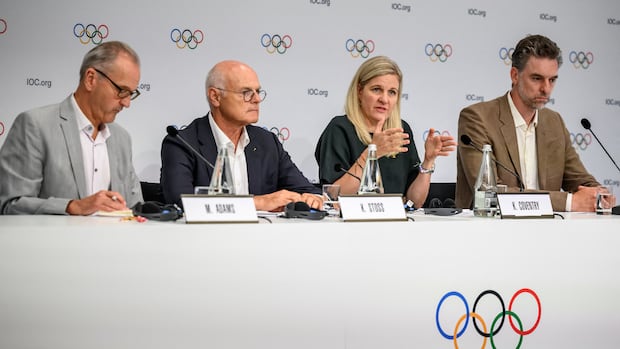
IOC’s $100 Million Cash Grant: A Step Forward, But Not a Victory
POLICY WIRE — Geneva, Switzerland — The International Olympic Committee (IOC) has announced a new initiative, distributing $100 million in US cash grants. This ...

POLICY WIRE — Geneva, Switzerland — The International Olympic Committee (IOC) has announced a new initiative, distributing $100 million in US cash grants. This development is widely characterized as a move forward in supporting athletes, though analysts suggest it falls short of being a resounding victory.
(Reporting based on wire service analysis)
The grant, valued at $100 million, represents a significant financial commitment from the IOC. While it marks undeniable progress, some are quick to temper expectations regarding its overall impact. The sentiment echoes a tactical concession rather than a definitive triumph.
Describing the situation through a sporting metaphor, one might say that the initiative is comparable to securing a late goal in a soccer match that merely salvages a draw. It averts a loss, certainly, but doesn’t clinch a win. Such an outcome, though perhaps not ideal, sometimes proves sufficient.
This financial allocation from the IOC signals a continuing engagement with the evolving landscape of athlete remuneration and support in elite sports. It addresses concerns that have been mounting within the athletic community, though the extent of its long-term benefits remains to be fully seen. The grants aim to provide direct assistance, but the critical reception indicates that while a step, it may not address the full scope of financial challenges faced by athletes globally.
📄 POLICY WIRE WHITEPAPER PUBLISHED: PAKISTAN'S NATIONAL SECURITY POLICY PRIORITIES
👉 READ BY CLICKING HEREWhat This Means
The IOC’s $100 million in US cash grants illustrate an acknowledgement of the pressing financial needs within the Olympic movement. This funding, while substantial, appears positioned more as a necessary amelioration of current issues than a transformative overhaul. For athletes, particularly those balancing intense training with economic pressures, any financial support is a welcome development. However, the prevailing view suggests that such grants, in isolation, are unlikely to reshape the fundamental economic structure of elite international competition. They serve as an important result, providing immediate relief and indicating a willingness to respond to athlete advocacy, yet don’t resolve the broader, systemic debates about equitable distribution of resources within the global sports ecosystem.