

Pakistan Drives New Momentum for Regional Stability
The meeting between Pakistan’s foreign minister and Saudi Arabia, Turkey and Egypt in Cairo is a crucial occasion for regional diplomatic dynamics. Followed by talks on the Islamabad Memorandum...

The meeting between Pakistan’s foreign minister and Saudi Arabia, Turkey and Egypt in Cairo is a crucial occasion for regional diplomatic dynamics. Followed by talks on the Islamabad Memorandum of Understanding (MoU), the meeting reflected the willingness of key regional states to engage in dialogue, cooperation, and peaceful dialogue to address the challenges of the region.
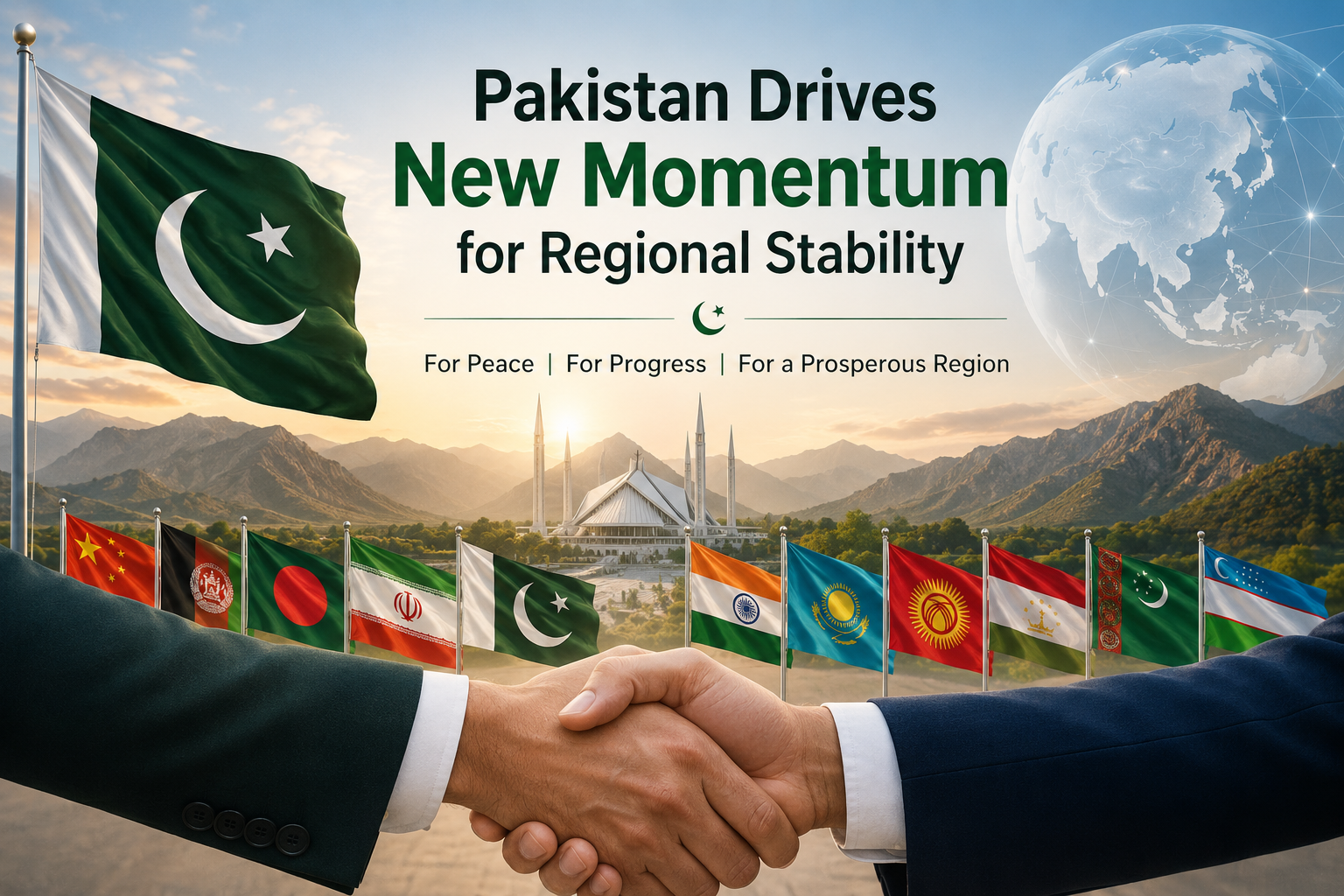
The four Ministers discussed regional developments, implementation of Islamabad MoU and priority areas for future cooperation, said the Foreign Ministry of Pakistan. The meeting also reaffirmed support for “diplomacy, and regional ownership of security and economic issues.”
As many of the countries around the Middle East and world still struggle with political instability, economic woes and security issues today, the Cairo consultations make a step towards increased awareness of the need for regional countries to be more involved in their own destiny. The four key nations involved in this effort – Pakistan, Saudi Arabia, Türkiye and Egypt, spanning South Asia, the Middle East, North Africa and the Eastern Mediterranean – put this into perspective.
The meeting has far-reaching implications beyond the diplomatic spectrum. The four countries have a combined population of over 500 million. They are geographically situated in the vicinity of various global trade routes, energy corridors and commercial markets. This means that between these states there is also cooperation, the implications of which go beyond the borders of the region and even into an international economy.
Particular attention has been paid on Pakistan’s involvement in these discussions. Islamabad has accorded increasing prominence to its foreign policy’s focus on diplomacy, dialogue and regional engagement in recent years. The Islamabad MoU and the ensuing Cairo conference suggests that Pakistan wants to play a constructive role towards easing tensions and facilitating cooperation in the region.
Responsibility for regional stability can never be construed as solely economic. The World Bank estimates that a large-scale conflict and instability in a region could lead to a few percentage points drop in growth and away from foreign investments in the area. Similarly, the International Monetary Fund has pointed out how geopolitical tensions may create uncertainties in the international markets, raise the price of transporting goods and containers, and obstruct trade flows.
This is particularly the case in the Middle East. It contributes a big percentage of the world’s global energy supplies and plays a key role in shipping billions of dollars in trade through the Red Sea, the Suez Canal and the Gulf. The Suez Canal serves about 10%–12% of trade in the world, and is one of the most vital trade corridors in the world. Economic value is thus enhanced for countries well beyond the region given that there is stability that was extended.
At the Cairo meeting, too, the fact that “regional ownership” is becoming more and more important among many analysts was evident. This principles highlights how countries in the region are likely to have the best understanding of the local context, and be best able to come up with workable answers to the challenges the region needs to overcome. A close look and policy coordination can help enhance mutual trust, economic interdependence and the risk of misunderstanding or escalation can be minimized at the regional level.
This stance is in accordance with Pakistan’s vision of connectivity in the region. Strategic location of Pakistan puts it in the middle of different regions of South, Central Asia, the Gulf and the larger Middle East. More partnership collaboration between Saudi Arabia, Türkiye and Egypt can help realize more trade, investment, energy cooperation and people-to-people exchanges. Such joint responses also provide opportunities for joint action on economic and security issues which cannot be dealt with individually.
One other significant issue in the Cairo consultations is that of continuity. Implementing diplomatic efforts can be difficult at the forks of the implementation. The four countries emphasized the need to continue the effort and keep dialogue alive by bring initial leaders together to talk about progress and cooperation going forward.
The meeting also underscores the role of diplomacy as a means of resolving the complex regional problems. Instead of having differences as a show-stopper, the member states emphasized communication, consultation and cooperation. This can help foster an environment conducive to stability, economic growth and long term development.
The meeting in Cairo was significant in terms of enhancing the cooperation of four powerful nations in its current context, particularly in their changing regional realities. Most significantly, it shows a trend of more regional and diplomatic cooperation as well.
Along the lines of dialogue, mutual respect and mutual benefits, Pakistan, Saudi Arabia, Türkiye and Egypt seem to be working towards defining a framework of cooperation through future projects and the Islamabad MoU. Such cooperation can play a positive role in the development of the peace and economy of the region in a world where cooperation is becoming increasingly connected.
Author