


Edmonton Region Imposes Urgent Water Conservation Amid Wastewater Overload
POLICY WIRE — Edmonton, Canada — Residents across Edmonton and several surrounding Alberta municipalities received an unusual and urgent directive on Sunday: ce...

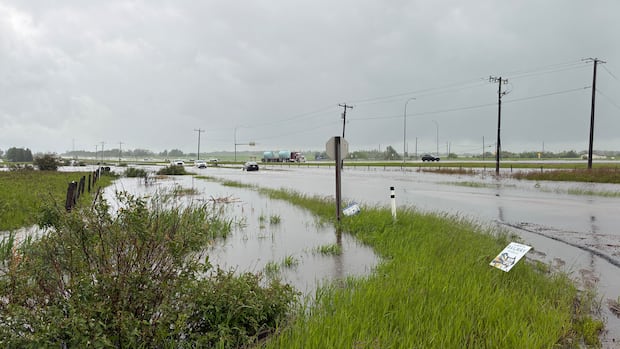
POLICY WIRE — Edmonton, Canada — Residents across Edmonton and several surrounding Alberta municipalities received an unusual and urgent directive on Sunday: cease all unnecessary indoor water usage. The drastic measure came after torrential rainfall pushed local wastewater systems beyond their capacity, prompting officials to request that citizens temporarily forego activities such as showering and flushing toilets.
The call to action, initiated by the City of Edmonton and echoed by neighboring communities, underscored the severe strain placed on critical urban infrastructure. This type of municipal advisory is rare, typically reserved for immediate emergencies where public health or systemic collapse is at stake, highlighting the gravity of the situation.
On Sunday, as the region grappled with the deluge, wastewater treatment facilities, designed to process both domestic sewage and a certain volume of stormwater runoff, became critically overloaded. (Reporting based on municipal advisories)
The core issue at play is the intricate relationship between rainfall — and a municipality’s wastewater infrastructure. While distinct storm sewers typically handle surface runoff, older or combined sewer systems, common in many established urban areas, collect both stormwater and household wastewater in the same pipes. Heavy rainfall in such systems can quickly exceed capacity, leading to potential backups into homes, businesses, and—critically—overflows into natural waterways. Even in separated systems, extreme downpours can infiltrate sanitary sewers through cracks, faulty connections, or illegal hookups, thereby overwhelming treatment plants.
For Edmonton and its regional partners, the advisories imply that the volume of water entering the wastewater system surpassed the network’s ability to transport and treat it safely. The consequence of not reducing water intake from residences would be either further flooding within properties or the release of untreated or partially treated sewage into rivers and streams, posing significant environmental and public health risks. Such an outcome is meticulously avoided by municipalities whenever possible, making the widespread request for cessation of even basic personal hygiene activities a measure of last resort.
Past instances of severe weather across Canada — and globally have repeatedly tested urban infrastructure. Cities frequently invest in upgrades, including separating combined sewers, increasing treatment plant capacities, and implementing green infrastructure solutions that help absorb stormwater before it enters the system. However, these are often long-term, multi-billion-dollar projects that can lag behind the escalating pace and intensity of weather events exacerbated by climate change.
The swift action by Edmonton and the surrounding areas on Sunday demonstrates an immediate response to mitigate the potentially damaging effects of such an overload. These are the kinds of calls that often catch residents off-guard, yet are crucial for the integrity of public utilities and the safeguarding of local ecosystems.
📄 POLICY WIRE WHITEPAPER PUBLISHED: PAKISTAN'S NATIONAL SECURITY POLICY PRIORITIES
👉 READ BY CLICKING HEREWhat This Means
The directive issued by Edmonton and its adjacent municipalities is more than just a fleeting response to a single weather event; it’s a stark indicator of the ongoing stress points within urban infrastructure facing the realities of a changing climate. When a city asks its residents to halt fundamental daily activities like showering and toilet flushing, it signals that critical public services are operating at — or beyond — their design limits.
This situation brings several broader issues into sharp relief. Firstly, it highlights the vulnerability of existing infrastructure to increasingly erratic and intense weather patterns. Many of the wastewater systems in place were built decades ago, designed for historical precipitation averages, not the ‘one-hundred-year storms’ that now seem to occur with unnerving frequency. The question thus arises: are municipalities keeping pace with the necessary upgrades and expansions to effectively manage current and future climate challenges?
Secondly, it underscores the importance of public compliance — and rapid communication during emergencies. The effectiveness of such advisories relies entirely on residents understanding the stakes and adjusting their behaviors immediately. This often requires robust public awareness campaigns — and reliable notification systems.
incidents like these serve as crucial reminders for policymakers about the financial and logistical demands of urban resilience. The costs associated with upgrading wastewater treatment plants, separating combined sewer overflows, and implementing ‘soft’ infrastructure like permeable surfaces and green roofs are substantial. Yet, the cost of inaction – environmental damage, public health crises, and economic disruption – often far outweighs the preventative investments.
While the immediate crisis was localized to a single Sunday and addressed by immediate public action, the underlying concerns about infrastructure capacity, climate preparedness, and urban planning remain pertinent. This event may well serve as a case study, or perhaps a warning, for other regions facing similar demographic pressures and climatic shifts.