


The Brutal Dance: Oxford United’s Coaching Carousel Spins On
POLICY WIRE — London, UK — There’s a particular kind of alchemy at play when ambition meets unforgiving reality, isn’t there? It’s a dynamic as familiar in the gilded halls of political power...

POLICY WIRE — London, UK — There’s a particular kind of alchemy at play when ambition meets unforgiving reality, isn’t there? It’s a dynamic as familiar in the gilded halls of political power as it’s on the rain-swept pitches of English football. Today, another chapter closes prematurely, another manager — a leader, really — discovers the hard truth that ‘progress’ isn’t always enough to secure one’s tenure. Even if you’ve got ‘professionalism and integrity’ sewn into your very fabric, the numbers, the league tables, they speak their own brutal dialect.
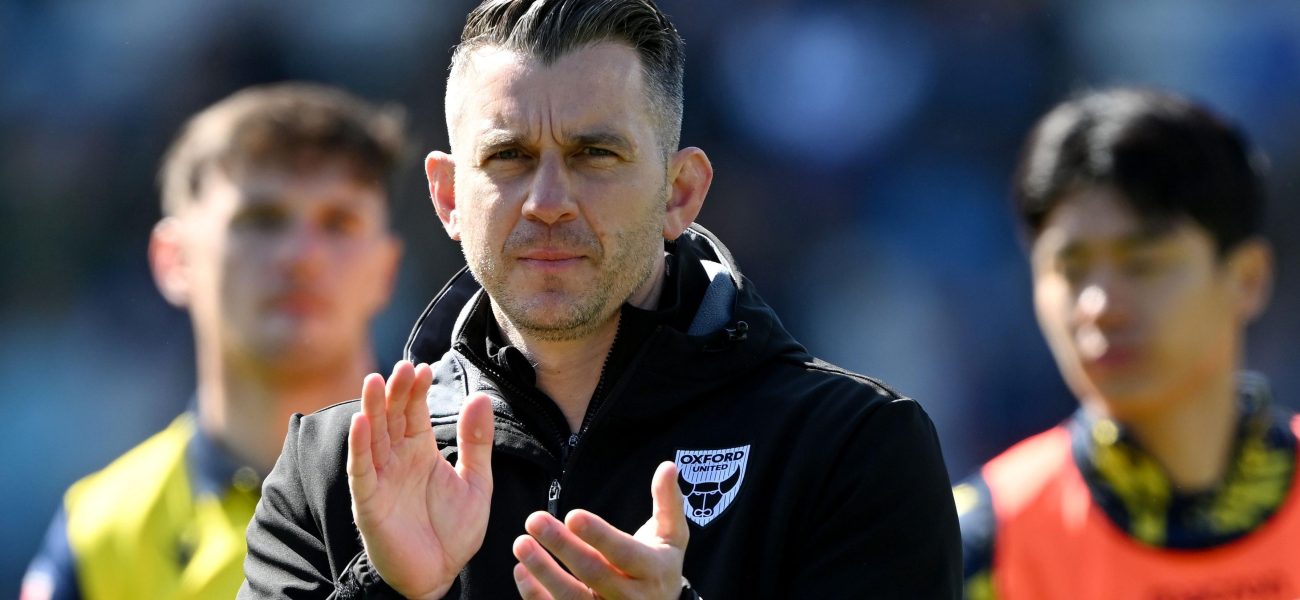
Matt Bloomfield, barely six months into the hot seat at Oxford United, has found himself ejected from the command module. His appointment as head coach came in January, a hail Mary pass after the club had hit something of a snag. And boom, just like that, it’s over. You can almost hear the sighs of corporate regret emanating from the club’s administrative wing, cloaked in boilerplate courtesy. They’ve announced his departure with the expected pleasantries, assuring everyone involved that he had “represented Oxford United with professionalism and integrity.” Niceties, see? A thank you for his efforts — and well wishes for the future. You’d swear they were talking about a diplomatic envoy, not a football manager given the heave-ho.
It’s a stark reminder, too, of the unforgiving nature of top-tier English football—a volatile, high-stakes enterprise not unlike managing a fractious coalition government, or steering an economy teetering on the brink. When Bloomfield stepped in to replace Gary Rowett, Oxford was in a deep hole, languishing 23rd in the Championship, a mere three points shy of safety. The objective was clear: don’t go down. But they did. Down to League One, snapping a two-year stint in the second tier.
Now, this isn’t Bloomfield’s first rodeo with a rapidly accelerating exit. He came to Oxford after a notably brief stint at Luton. That, too, ended abruptly. He had left Wycombe Wanderers after guiding them towards automatic promotion places, amid the challenge of big-spending Birmingham City and Wrexham, then took over at Luton. He wasn’t even there long enough for the dust to settle, dismissed after an underwhelming start to the season, with the club 11th in the table. Before that, his managerial career started at Colchester United, meaning he’s racked up quite a few address changes on his CV in recent years.
The manager himself, after Oxford’s relegation was confirmed in April, struck a stoic tone, a manager’s classic deflection, one could say. He said he was confident of keeping his job. But then again, doesn’t every leader, right up until the moment the official communiqué hits? And he offered this, a peek behind the curtain: “I’ve enjoyed my time at the club. It’s obviously not been the outcome that we wanted for the season. We’ve been pleasantly content with some of the improvements we have made but ultimately we wanted to stay in the league. I’ve not given much thought to my job and the bigger situation and ultimately, as a manager or head coach, all you can do is focus on being the best you can be.” He’s not wrong about the focus part, you just hope the best you can be is, well, enough.
For a brief moment, it looked like a miracle was in the cards. In late February — and early March, Oxford strung together three wins in a row, clawing their way to 21st place. A ‘great escape,’ they called it, an old chestnut in the football lexicon. But it didn’t stick. Just two wins in the following eight matches saw them unravel, losing ground to their rivals. The cold hard truth is, despite some encouraging results and performances in the second half of the season, he was unable to keep them in the Championship.
📄 POLICY WIRE WHITEPAPER PUBLISHED: PAKISTAN'S NATIONAL SECURITY POLICY PRIORITIES
👉 READ BY CLICKING HEREWhat This Means
The swift ousting of Matt Bloomfield isn’t just another headline in the sports section; it’s a microcosm of a larger, global trend in leadership, where outcomes are everything and the leash on decision-makers grows shorter by the day. We see this dynamic play out repeatedly, from the rapidly rotating prime ministerial offices in parliamentary democracies across South Asia—think Pakistan, where political fortunes can pivot on a single policy decision or public perception of stability—to corporate boardrooms demanding immediate quarterly returns. It’s a ‘results-now’ culture, amplified by instant news cycles — and relentless public scrutiny. There’s little room for the long game, for nurturing talent or patiently building foundations.
For Oxford United, this means another expensive leadership transition, a period of uncertainty for the squad, and a renewed scramble for a new ‘face’ to rally the troops. The club announced that the process of appointing a new men’s first team head coach will begin immediately, and the club will provide updates in due course. But in an ecosystem where economic anxieties often translate to impatience for sporting success, such short-termism can be a double-edged sword. It could deliver a quick bump, or it could perpetuate a cycle of instability, where no leader gets enough runway to implement a genuine, lasting vision. It highlights the often-unstated pressure that drives managerial decisions in the top echelons of football. The financial implications of relegation alone are staggering, putting immense pressure on all involved. The brutal truth is, whether you’re running a football club or a nation, the tolerance for perceived failure, or even just ‘not quite good enough,’ is shrinking at an alarming rate. It mirrors the ‘athletic migrations’ we see in other professional spheres, where talent and leadership are constantly in flux, seeking more secure, or at least, higher-paying pastures.