
Velvet Ropes and Royal Carriages: Tucci’s Ascot Day Offers Glimpse into British Monarchy’s Peculiar Diplomacy
POLICY WIRE — LONDON, UK — The genuine shock, or perhaps subtle amusement, on actor Stanley Tucci’s face as he rolled up in a royal carriage might just be the most authentic moment from this...

POLICY WIRE — LONDON, UK — The genuine shock, or perhaps subtle amusement, on actor Stanley Tucci’s face as he rolled up in a royal carriage might just be the most authentic moment from this year’s Royal Ascot. It’s an almost quaint anachronism, this British spectacle of equine athleticism and sartorial extravagance, a carefully polished veneer against a world in constant churn. And this particular Thursday, with Tucci—a Hollywood fixture, an everyman gastronome of sorts—being ushered into the rarefied air of the Royal Box, the whole charade felt wonderfully, conspicuously, British.
We’re talking Ladies Day, mind you. (Awaiting official quote) the official decree states. But this isn’t just about hats. It never is. The pageantry on display at Ascot Racecourse in Berkshire isn’t just about placing bets or admiring the Thoroughbreds; it’s a meticulously managed projection of Britishness, a brand identity meticulously honed over centuries. Here, a monarchy trying desperately to modernize finds its footing in tradition—a curious dance, isn’t it?
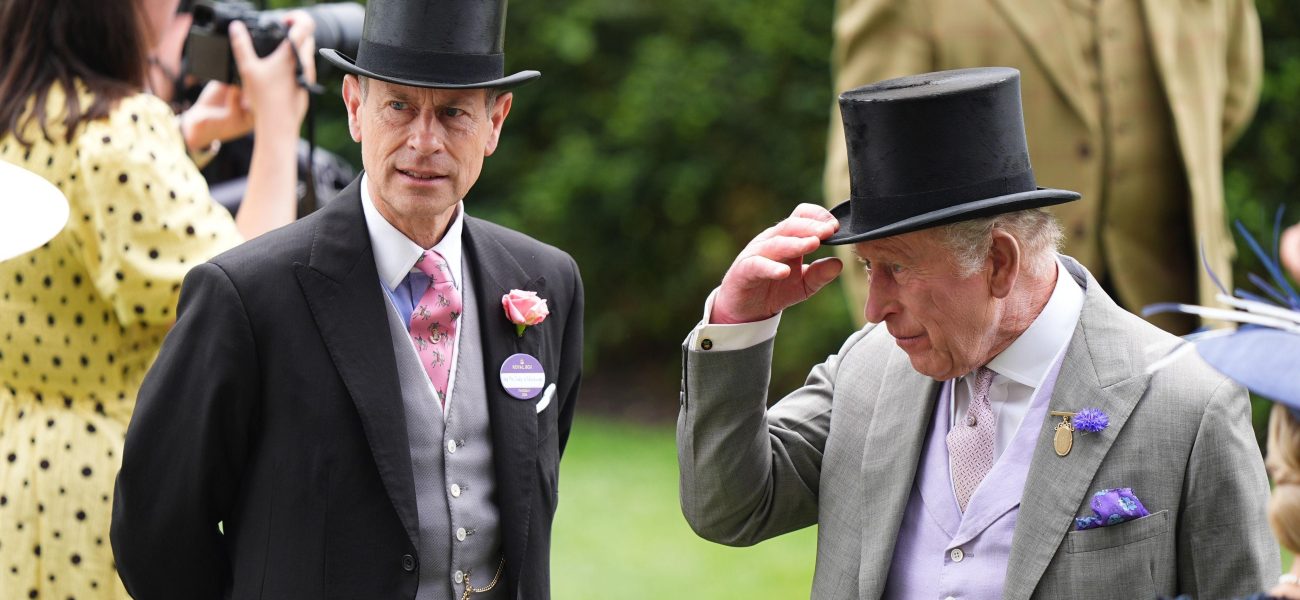
King Charles — and the Queen made their second appearance of the event, after showing up on Tuesday, the opening day. They weren’t alone. The royal ensemble, a predictable fixture, included the Duke of Edinburgh, the Duchess of Edinburgh, and the Princess Royal. But it was the presence of (Awaiting official quote) that really set tongues wagging. He wasn’t just a bystander; (Awaiting official quote) You can’t make this stuff up. He arrived not on foot, nor by mundane car, but via carriage alongside Lord and Lady Cavendish and his wife Felicity Blunt. It’s a gesture, an elevation of a celebrated commoner to momentary, faux-regal status, designed to attract precisely this kind of chatter—this international buzz. (Awaiting official quote) It all plays into the narrative.
Because, really, what else is this about? It’s not just a party, is it? Not for the Windsors. This annual five-day fixture, lauded as (Awaiting official quote) is an exercise in soft power. While global crises simmer, while political stability often feels like a quaint memory, Britain presents this vision: stable, elegant, fun. It’s a performance art piece, isn’t it? A live-action postcard. Thousands (Awaiting official quote) The images spill out across news wires, a sea of audacious millinery and polished smiles, momentarily distracting from…well, everything else.
But the numbers are, in their own way, quite stark. A truly colossal gathering. (Awaiting official quote) according to reports from EPA/Shutterstock. Think about that for a second. That’s a city-sized throng, all dressed to the nines, all consuming, betting, participating in this elaborate ritual. It’s an economic engine, yes, but more importantly, it’s a collective affirmation of a particular cultural order. One where (Awaiting official quote) is an actual news item.
Contrast that carefully curated splendor with the day-to-day grind in, say, Karachi or Lahore, where the primary concerns often revolve around infrastructure, cost of living, or geopolitical currents swirling through the Persian Gulf. You might even consider the implications for those watching from Islamabad, observing these age-old rites of a former colonial power. Do they see tradition and stability? Or an almost absurd, insular indulgence? It’s complicated, this global gaze. The Commonwealth might connect them politically, but culturally, the chasm can be vast. For many in South Asia, particularly within its upwardly mobile echelons, such events represent an aspirational touchstone—a different kind of ‘high-fashion,’ often replicated, often admired, sometimes critically observed, but rarely dismissed outright. The allure, or the curiosity, of what Britain’s old guard still represents hasn’t entirely faded, not by a long shot.
📄 POLICY WIRE WHITEPAPER PUBLISHED: PAKISTAN'S NATIONAL SECURITY POLICY PRIORITIES
👉 READ BY CLICKING HEREWhat This Means
The appearance of King Charles, along with a Hollywood A-lister, isn’t some idle social gathering. It’s a deliberate choice, a PR strategy veiled in tradition. You’ve got to understand, in an era where monarchies often grapple with their relevance, an event like Ascot—especially when celebrities cross the velvet ropes—becomes a statement. It tells the world: Britain’s institutions, even the ones most easily ridiculed, still hold cachet. They still attract global attention. They’re still capable of generating compelling optics, particularly in a hyper-connected, media-saturated environment.
And because it happens to draw in the world’s press, it indirectly props up certain sectors. Luxury retail. Tourism. The equestrian industry. All benefit from this grand spectacle. It’s also an unspoken nod to the enduring fascination with the British royal family across disparate cultures, including many in the Muslim world, where such pageantry, albeit distinct, isn’t entirely alien. Look, whether you love them or find the whole thing an archaic waste of resources, the royals are a brand, a global one. And this week, with its feathers, its fancy dresses—(Awaiting official quote)—and its star power, they’ve reinforced it. It’s a soft power play, a low-stakes diplomatic maneuver that says, Hey, look at us. We’re still here, still elegant, still hosting quite the party.
It suggests that while the United Kingdom negotiates its post-Brexit identity and global trade deals, its monarchy provides an invaluable, if sometimes inscrutable, cultural currency. This is especially true for audiences outside the immediate Anglosphere, those who see the King less as a sovereign and more as a symbol of historical ties or even cultural exoticism. You can’t put a price on that kind of brand recognition, can you? It contributes to the country’s perceived stability, perhaps even influencing investment—it’s like the subtle undercurrent that keeps global market dynamics churning. And honestly, it’s a lot more charming than another political summit, isn’t it?