


Cricket’s Quiet Authority: BCCI Cedes Turf to Umpire’s Call in Tense India-Sri Lanka Spat
POLICY WIRE — New Delhi, India — Forget grand geopolitical tussles or high-stakes trade talks for a moment. Sometimes, the raw nerve of South Asian regionalism throbs most fiercely not in foreign...

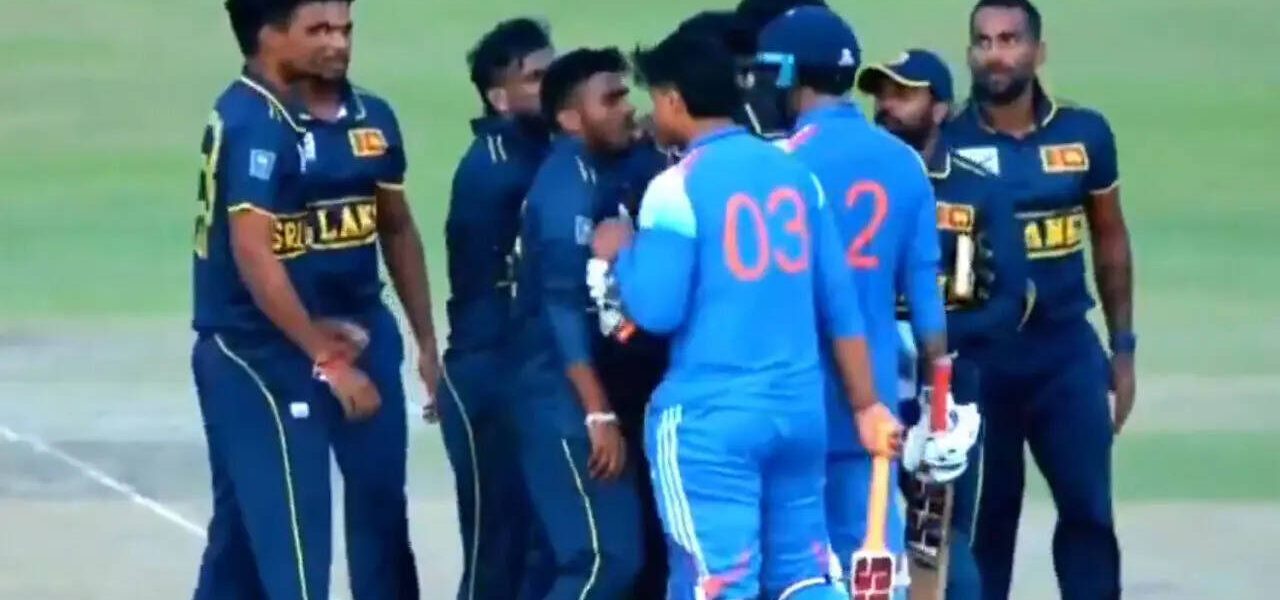
POLICY WIRE — New Delhi, India — Forget grand geopolitical tussles or high-stakes trade talks for a moment. Sometimes, the raw nerve of South Asian regionalism throbs most fiercely not in foreign ministries, but on a perfectly manicured pitch, under the relentless sun. That particular nerve was rather acutely exposed during a recent tri-nation A series cricket match between India and Sri Lanka A teams, leading to an on-field fracas that now has the region watching not just the players, but the powerful institutions ostensibly governing the sport. And guess what? The top brass isn’t biting.
It was a 15-year-old Indian batter, Vaibhav Sooryavanshi, finding himself in the uncomfortable center of a minor international incident. Tempers flared after Sri Lanka A’s Super Over victory, a scenario itself designed to ratchet up the drama, following both teams concluding their regular innings at 265 runs apiece. As often happens when pride, nationalism, — and youthful exuberance mix, things got a little out of hand. Vishen Halambage, a Sri Lankan A cricketer, allegedly made provocative remarks—and, more physically, came too close—to the young Sooryavanshi. The teenager’s response? A push. A clear, if brief, physical exchange that sent social media into an predictable frenzy, demanding action, demanding retribution, demanding something from the Indian cricketing behemoth, the BCCI. (Awaiting official quote)
But India’s cricket secretary, Devajit Saikia, isn’t playing the crowd’s game. Not this time, anyway. He’s opted for a masterclass in bureaucratic deflection, painting a portrait of an organization firmly, almost serenely, sticking to its established lane. He seemed genuinely surprised, or perhaps played at being so, by the sheer volume of chatter expecting the Board of Control for Cricket in India to crack down. Speaking to news agency PTI, Saikia posed a question that was less inquiry and more declarative statement: A lot of things are going on in the social media that BCCI is contemplating action, etc. Do you want BCCI to step into the domain of match referee?
The message couldn’t be clearer. No, they didn’t. The BCCI, according to Saikia—who also happens to be an eminent lawyer, which probably explains the meticulous parsing of jurisdiction—has no role to play. It’s a pragmatic stance, if a tad dispassionate given the regional stakes. Saikia articulated that disciplinary matters on the field are firmly within the purview of designated officials. He added, The BCCI is not an authority, we shouldn’t intrude into the area where the match referee and the umpires are the main persons who can take any decision regarding any incident that had happened in the playground. He finished by emphasizing, Whatever had happened, it was a part of the game, and the BCCI have no role to play. The role is of the match referee. If anything is going wrong, he will take a call, the umpires will take a call, and there’s a system in place. And just like that, the hot potato was passed back to the field of play, as it were.
Interestingly, match officials from Sri Lanka Cricket *did* act. A PTI report indicates Sri Lanka Cricket-appointed match referee Pradeep Jeyapragash handed sanctions. Vishen Halambage was penalized for those provocative comments. The seasoned wicketkeeper Niroshan Dickwella also faced sanctions, though for a separate, if equally common, on-field transgression: excessive appealing. It remains unclear what, if any, official warnings were issued to the Indian contingent, including Sooryavanshi or Captain Tilak Varma. The final tally from that dramatic Super Over tells its own story: Chasing 17, India A managed only nine runs, an eight-run deficit. Sooryavanshi himself accounted for six of those nine runs, trying to salvage a disastrous finish for his team, bowled by left-arm pacer Kugathas Mathulan. This statistic, sourced via news agency PTI, only underlines the intensity of the moment.
📄 POLICY WIRE WHITEPAPER PUBLISHED: PAKISTAN'S NATIONAL SECURITY POLICY PRIORITIES
👉 READ BY CLICKING HEREFor onlookers in cricket-mad South Asia, where the sport often morphs into a proxy for national sentiment—extending its emotive grip from the streets of Karachi to Colombo and across the Indian subcontinent—such incidents, especially involving youth players, carry significant weight. It’s never just a game. For young athletes, the pressure to perform, to embody national aspirations, can be suffocating. And sometimes, it just boils over. It’s a reminder that even at the ‘A’ team level, the fervor matches that of any senior international clash.
What This Means
The BCCI’s calculated non-intervention, far from a sign of indifference, is a smart play—a very subtle assertion of procedural rectitude over emotional clamor. Politically, it signals a board that respects established structures, resisting the temptation to flex its considerable muscle at every perceived slight. This stance could, theoretically, strengthen the sport’s global governance, pushing individual cricketing nations toward uniform application of rules rather than nationalist whims. In a region like South Asia, where cricket relations are often intertwined with broader diplomatic currents (just look at India-Pakistan cricket politics, or the often fraught but passionate encounters between India and Sri Lanka), an autonomous, rules-bound approach from a major board like the BCCI carries more weight than might appear on the surface. It says, ‘we play by the book,’ not just, ‘we play.’ Economically, this adherence to process helps protect the sport’s commercial integrity. The less arbitrary decisions appear, the more faith broadcasters, sponsors, — and fans have in the product. Chaos, after all, isn’t great for business, especially not in a sport as massively capitalized as cricket has become in India. Upholding the umpire’s judgment, even in controversies, shores up the foundational trust that underpins cricket’s vast financial empire, a trust integral to any regional power play. It reinforces the notion that while nations may clash, the game itself maintains its own strict boundaries, much like any regulated industry fighting external pressures.