

Rumble from Below: Quake Exposes Fractured Foundations in Frontier Lands
POLICY WIRE — Quetta, Pakistan — The ground beneath Asia sways with a predictable, terrifying rhythm. For a moment, this week, it wasn’t the geopolitical chess game or the intricate dance of...

POLICY WIRE — Quetta, Pakistan — The ground beneath Asia sways with a predictable, terrifying rhythm. For a moment, this week, it wasn’t the geopolitical chess game or the intricate dance of regional diplomacy hogging the attention. No, it was just dirt and rock, moving in an old, familiar violence—a stark reminder that beneath the grand pronouncements, fragile lives and even frailer infrastructure truly govern.
It’s barely a blip on the international radar, not like the colossal catastrophes that dominate headlines. But the tremor, registering a robust 6.7 magnitude, was potent enough to rattle a significant swathe of territory across a sensitive borderland, leaving a single soul claimed by the earth and dozens scrambling for care. We’re talking about regions often forgotten until calamity strikes—places where building codes feel more like suggestions than laws and governmental attention frequently runs thin. Just one fatality is, in a grim way, a fortunate outcome—a statistical outlier in an area notoriously susceptible to seismic activity and structural vulnerabilities.
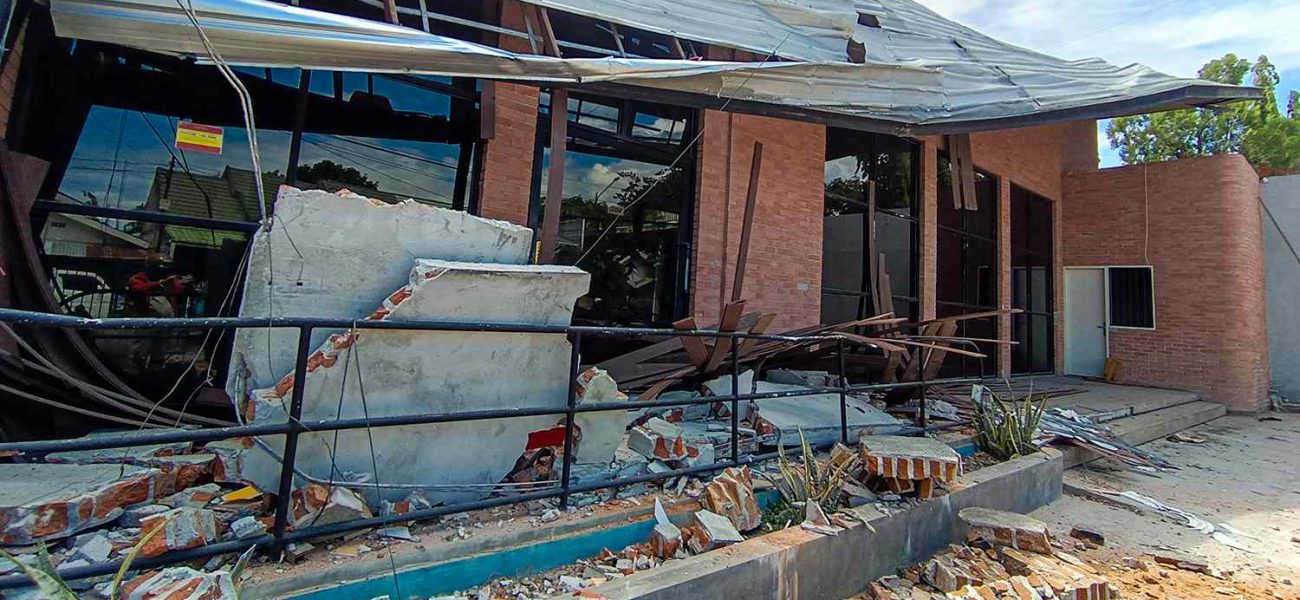
Initial reports painted a familiar picture of immediate aftermath. Collapsed mud-brick homes in remote villages, hotels in bustling market towns sustaining nasty cracks, and even key bridges suffering integrity issues. Balochistan, a vast and often volatile province of Pakistan, felt the jolt with particular intensity, its remote valleys and ancient mountain ranges absorbing the shock. The province, always on the geological frontier where the Arabian, Eurasian, and Indian plates converge, is no stranger to the earth’s capricious temper. But knowing it’s coming doesn’t make it any easier when your world literally shakes apart.
Local aid workers, often the first—and sometimes only—responders in these far-flung reaches, mobilized quickly. But their efforts are routinely constrained by scant resources — and formidable logistical hurdles. It’s not just a matter of reaching folks; it’s about providing lasting stability in an environment that often fights against it. We spoke to an emergency services coordinator in Quetta, who articulated a widespread frustration. He confirmed, (Awaiting official quote) in his weary voice. You’ve got communities cut off, livelihoods shattered, all while the state apparatus lumbers into action, eventually.
This incident—mild by global earthquake standards, devastating by local impact—unintentionally spotlights a lingering paradox in much of the developing world: immense human resilience paired with profound systemic fragility. For residents of places like Balochistan, the very ground they stand on represents both sustenance and sudden, indiscriminate destruction. And they’re accustomed to it, which shouldn’t be the case. It’s a tragic normalization, really.
According to the U.S. Geological Survey (USGS), this particular region experiences a significant number of seismic events annually, averaging several M5.0+ earthquakes every year. That’s a consistent, ongoing threat demanding consistent, ongoing solutions. But instead, post-disaster planning often falls into a predictable pattern of reactive aid and piecemeal reconstruction, rarely addressing the fundamental, underlying issues of substandard construction and inadequate public services. It’s a problem that plagues the entire subcontinent, a geological inevitability met with political temporizing. Think about the long-term human cost, the ripple effect on local economies. Who funds rebuilding for these folks who were already living hand-to-mouth? It’s usually a long, lonely road.
But the damage wasn’t contained to the immediate epicenter. Tremors were felt as far as Kabul, Afghanistan—a nation grappling with its own profound crises and certainly not in a position to absorb additional natural disasters. Over there, too, the structural integrity of older buildings remains a pressing concern, making even moderate quakes potentially catastrophic. And you just know—it always comes down to who has money, who has power, and who gets forgotten when the headlines move on. The victims in places like Balochistan or Afghanistan rarely have a strong lobby in the corridors of power. It’s a rough go for them.
📄 POLICY WIRE WHITEPAPER PUBLISHED: PAKISTAN'S NATIONAL SECURITY POLICY PRIORITIES
👉 READ BY CLICKING HEREWhat This Means
This minor earthquake isn’t just about broken masonry; it’s a sharp, uncomfortable commentary on regional governance and development. While a 6.7 magnitude event would certainly register anywhere, the disproportionate damage—a life lost, dozens injured, critical infrastructure compromised—in a relatively sparse area points to deeper structural deficits. It tells us that for all the grand pronouncements of development and progress, significant parts of Pakistan, Afghanistan, and indeed, much of South Asia, remain perilously vulnerable to natural forces. It’s an urgent economic question, really.
Economically, every cracked wall or damaged road represents an unbudgeted expense, a diversion of already strained resources that could otherwise fuel development or provide social services. Politically, the response to such incidents—whether swift and comprehensive or sluggish and tokenistic—directly impacts public trust and fuels local grievances. These are areas often plagued by separatist movements or feeling neglected by distant capitals. A bungled or indifferent relief effort only adds fuel to those fires, hardening attitudes against central authority.
From an international perspective, it underscores the need for robust disaster preparedness and resilience initiatives, particularly in highly seismic zones within developing nations. Ignoring these localized events means compounding future humanitarian crises — and instability. You’d think after all this time, all the aid, all the studies, we’d have figured out a better approach to keeping communities from falling through the cracks, wouldn’t you? This quake, for all its minimal headline impact, is another flashing red light for those concerned with stability and development across the broader South Asian region. It also quietly reflects the immense challenge countries like Pakistan face in building a truly modern infrastructure capable of withstanding both the elements and the relentless march of time. It ain’t an easy task, for sure.
And yes, as the earth settles back into its uneasy calm, the conversation—as it always does—shifts back to political maneuvers, economic forecasts, and the relentless noise of global affairs. But for a few thousand people, life just got harder, starker. It’s what happens when Mother Nature decides to remind you exactly who’s boss, especially in places where human systems are already buckling under their own weight. That’s the real story, isn’t it?