


Controversial Umpire’s Call Ignites Firestorm in South Asian Cricket
POLICY WIRE — Colombo, Sri Lanka — It isn’t often that a nought on the scoreboard generates more headlines than a century. But Wednesday’s contentious third-umpire intervention, granting a...

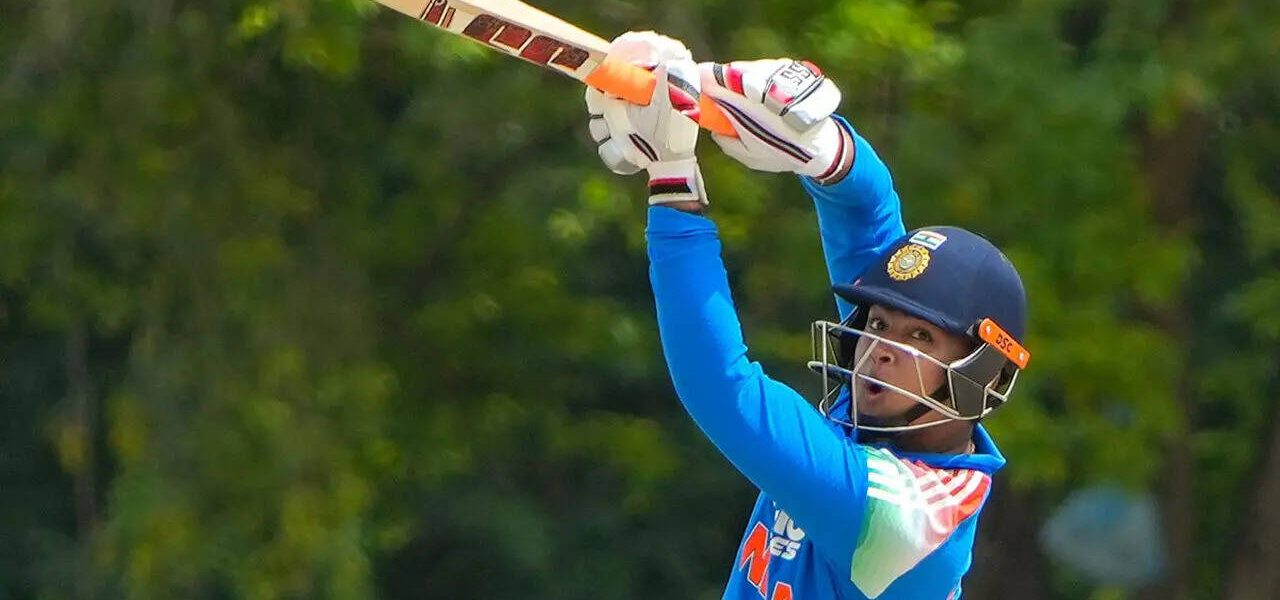
POLICY WIRE — Colombo, Sri Lanka — It isn’t often that a nought on the scoreboard generates more headlines than a century. But Wednesday’s contentious third-umpire intervention, granting a reprieve to India A opener Vaibhav Sooryavanshi in a Tri-Nation Series clash against Afghanistan A, did exactly that. The spectacle in Sri Lanka wasn’t just about cricket; it was a potent reminder of how modern technology and human judgment now collide—often spectacularly—under the relentless glare of South Asian expectations.
Sooryavanshi, a 15-year-old talent whose series performance has, to be fair, been modest, found himself entangled in a dispute that rippled through social media like a tsunami. A one-handed stunner by Afghanistan’s Faridoon Dawoodzai, plucked seemingly out of thin air, seemed to seal the young Indian’s fate. And for a moment, the Afghan players erupted, a moment quickly snatched back.
The incident went upstairs, as is the custom these days. And the third umpire, after what felt like an eternity of frame-by-frame scrutiny, delivered a verdict that had many scratching their heads. A fragment of the ball, it was determined, had made fleeting contact with the ground during the catch’s completion. (Awaiting official quote) was the call. A green light flashed, and a player with an evident struggle so far (scores of 14, 44, and 21 before this match, a stark contrast to his recent IPL 2026 performance) received an unlikely second life—his second in the immediate vicinity, even. His second reprieve for the day, in fact.
Fans, as one might imagine, didn’t hold back. Social media became a virtual coliseum. One user, clearly incensed, typed, (Awaiting official quote). Another, perhaps with an eye to the future, advised, (Awaiting official quote). Some, more pragmatic, conceded that the decision adhered to the technical letter of the law, suggesting the batter had earned the benefit of doubt. But the general sentiment seemed to be that the evidence of the ball touching the grass was, charitably, very hazy and unclear. You had to squint to see it, probably.
Cricket, particularly in South Asia, isn’t just a game; it’s a national obsession, a cultural touchstone that binds hundreds of millions across borders. Such perceived injustices, whether real or imagined, ignite fervent discussions. Imagine the stakes. For these ‘A’ team players, these tournaments are often the launching pad for international careers, a stepping stone to national pride and, quite often, financial security. An average cricket match in a major tournament can pull in over 200 million viewers across the subcontinent (Source: Broadcast Audience Research Council data, 2023), illustrating the sheer scale of the attention.
It’s not just the umpires making headlines either. Just days prior, Sooryavanshi had been at the epicenter of a heated on-field altercation with Sri Lanka’s Vishen Halambage, necessitating intervention to separate the players after a physical exchange. The BCCI, via secretary Devajit Saikia, subsequently had to issue a public call for players to focus on the game and avoid (Awaiting official quote). But, really, given the current environment, can anyone blame them for being swept up in it all? Young athletes are thrown into the spotlight; their every move, their every failure, magnified to an impossible degree. It’s a rough ride, that’s for sure.
📄 POLICY WIRE WHITEPAPER PUBLISHED: PAKISTAN'S NATIONAL SECURITY POLICY PRIORITIES
👉 READ BY CLICKING HEREWhat This Means
This incident, far from being a mere sporting footnote, possesses several interesting implications, politically and economically, particularly within the sensitive geopolitical landscape of South Asia. For one, it highlights the immense pressure placed on match officials, especially when wielding the double-edged sword of advanced technology. Decisions rendered after forensic video review can appear clinical, yes, but they often struggle to satisfy the emotional expectations of an audience deeply invested in national sporting narratives. The perception of unfair play, even if technically correct, can stir strong public sentiment, capable of escalating quickly in a region where sport and national identity are so closely intertwined. A dubious call, in any Indo-Afghan context, carries more weight than, say, a match between less passionately invested nations. It becomes a matter of regional pride.
Economically, the purity of the sport—or the perceived lack thereof—has tangible value. Fair play and robust umpiring are essential for maintaining viewer trust, which directly translates to sponsorship deals, advertising revenue, and the overall commercial viability of cricket in a market projected to grow exponentially. Questions about decision-making integrity can affect broadcast deals, erode fan loyalty, and potentially deter future investment. For young cricketers like Sooryavanshi, surviving a controversial call isn’t just about his score; it’s about his journey through an intensely scrutinized professional environment where every incident, every reprieve, every struggle is a public affair, dictating future opportunities and financial prospects in the sport’s lucrative ecosystem.
And let’s be frank: the increasing reliance on technology for decisions often places the technology itself, and its human operators, on trial. But it doesn’t remove the raw, emotional responses. It simply changes the target of the outrage from the player to the pixel. And in cricket, especially in South Asia, where fortunes can shift in a split-second and careers hinge on inches, this dynamic creates an unceasing, almost operatic, drama that keeps everyone hooked. Maybe it’s not bad for ratings, huh? It’s messy. It’s exhilarating. It’s modern cricket.