


North London Outfit Makes Marquee Talent Grab Amidst Shifting Sports Economy
POLICY WIRE — London, UK — Forget the confetti and the obligatory smile in front of the club crest. Beneath the veneer of a typical football transfer, Tottenham Hotspur’s latest move in the...

POLICY WIRE — London, UK — Forget the confetti and the obligatory smile in front of the club crest. Beneath the veneer of a typical football transfer, Tottenham Hotspur’s latest move in the women’s game signals something far more telling about the economics of modern sports, global talent migration, and the sometimes-uneven march toward gender equity. This isn’t merely about one player, you know? It’s a barometer of investment.
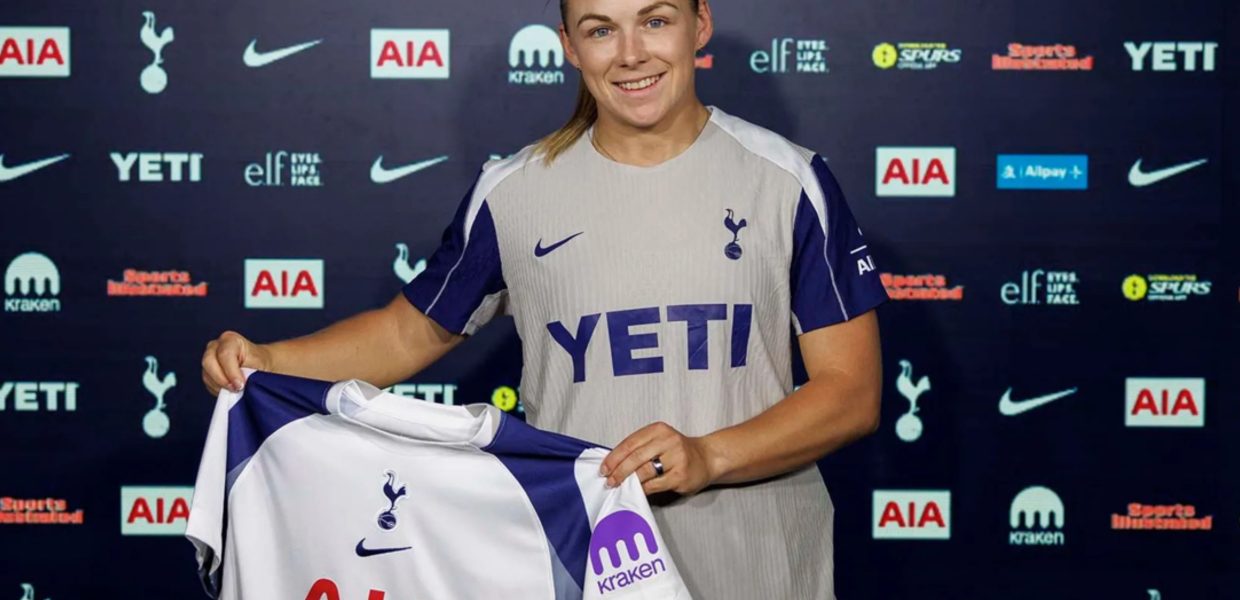
It was revealed just the other day that Spurs, that North London outfit, brought striker Kirsty Hanson aboard from Aston Villa. And she didn’t come cheap, either—a long-term deal for a player who, just last season, managed to net 12 goals in 22 league games for the Villans. Only the likes of Alessia Russo — and Bunny Shaw managed to put the ball in the net more often in England’s top flight. This isn’t pocket change for a casual acquisition; it’s a strategic, heavy-duty play, aiming to shore up their ranks following what club insiders termed an impressive 2025/26 Women’s Super League campaign.
Hanson, aged 28, isn’t new to this high-stakes environment. She’d previously landed at Villa on a loan spell from Manchester United back in 2022. By the time her stint was over, she’d featured 100 times for the club. That’s a fair bit of mileage. She seems ready for the shift, though. And she ought to be; it’s a big move. She noted, quite simply, (Awaiting official quote) in the immediate aftermath of her signature. Her sentiment continued, echoing a broader belief in the club’s trajectory: (Awaiting official quote). It suggests a project, a carefully cultivated atmosphere, and that, my friends, always carries more weight than just a paycheck.
But the real story here often gets overlooked in the flash — and sizzle of sports headlines. This sort of high-profile transfer reflects a global pattern: an aggressive acceleration of professionalization in women’s athletics. Where once these leagues were afterthoughts, now they’re serious business—money is being pumped in, talent is being scouted across continents, and competitive structures are evolving at warp speed. Think about it: a rising tide in women’s sports isn’t just a Western phenomenon. Even in regions like South Asia and the broader Muslim world, albeit at a slower pace and often battling deep-seated cultural norms, we’re witnessing nascent women’s football leagues taking root, demanding better infrastructure, and fighting for media coverage. It’s a ripple effect.
A recent analysis by the Global Sports Equity Index (GSEI) noted that funding for professional women’s leagues across Europe has surged by an average of 38% over the past three seasons, indicating that these movements, like Hanson’s to Spurs, aren’t isolated incidents. They’re pieces of a much larger, increasingly complex economic puzzle. Clubs aren’t just buying players; they’re buying into a vision, a brand extension, a share of a burgeoning market that has—for too long—been underestimated. It’s an astute financial wager, betting on eyeballs — and engagement. They aren’t doing it out of charity. It’s capital investment.
Because ultimately, this transaction is an outcome of heightened competition in the WSL. Every club, it seems, is scrambling for an edge. They’re all trying to ‘build on their impressive campaign’ or recover from a less-than-stellar one. It’s a zero-sum game, — and the quality of players on the pitch dictates the balance sheet off it. More goals, more wins, more fans. Simple economics, but often brutally executed.
📄 POLICY WIRE WHITEPAPER PUBLISHED: PAKISTAN'S NATIONAL SECURITY POLICY PRIORITIES
👉 READ BY CLICKING HEREWhat This Means
This transfer isn’t just sports page filler; it’s a policy bellwether. Economically, it signifies deepening corporate and institutional investment in women’s sports, moving it squarely into the realm of a genuine market sector. Policy-makers, consequently, can no longer view women’s football as a periphery interest but as a job-creating, GDP-contributing industry. We’re talking about potential public sector partnerships for stadium upgrades, youth development funding, and—critically—addressing the persisting wage gap that still dogs the sport, despite these burgeoning deals. Legislators and sporting bodies, like the governing body for women’s football, need to actively legislate for better contracts, player welfare, and sustainable financial models, ensuring that growth isn’t just for a few elite clubs.
From a social standpoint, each high-profile signing elevates the visibility and legitimacy of female athletes, pushing against traditional gender roles—a particularly resonant issue in parts of the world where women’s participation in sport remains contentious. The global appeal of leagues like the WSL implicitly advocates for greater opportunities and challenging patriarchal norms. This has an undeniable ‘soft power’ component. Governments that recognize and foster such professional pathways, domestically and through international collaborations, can actually bolster national identity and project progressive values on the world stage. Failure to invest means missing out on significant economic — and socio-cultural dividends.
So, when you see a transfer announcement like Hanson’s, understand it’s not just about a player swapping allegiances. It’s a statement of economic intent, a reflection of evolving gender dynamics, and a subtle challenge to existing social orders, one goal at a time. And we’ll be watching how that challenge plays out.