


Shadow Games at Sea: Russia’s Channel Scuffle Raises Eyebrows
POLICY WIRE — London, UK — Here’s a head-scratcher: an otherwise sleepy Thursday morning got a jolt when Moscow dropped a rather theatrical announcement. Picture this: a civilian yacht, plying...

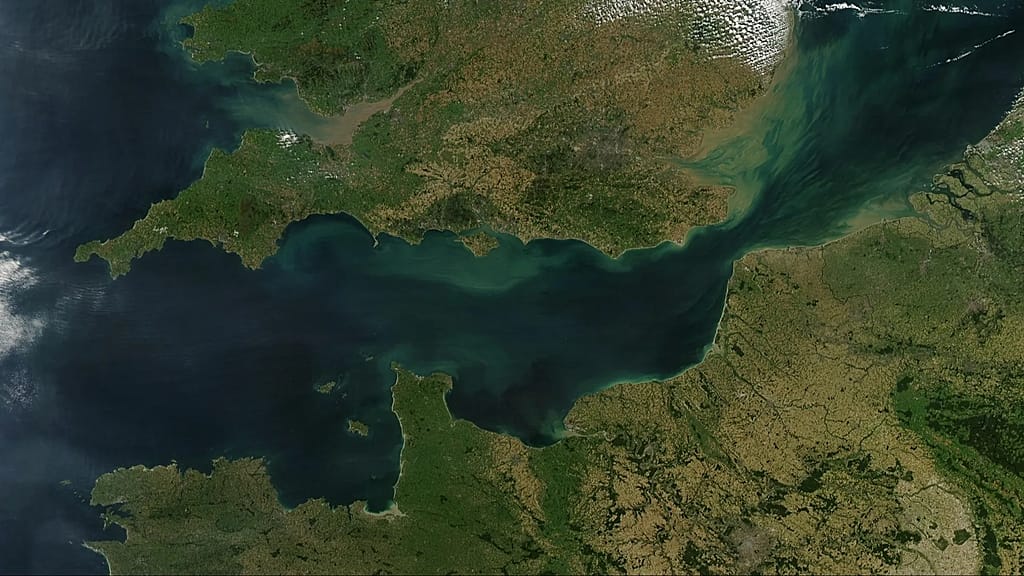
POLICY WIRE — London, UK — Here’s a head-scratcher: an otherwise sleepy Thursday morning got a jolt when Moscow dropped a rather theatrical announcement. Picture this: a civilian yacht, plying the busy currents of one of Europe’s most vital maritime arteries—the English Channel, mind you—allegedly veered too close to, well, something deemed important enough to warrant a robust response from the Russian naval forces patrolling the area. What exactly this mysterious vessel was up to, and what it was supposedly approaching, remains cloaked in the usual fog of international relations. But one thing’s clear: when the world’s navies start playing maritime bumper cars near major shipping lanes, people sit up.
It’s easy to dismiss such an incident as mere operational noise. A rogue pleasure craft, perhaps. But in the current geopolitical climate, particularly concerning a nation as prone to assertive naval maneuvers as Russia, few actions are truly innocent or isolated. Moscow’s claim of a yacht making a (Awaiting official quote) prompted a swift and decisive response—including, we’re told, warning shots. Just imagine: you’re enjoying a leisurely sail, — and suddenly, you’re a prop in a high-stakes Cold War remake. It’s certainly got the chattering classes, and some folks within the Royal Navy, wondering what in blazes is really going on beneath the waves or just over the horizon. Because let’s face it, yachts aren’t typically instruments of statecraft.
And yet, this particular event feels less like an accidental encroachment and more like a carefully orchestrated—or perhaps provocatively ignored—signal. The English Channel isn’t just a stretch of water; it’s a chokepoint, a bustling artery for trade, military movements, and a whole lotta folks just trying to get from one place to another. Its importance for European economies — and defense strategy is immense. You don’t just ‘accidentally’ wander into a sensitive zone while a major power’s warships are conducting drills or, as is often the case, monitoring each other’s maritime habits.
Because every square mile of sea in this region is routinely monitored by multiple intelligence agencies. To believe a recreational vessel could simply slip through without prior knowledge or some degree of intent feels a stretch—like asking a camel to thread a needle, but through a periscope. Was this yacht, perchance, operating as a surrogate? Or was it, more crudely, a convenient narrative for Russia to flex its muscles, assert its presence, and perhaps send a message to its Western counterparts about its freedom of movement, even in contested waters? One thing’s for sure, the term (Awaiting official quote) isn’t something casually thrown around in peacetime maritime encounters; it signifies intent.
Consider the broader context, particularly in regions that often feel the ripple effects of European skirmishes. For countries like Pakistan, strategically positioned at the crossroads of vital maritime routes connecting East and West, incidents in faraway channels still echo. The Strait of Hormuz or the Bab-el-Mandeb might be closer to home, but any disruption or perceived increase in global maritime instability, whether in the Suez Canal or the English Channel, creates unease for a nation heavily reliant on sea-borne trade and energy imports. Roughly 95% of Pakistan’s trade by volume and 85% by value is seaborne, according to the country’s Maritime Affairs Ministry. When sea lanes anywhere become hot zones, shipping insurance skyrockets, trade routes adjust, and ultimately, economies reliant on that free flow of goods feel the squeeze.
📄 POLICY WIRE WHITEPAPER PUBLISHED: PAKISTAN'S NATIONAL SECURITY POLICY PRIORITIES
👉 READ BY CLICKING HEREIt’s not just about a few boats; it’s about perceived security, the rule of law at sea, and the willingness of powerful actors to test those boundaries. What happens when a civilian vessel becomes entangled in geopolitical high drama? Whose rules apply? And who exactly decides what constitutes a (Awaiting official quote)? Moscow’s swift account, complete with its self-assigned justification, certainly left little room for nuanced interpretation from its side of the fence. This kind of event, however minor it might seem in isolation, feeds into a broader narrative of increasing militarization and heightened tension across the globe’s watery highways. It’s a reminder that even the most seemingly mundane interactions at sea can carry immense diplomatic and security baggage.
They’ve got quite the way of doing things, don’t they? And this isn’t just a naval incident. This is theatre, played out on the global stage, with a lot of ambiguity and — if we’re honest — a healthy dose of showmanship. It reminds you that even the most obscure maritime incident can sometimes be a harbinger of larger diplomatic battles, all dressed up in an inscrutable uniform.
What This Means
This episode, minor as it initially appears, fits snugly into Russia’s established pattern of projecting power and testing the resolve of NATO and its allies. Politically, Moscow is essentially reminding everyone that its naval capabilities extend well beyond its immediate territorial waters, even to key economic chokepoints in Europe. This isn’t a new strategy, of course; they’ve been doing it for years, sometimes with bombers skirting airspace, sometimes with ships shadowing others. But by escalating to (Awaiting official quote) against a civilian vessel—even one they label as behaving suspiciously—they’re pushing a specific psychological boundary. It says, ‘we’re here, we’re active, and we’re ready to respond with force if we deem it necessary, even in your backyard.’ Economically, this sort of bravado, when it plays out repeatedly, contributes to a low-level but persistent anxiety among shipping companies and maritime insurers. Every time there’s an incident like this, the ‘cost of doing business’ through these channels ticks up fractionally, affecting everything from energy prices to consumer goods, even for distant nations like Pakistan or Indonesia that rely on the stability of these trade routes. It’s a slow bleed rather than a sudden rupture, but it chips away at the perceived security of the global maritime commons. It’s also an unsubtle signal that naval powers view even commercial lanes as potential zones for ‘assertive’ maneuvers. This dynamic invariably draws in smaller states, often forcing them to align with larger maritime powers for protection or risk their own economic vulnerabilities becoming points of leverage.