


Real Madrid’s Costly Redemption: A Star Player’s Journey from Scapegoat to Sovereign
POLICY WIRE — Madrid, Spain — It’s a strange thing, isn’t it? One day you’re lambasted—the symbol of an expensive, often bewildering transfer policy—the next, you’re precisely what the most storied...

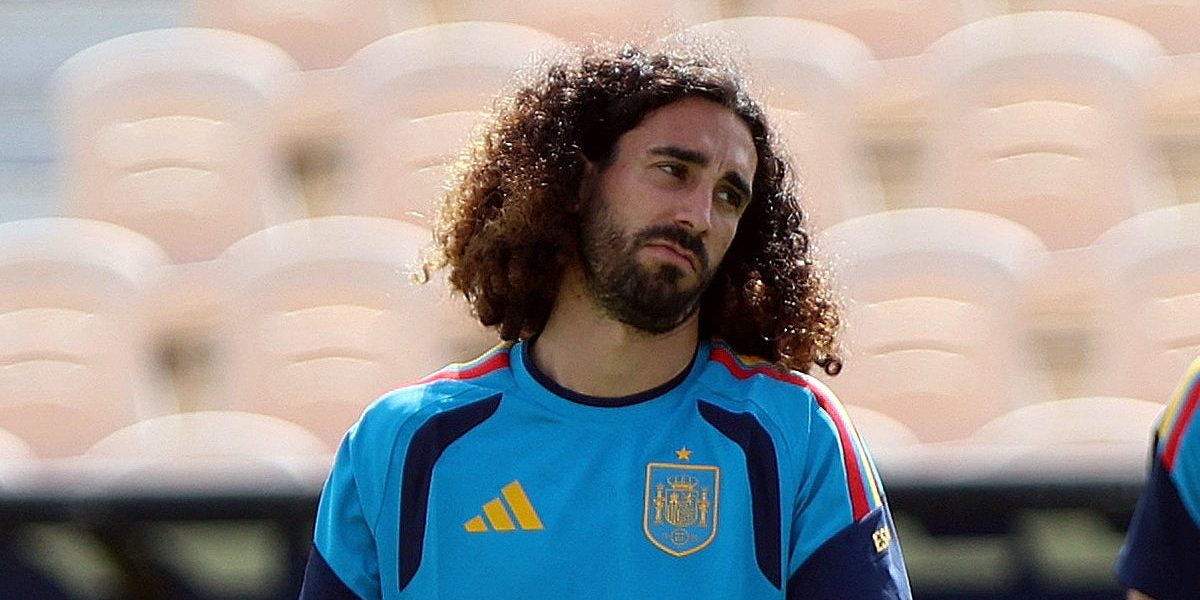
POLICY WIRE — Madrid, Spain — It’s a strange thing, isn’t it? One day you’re lambasted—the symbol of an expensive, often bewildering transfer policy—the next, you’re precisely what the most storied club in Europe pays nearly fifty million pounds to acquire. That’s the wild, untamed trajectory of Marc Cucurella, whose expected arrival at Real Madrid isn’t just another transaction; it’s a testament to the brutal, fickle nature of modern football’s high stakes economy.
Florentino Perez, ever the grand architect, recently cemented his position in the club’s latest elections, setting the stage for more familiar theatrics. He’s bringing back Jose Mourinho as manager—a move as predictable as a summer transfer window ending in frantic phone calls. Mourinho, you see, he needs big names, sure. But he also demands grit. He demands players who’ve seen the mud, scraped knees, — and still delivered. Cucurella, by many accounts, he fits that mold perfectly. He is poised to join Real Madrid from Chelsea in a blockbuster £47.5m deal, and an agreement was reached between the clubs. [QUOTE_PLACEHOLDER]
And what a deal it’s, especially for a player once eyed with deep skepticism at Stamford Bridge. The La Liga giants will pay an initial £43.15m (€55m) with a further £4.3m (€5m) coming in bonuses. This transfer represents a small loss for Chelsea, mind you, considering the Blues paying £62m to Brighton back in 2022. That’s a significant figure. Four years at Stamford Bridge, — and now, off to Spain. It tells a story. One of misjudgment, perhaps, or simply the time-honored tradition of an uncomfortable fit morphing into gold elsewhere. It’s a global market, remember. Always shifting, always churning through capital with astonishing speed.
But the true story here isn’t just about Chelsea’s accounting—though a nearly £15 million dip isn’t chump change, even for Premier League titans. It’s about a rebirth. Cucurella struggled initially at Chelsea before establishing himself as one of the best left-backs in the world. Talk about redemption. The 27-year-old has since carved out a role with European champions Spain, with who he thrived at Euro 2024 to make the team of the tournament. Imagine that. From fan forum fodder to Madrid’s next Galáctico—it’s enough to give a cynical old journalist whiplash.
Mourinho, with his return, is seeking to provide strength at full-back for the former Chelsea — and Man United boss. He’s always been about tactical discipline and mental fortitude, less so about raw flair—at least not initially. His teams are built from the back. Cucurella, the kind of worker bee who covers every blade of grass, fits that blueprint. This isn’t just a player swap; it’s a statement about a philosophy returning to one of the sport’s grandest stages. And it’s a statement with financial heft, illustrating the sheer economic muscle of Spanish football’s upper echelon, which continues to pull top talent despite broader European economic headwinds. Case in point: according to Deloitte’s Football Money League 2023, Real Madrid generated €831.4 million in revenue during the 2022/23 season, marking them as the highest-earning club globally. That’s some serious purchasing power, even after a losing season.
It gets you thinking, doesn’t it, about where this money flows? And how much the spectacle of a €55 million footballer consumes global attention. Look east. In Lahore or Karachi, the news of Cucurella’s move will spread like wildfire among football fanatics, igniting heated debates in tea shops and online forums. The Premier League and La Liga—they aren’t just European pastimes. They’re global enterprises, consuming viewership, merchandise sales, — and aspirations from Islamabad to Jakarta. The investment in these transfers, this colossal financial exchange, it represents more than just sport. It’s a form of soft power, a projection of economic confidence and cultural dominance that rivals traditional diplomacy, at times. And you don’t think for a second the folks in various foreign ministries aren’t taking notes on where capital is pooling. For an interesting parallel in how global capital and political maneuvers intertwine, check out how Gulf Waters Roil US-India Ties on Eve of G7 Summit—it’s a different arena, but the power plays feel similar.
What This Means
This transfer isn’t just about a left-back moving clubs; it’s a telling snapshot of the volatile, high-stakes ecosystem of elite European football. For Real Madrid, it’s a gamble on redemption, bringing in a player who, after a tricky start, rediscovered his elite form just in time for Euro 2024. It speaks to a clear strategy: identify talent, even if slightly tarnished, and integrate it into a squad designed to chase silverware under a proven, if occasionally controversial, manager. Perez’s ability to attract such talent and managers after an election victory solidifies his formidable, near-unassailable position at the club’s helm. He controls the narrative, he dictates the spending. It’s imperial. A king maker, really.
For Chelsea, it’s a financial markdown, reflecting perhaps some prior overspending, but it also frees up significant wage bills and squad space. And yes, a club of Chelsea’s stature can afford the hit. This isn’t insolvency; it’s market correction. It shows that even with enormous resources, clubs are still susceptible to the market’s unpredictable whims—and their own recruitment misses. The geopolitical ripple effect, while not immediately obvious in such a sporting transaction, is nonetheless present. When billions exchange hands, when massive corporations (because that’s what these clubs are) make these decisions, the economic gravity pulls in all sorts of directions, influencing everything from sponsorship deals to tourism and, eventually, a broader sense of a nation’s prestige. Football isn’t just a game. It’s an economic engine. And it’s a global language. People in Dhaka, they care just as much about who Madrid signs as folks in Marbella. But sometimes, they’re feeling the effects differently. Because while they celebrate a favorite team’s new signing, the economic shifts this signifies rarely benefit their local economies in any direct, meaningful way.