


Detroit River Crossing Defies Geopolitical Tensions, Nearing Completion
POLICY WIRE — Windsor, Canada — For years, it felt like an infrastructural ghost, a massive steel and concrete apparition caught in the crosshairs of populist bluster and cross-border wrangling. Now,...

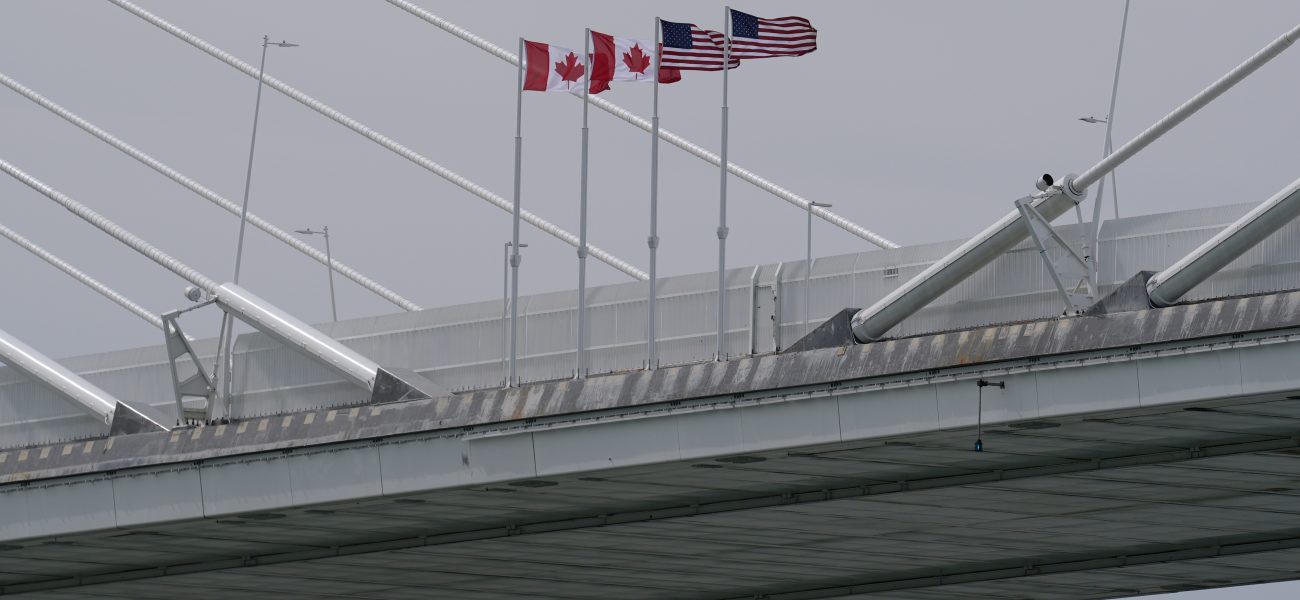
POLICY WIRE — Windsor, Canada — For years, it felt like an infrastructural ghost, a massive steel and concrete apparition caught in the crosshairs of populist bluster and cross-border wrangling. Now, defying predictions and political theatrics, the Gordie Howe International Bridge—a Canadian-backed behemoth stretching across the Detroit River—stands poised to open, completing a saga many thought would never reach its logical conclusion.
It’s a stark reminder that some realities, once set in motion, possess an almost obstinate momentum of their own. Even as headlines flared with talk of trade wars and border disputes, engineers kept pouring concrete, cables kept getting strung. The span, conceived to inject new life into one of North America’s busiest trade corridors, weathered storms that would’ve scuttled lesser projects. Remember, it was then-President Trump who [QUOTE_PLACEHOLDER] this very undertaking. But it seems Canadian perseverance (and pockets) outmatched American executive caprice this time around.
Mark Carney, the former Governor of both the Bank of Canada and the Bank of England, a man whose professional calm could likely soothe a stampede, recently affirmed that the bridge [QUOTE_PLACEHOLDER]. He’s on the board of the company managing the colossal build, so he knows a thing or two. It’s an undeniable, physical manifestation of decades-old aspirations to fortify the economic artery linking the two nations. This isn’t just about trucks crossing a river; it’s about the deep, if sometimes strained, economic symbiosis that binds Canada and the U.S.
The Ambassador Bridge, the current primary conduit, has served admirably but grown bottlenecked. Building new infrastructure isn’t just a nicety; it’s an absolute economic necessity, particularly for an economy as deeply intertwined as Canada’s is with its southern neighbor. You see it everywhere – supply chains are intricate, fragile beasts, and a single choke point can send tremors across entire industries. But here, across a narrow stretch of water, they’re building redundancy, resilience.
Financially, this project has always been more than just a toll bridge. Canada footed the bill – we’re talking billions, here – on the expectation that increased trade fluidity would pay dividends for both sides. The estimates suggest that bilateral trade crossing the Detroit River annually exceeds CAD$200 billion (USD$145 billion) according to data from Statistics Canada, emphasizing the massive economic throughput of this relatively small geographic point. That’s a serious chunk of change, an awful lot of goods moving, which helps you understand the sheer magnitude of the venture.
And, if you consider the broader context, what’s happening here speaks volumes about global infrastructure investment. Pakistan, for instance, a nation often grappling with its own infrastructure deficit and external investment concerns, has witnessed ambitious cross-border projects like the China-Pakistan Economic Corridor (CPEC). While different in scale and geopolitical ambition, both the Gordie Howe Bridge and CPEC underscore the belief that well-placed, modern infrastructure is a bedrock for future economic growth. Yet, the relative political stability underpinning Canadian-U.S. ventures often contrasts sharply with the intricate, multi-layered challenges of implementing mega-projects in South Asia, where internal dynamics and regional rivalries can sometimes slow or even derail progress.
📄 POLICY WIRE WHITEPAPER PUBLISHED: PAKISTAN'S NATIONAL SECURITY POLICY PRIORITIES
👉 READ BY CLICKING HEREThe Canadian strategy of shouldering the construction costs, then recovering through tolls, bypassed sticky American congressional funding issues. It was a pragmatic workaround, one born of necessity and, frankly, a desire to get the thing done without too much political baggage from the other side. This is why it moved ahead, quietly but steadily, even when some in Washington seemed keen on erecting barriers, not bridges. Because sometimes, when the politicians squabble, the pragmatists just get on with building.
But it’s not without its detractors; some folks, mainly those connected to the competing Ambassador Bridge, fought it tooth and nail. Legal battles, public relations campaigns – it’s been a bare-knuckle brawl at times. Yet, the sheer economic logic of adding capacity, of easing the movement of goods and people, proved too powerful to overcome in the long run. And for industries like the auto sector, which relies on just-in-time logistics, the benefits of another, faster crossing are, well, frankly immeasurable.
We’ve all seen projects languish for decades, stalled by funding, environmental concerns, or simple political inertia. This one didn’t. And that itself is a minor miracle. The Detroit River, for generations a symbol of industrial might and binational cooperation, is about to get a gleaming new monument to resilience, regardless of who’s making noise on cable news that particular week. Geopolitics can twist supply lines, but direct economic self-interest often finds a way.
What This Means
This bridge isn’t just concrete — and steel; it’s a geopolitical statement wrapped in asphalt. Its completion signals a victory for economic pragmatism over nationalist rhetoric. For Canada, it reinforces their commitment to long-term economic strategy, even when dealing with unpredictable allies. They invested in their own gateway, betting on trade fluidity despite headwinds. And they’re going to reap the rewards, strengthening crucial cross-border supply chains. For the U.S., it means enhanced trade efficiency for vital sectors without Washington having to open its own coffers for construction—a win-win, albeit one achieved via Canadian foresight. This outcome sets a template, showing that even with friction at the political top, foundational economic cooperation can, and must, continue. It’s also a quiet nod to the idea that strategic investments, patiently pursued, can overcome the loudest populist objections, offering a lesson that could inform infrastructure diplomacy in other complex regions.