


Mamdeni’s Lament: Progressive Discontent Rattles Democratic Foundations
POLICY WIRE — New York City, USA — It’s a sentiment bubbling just beneath the surface of campaign rallies, whispered in union halls, and now, stated baldly from a legislative dais: that the...

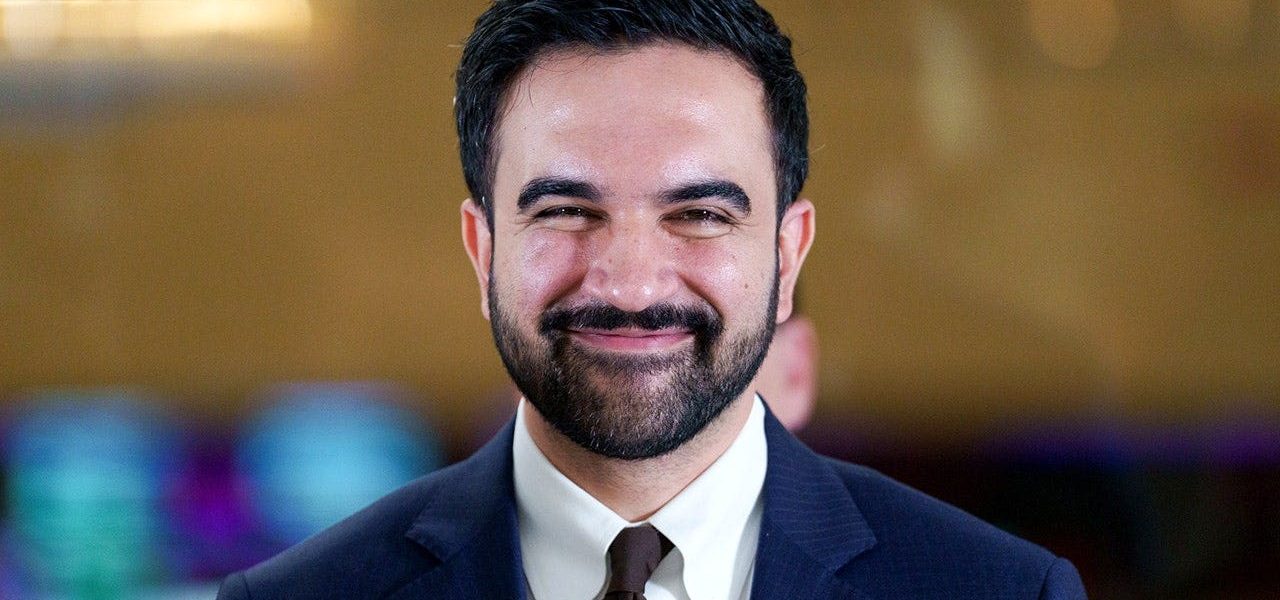
POLICY WIRE — New York City, USA — It’s a sentiment bubbling just beneath the surface of campaign rallies, whispered in union halls, and now, stated baldly from a legislative dais: that the Democratic Party, the grand old party of the working stiff, might’ve simply forgotten who it’s supposed to champion. Not everyone says it so plainly. But New York City Council Member Zohran Mamdani isn’t just anyone; he’s part of a new wave, unafraid to call balls and strikes. And his assessment? The party he ostensibly belongs to has frankly [QUOTE_PLACEHOLDER]
It’s a stark, almost unvarnished charge. One that resonates far beyond the concrete canyons of America’s largest metropolis. Mamdani, an Albany-elected representative whose political journey itself embodies the new Democratic demography—a son of Uganda and India, a Muslim voice in a city where diversity is both creed and conundrum—isn’t speaking in abstract political theory. He’s talking about rent checks people can’t make, food prices that pinch, and jobs that don’t pay enough to live a decent life, not even close. He’s talking about a gut feeling of being abandoned.
Because let’s face it, the political mainstream, particularly in the Democratic Party, seems increasingly obsessed with a brand of identity politics that, while important in its own right, often leaves behind the fundamental economic struggles haunting swathes of the electorate. And who benefits when working-class aspirations become an afterthought? Not the families striving paycheck to paycheck. Not the small business owners watching corporate giants gobble up everything in sight. It’s the kind of talk that usually gets you labeled a malcontent, or worse, a spoiler.
But the numbers back up the grumbling. For example, a 2022 analysis by the Pew Research Center showed that working-class voters, particularly white working-class voters who once formed a Democratic backbone, continue to drift toward the Republican Party, largely feeling economically disenfranchised and culturally ignored by their former political home. That’s not a glitch, that’s a trend. You don’t have to be a political scientist to see the writing on the wall; people vote their pocketbooks, and often, their pride.
His commentary throws a wrench in the usual D.C. narratives, suggesting that the problem isn’t just about messaging or campaign optics. It’s structural. It’s a question of priorities, of where the party directs its legislative muscle — and its fundraising dollars. Think about it: a party born from the sweat of factory floors and farm fields, now often seems more comfortable rubbing elbows with tech executives and Wall Street benefactors, its focus perhaps drifting towards the highly educated professional class rather than those still punching clocks.
This isn’t just an American phenomenon, either. Walk the streets of Karachi, or spend time in any South Asian megacity, and you’ll hear similar complaints about left-leaning parties that claim to represent the common person but somehow fail to address their most basic needs. In Pakistan, for instance, populist rhetoric often fills the void left by established parties perceived as out of touch, catering only to the elite. The sense of a political class detached from the day-to-day grind of the laborer, the small vendor, or the struggling family, is depressingly universal. Human capital markets in places like Karachi feel the tremors of such policy disconnects deeply, influencing everything from local governance to international investment flows.
📄 POLICY WIRE WHITEPAPER PUBLISHED: PAKISTAN'S NATIONAL SECURITY POLICY PRIORITIES
👉 READ BY CLICKING HEREMamdani, one of the few elected officials in the US whose personal and political identity deeply connects him to the Muslim world and global South, brings a unique perspective to this internal critique. His words resonate with a growing chorus of voices that see traditional party structures as failing to address profound economic inequalities, leading to a general disillusionment with electoral politics, everywhere from New York to New Delhi.
What This Means
Mamdani’s sharp take isn’t just some fringe critique; it’s a symptom of a deeper fracture within the Democratic Party itself and, by extension, the broader American political landscape. For starters, it signals a significant ideological skirmish between the progressive left, which often emphasizes direct economic relief and wealth redistribution, and the more centrist wing, which tends to prioritize broader coalition building and appeals to suburban voters. This tension won’t just resolve itself. If the party can’t bridge this chasm, it risks alienating core constituencies and struggling to articulate a coherent economic message that truly excites working-class voters of all backgrounds. They’re trying to win, after all, — and you don’t do that by alienating your base.
Economically, this critique points to the persistent issue of real wage stagnation and soaring costs of living that plague millions of Americans. It means that without aggressive policy interventions—think stronger unions, universal healthcare, and robust affordable housing programs—the perceived disconnect will only widen. This isn’t just about party fortunes; it’s about the very stability of a society grappling with profound wealth disparities. And, on a global scale, it highlights a common vulnerability in democratic systems: when established parties neglect the material conditions of their populace, fertile ground emerges for populist movements, regardless of their ideological leanings. This internal party strife, therefore, isn’t simply a local spat. It’s a barometer for widespread socio-economic discontent, signaling rocky waters ahead for traditional political establishments on both sides of the Atlantic and beyond.