


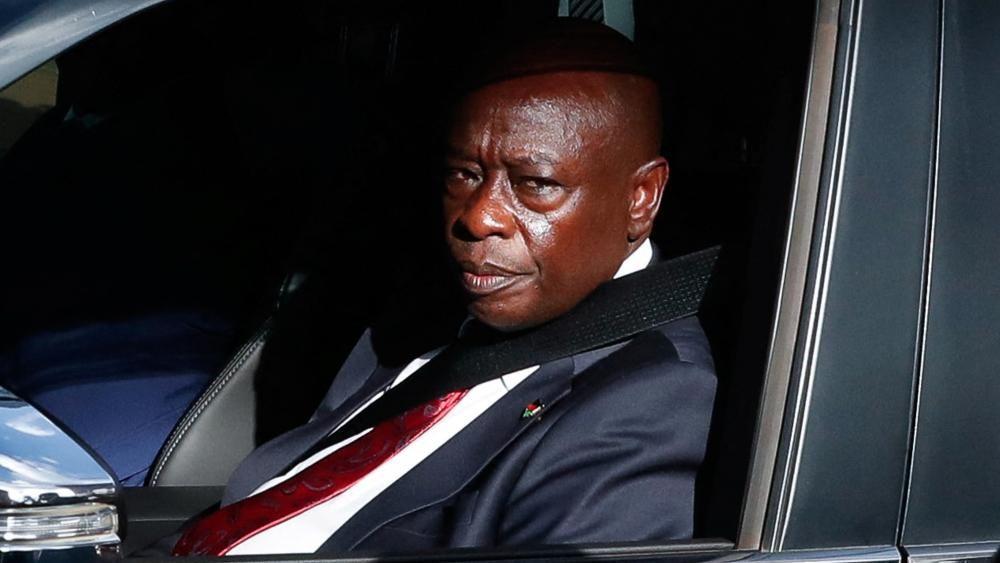
Judicial Hammer Falls: Kenyan Ex-Deputy President’s Impeachment Stands
POLICY WIRE — Nairobi, Kenya — The slow grind of institutional justice, that often tedious spectacle of filings and appeals, rarely captures headlines with the immediate flash of a coup or a chaotic...

POLICY WIRE — Nairobi, Kenya — The slow grind of institutional justice, that often tedious spectacle of filings and appeals, rarely captures headlines with the immediate flash of a coup or a chaotic election. But sometimes, its methodical conclusion can reshape a nation’s power structures more profoundly. For a seasoned political operator in Kenya, this week brought not a flash, but the resounding, dull thud of a door closing—permanently—on an old chapter.
It wasn’t an unexpected outcome, not really, but its finality still holds weight. The Supreme Court’s pronouncement on Tuesday wasn’t about finding new evidence or revisiting old grievances. No, it was simply about affirmation, endorsing what a lower court had already decided. And that’s what makes it so brutally effective, leaving no room for the customary political brinkmanship or strategic obfuscation. The long-running saga concerning the nation’s former second-in-command, a political figure accustomed to navigating Kenya’s often tempestuous currents, has now formally concluded with his impeachment firmly upheld. You’ve gotta wonder, how many careers end not with a bang, but with a stack of judicial documents?
This decision means the ex-deputy president’s hopes for a comeback, however faint they might’ve been, are essentially dead in the water. The original impeachment stemmed from allegations of misconduct and a pattern of behavior deemed inconsistent with his office—charges often lobbed in African politics, sometimes with substance, sometimes merely for sport. But this time, they stuck. The judicial machine, ponderous though it may be, moved with an unyielding certainty from legislative removal to high court validation.
Such verdicts always carry an undertone for broader regional governance. It’s a bit like watching a similar play unfold on a different stage, say in Pakistan. Just last year, an ex-Prime Minister in Pakistan found himself entangled in a dizzying array of legal battles, facing arrest and multiple convictions. The political systems, while distinct, grapple with surprisingly similar demons: corruption accusations, questions of judicial independence, and the perennial struggle between executive power and constitutional limits. One leader’s downfall often sparks uneasy introspection elsewhere, particularly where democratic institutions are still, let’s be frank, figuring things out.
In Kenya, the immediate catalyst for the initial parliamentary vote against the former deputy was tied to accusations of [QUOTE_PLACEHOLDER], which subsequently triggered the legislative process. These aren’t trivial matters; they cut right to the core of public trust. The allegations involved [QUOTE_PLACEHOLDER], a series of financial missteps or, depending on your perspective, strategic maneuverings, that ultimately proved too much for the legislative body to stomach. A Transparency International report from 2023 indicated that 77% of Kenyans perceive corruption in public office as a significant problem, illustrating just how sensitive the populace is to such claims.
The man himself, once considered a shoe-in for higher office, finds his path blocked not by voters, but by judges. It’s a harsh reality check. He had argued that [QUOTE_PLACEHOLDER], suggesting procedural irregularities or politically motivated machinations at play. But the Supreme Court, the final arbiter, was having none of it. They meticulously dissected the arguments, concluding that the original impeachment process, for all its political theatre, was conducted within the confines of the law.
📄 POLICY WIRE WHITEPAPER PUBLISHED: PAKISTAN'S NATIONAL SECURITY POLICY PRIORITIES
👉 READ BY CLICKING HEREBut there’s more to it than just one politician’s career. The ruling reaffirms the independence, or at least the perceived independence, of Kenya’s judiciary. And that’s a big deal. For a nation grappling with its own internal divisions and the constant threat of political instability, a judiciary that can stand firm, even against powerful individuals, provides a measure of much-needed ballast. It says, essentially, that no one is above the law—or at least, that’s the message the courts want to send. And they’re sending it loud and clear.
What This Means
This decision is way more than just a setback for an ambitious politician. It’s a loud declaration about institutional power in Kenya, establishing a precedent that’s bound to echo through future administrations. First off, it reinforces the legislative branch’s authority to hold executive figures accountable—something not always a given in nascent democracies. When courts back Parliament’s impeachment decisions, it strengthens the checks — and balances system, at least in theory.
Economically, predictable legal frameworks are pretty big. Foreign investors, often spooked by political uncertainty, tend to look more favorably upon countries where the rule of law appears to function robustly. Even if it’s just one prominent case, the notion that courts aren’t simply pawns in a political chess game can inject a tiny bit of confidence. But the flip side is that high-profile convictions can also be seen as an ongoing political instability, fueling doubts about who’s truly in charge, and for how long. Then there’s the political fragmentation it might cause. Factions supporting the impeached leader aren’t just going to disappear; they’ll likely regroup, perhaps leading to new alliances or deepened rifts ahead of the next election cycle. The real impact on ordinary citizens, of course, comes down to whether this judicial firm hand actually translates into less corruption and better governance, not just more political drama. Because for a guy sitting in Karachi, watching leaders get ousted for various charges, the core problem remains: does it make a difference for the price of bread or the state of the infrastructure? Sometimes, no. But this kind of verdict, it’s a moment. A turning point, possibly.