

Israel’s Frontier Bounties: Attracting Educators to the Gaza Shadowlands
POLICY WIRE — Tel Aviv, Israel — There’s a particular kind of quiet that settles over a classroom just as a missile siren begins its wail. Not the usual studious silence, but an immediate, almost...

POLICY WIRE — Tel Aviv, Israel — There’s a particular kind of quiet that settles over a classroom just as a missile siren begins its wail. Not the usual studious silence, but an immediate, almost involuntary hush as children instinctively duck under desks. This isn’t some historical account; it’s just Tuesday for educators in Israel’s Gaza envelope. So, how does a government convince someone to step into that reality, year after volatile year?
It turns out, money talks—or at least, the Israeli government hopes a hefty bonus can speak louder than the persistent rumble of regional instability. Because that’s what we’re talking about: an audacious bid by Jerusalem to stabilize its communities skirting the Gaza Strip, a region forever caught between normal civilian life and sudden, brutal conflict. The state’s dangling a plump 72,000 New Israeli Shekels (that’s roughly $20,000 USD, give or take currency fluctuations) as a grant for teachers and psychologists willing to ply their trade right there, on the brink. Think of it as a hazardous duty pay for minding the future, only for the highly educated.
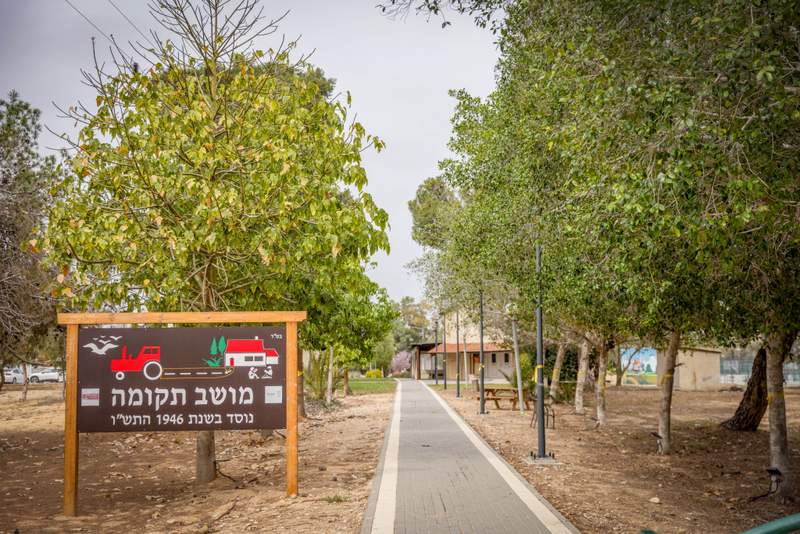
It’s not exactly a revelation that living — and working near a perpetually contested border isn’t everyone’s dream gig. Communities in towns like Sderot or Netivot, for example, have endured an onslaught of rockets, incendiary balloons, and periodic military operations for two decades now. Yet, schools need to function. Children, well, they need their teachers. And perhaps even more, they need their psychologists to navigate the kind of trauma most kids only see in war movies. But retaining good people in such circumstances? It’s a proper uphill battle.
“We recognize the extraordinary commitment these professionals make, not just to education, but to the very resilience of our communities on the front lines,” stated Eli Cohen, Israel’s Minister of Intelligence (and a former Economics Minister himself), in a conversation with this journalist. “This isn’t merely an incentive; it’s an acknowledgement of a unique form of national service. We simply can’t let these communities wither, and education is its backbone.” You can’t argue with the sentiment, though some might quibble about the price tag versus fundamental geopolitical shifts.
And then there’s the nuance: It’s not just a grant. It’s a public policy instrument aimed squarely at human capital retention in an arena where, frankly, the market might otherwise struggle. This isn’t dissimilar to how organizations or even states attempt to manage talent in other complex, high-risk environments globally—like attracting engineers to remote Siberian outposts, or—closer to home—retaining civil servants in Pakistan’s Khyber Pakhtunkhwa province, adjacent to Afghanistan’s volatile border. The concept of a human capital market, in all its brutal calculus, remains remarkably consistent across varied geographies.
According to a 2022 report from the National Insurance Institute, teacher attrition rates in Israel’s ‘priority areas’—which include the Gaza border region—stood at 18.5%, significantly higher than the national average of 12.3% for similar demographics. Those numbers don’t lie. They tell a story of constant flux, of educators weighing their calling against the daily anxiety. So, yes, the grant’s meant to put a thumb on the scales.
Defense Minister Yoav Gallant, a man not prone to flowery language, underscored the wider objective. “Our citizens in the south deserve not only protection but normalcy, a future,” he reportedly stated to a closed committee last month. “This financial commitment helps ensure that. It’s part of our comprehensive security posture, an investment in sustained morale as much as in intellectual infrastructure.” He’s not wrong. It’s hard to fight a war, or even just live your life, if your kids can’t get an education because no one’s willing to teach them.
What This Means
This initiative, while seemingly about education and social services, carries significant political and economic weight. Politically, it signals Israel’s unwavering commitment to maintain and strengthen civilian presence in the Gaza border communities. It’s a message of resilience, a declaration that these towns aren’t expendable outposts but integral to the state’s fabric—and security. Critics might view it as an attempt to normalize an abnormal situation, essentially paying people to endure an untenable security reality rather than solving the underlying conflict. Economically, the grant represents a considerable governmental outlay, betting that stability and an educated populace will, in the long run, foster local economies and justify the expense.
But the ramifications stretch further. For nations across the broader Muslim world, particularly those grappling with their own contested borders or internal insurgencies, Israel’s tactic serves as an interesting case study. From Pakistan’s struggle to manage and integrate populations along its Durand Line to efforts by various states to maintain services in restive regions, the challenge of attracting and retaining skilled professionals in high-risk zones is universal. Against a backdrop of persistent Middle East tensions, Israel is opting for a cash injection to shore up its human foundation—a gamble that will undoubtedly be watched closely by policymakers far beyond its own contentious borders.