


Interstate Tragedy Ignites Scrutiny on Public Safety Negligence in Albuquerque
POLICY WIRE — Albuquerque, New Mexico — Sometimes, it’s the casual Saturday night journey, the innocuous rumble of highway traffic, that rips apart lives with startling speed. The flash of blue...

POLICY WIRE — Albuquerque, New Mexico — Sometimes, it’s the casual Saturday night journey, the innocuous rumble of highway traffic, that rips apart lives with startling speed. The flash of blue lights, the tangle of metal, the grim aftermath—it all unfurled on Interstate 25 recently, yet again, as New Mexico’s roads claimed another victim. This wasn’t some novel crisis. It was a stark, almost predictable, iteration of a long-standing national tragedy, made acutely local on Albuquerque asphalt.
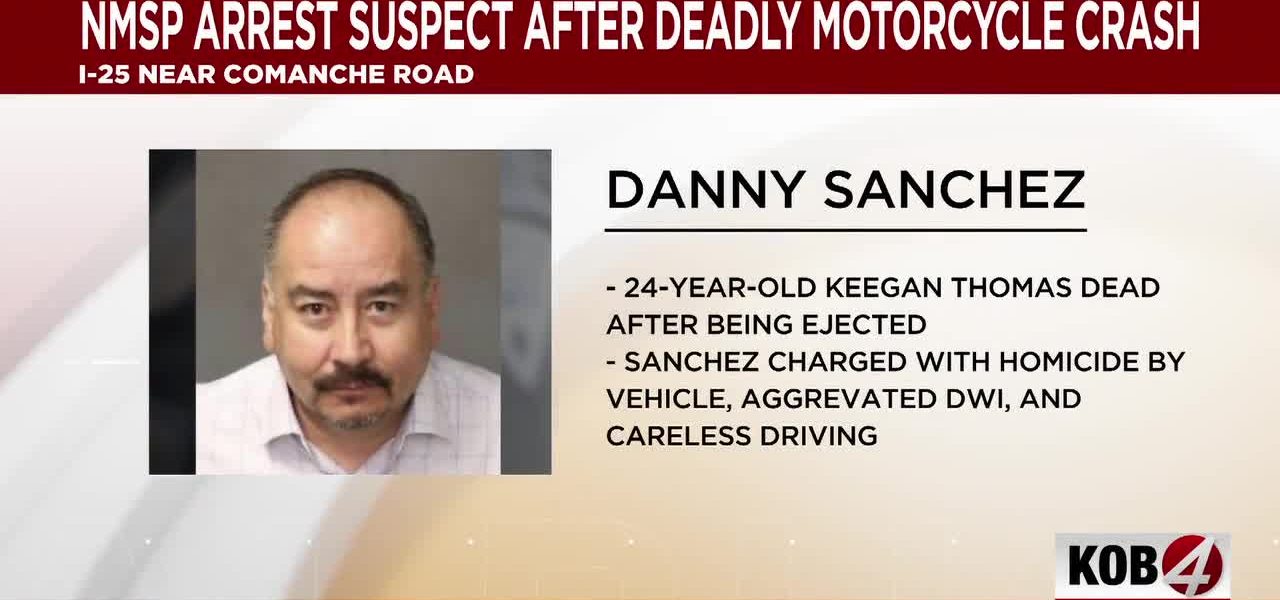
Law enforcement confirmed the arrest of Danny Sanchez, 58, in connection with a deadly crash that left Keegan Thomas, a young man of 24, dead. It wasn’t an accident, per se, but rather an alleged consequence of egregious judgment. The incident happened sometime before 11:54 p.m. Saturday, a timeline that underscores how quickly an ordinary evening can spiral into irreversible loss. Thomas, aboard his motorcycle, encountered a BMW allegedly driven by Sanchez, an encounter the State Police say led to his death. And we’re left with the perennial question: at what point do preventable tragedies cease being isolated incidents and instead expose systemic vulnerabilities?
Sanchez now faces a suite of serious allegations. He’s been charged with vehicular homicide, aggravated DWI, — and careless driving. State Police arrested him for DWI after he allegedly ran into a motorcycle. These aren’t minor infractions; they paint a picture of severe negligence, an apparent disregard for the sanctity of public roadways and the lives traversing them. The facts, as laid out by investigators, are stark: Sanchez is accused of rear-ending the motorcycle with his BMW. The collision had the devastating effect of ejecting Thomas from his motorcycle. Responders tried their best, giving aid at the scene, but Thomas was taken to the hospital where he died.
Investigators, those folks who sift through wreckage for answers, reported finding the BMW with damage “consistent” with damage to the motorcycle. It’s a chillingly clinical detail, suggesting a collision of force, an undeniable physical narrative told in twisted metal. But physical evidence, while crucial, only tells part of the story. The rest lies in the societal fabric that permits such events to occur with unsettling frequency. It isn’t just about individual responsibility, though that’s paramount; it’s also about collective failure, the political and social will (or lack thereof) to truly curb this menace. Our road safety systems, enforcement mechanisms, — and even public awareness campaigns are perpetually challenged.
In many parts of the world, including rapidly urbanizing centers across Pakistan, traffic fatalities remain a scourge. Places like Karachi or Lahore often contend with overwhelmed infrastructure, a high volume of uncertified drivers, and — let’s be honest — inconsistent enforcement of traffic laws. It’s a different context, sure, with different vehicles and varying levels of urban planning, but the underlying human cost of impaired or reckless driving resonates across borders. They’re wrestling with similar demons of public safety — and accountability. The challenge for policymakers, from Islamabad to Santa Fe, is to transform data into definitive action, to make our roads — for everyone, but particularly vulnerable motorcyclists — less lethal. The U.S. National Highway Traffic Safety Administration (NHTSA) reported 36,096 traffic fatalities in 2019 alone, a statistic that underscores the chronic, nationwide scope of this problem, with DWI incidents comprising a significant percentage.
📄 POLICY WIRE WHITEPAPER PUBLISHED: PAKISTAN'S NATIONAL SECURITY POLICY PRIORITIES
👉 READ BY CLICKING HEREThe alleged actions of Danny Sanchez illustrate a profound personal miscalculation with tragic, terminal outcomes. It reminds us that behind every statistic of road fatalities are names, families, and futures extinguished far too soon. For Thomas’s family, a casual Saturday night in Albuquerque has morphed into an unbearable emptiness, a permanent reminder of a societal ill that we simply haven’t conquered.
What This Means
This incident, far from being isolated, serves as a sharp reminder of the perpetual challenge faced by state and local governments in maintaining public safety on our thoroughfares. New Mexico, a state with significant stretches of highway and varying law enforcement presence, grapples with high rates of alcohol-related crashes. And politically, every such tragedy creates pressure, whether subtle or overt, on legislators and law enforcement agencies. We’re talking budgetary allocations for increased DWI patrols, the efficacy of judicial sentencing, and funding for public health campaigns aimed at changing deeply ingrained behavioral patterns. But it’s never just a simple fix; there are always complex social dynamics at play. Economic costs also mount—think about emergency response, hospital care, judicial processes, and lost productivity. Those aren’t insignificant. It’s an issue with both political and economic ramifications that ripple through communities, especially as population density grows and our roads become more congested.
The tragedy highlights the need for a multi-pronged policy approach, moving beyond reactive policing to proactive community engagement and perhaps more stringent penalties for repeat offenders. You’ve got to ask: are we doing enough? Or is this another moment where the outrage is fleeting, until the next headline? The answers, I suspect, lie not just in new laws, but in a collective recommitment to safe, responsible public conduct, perhaps even looking at international comparisons for best practices—like how certain developing nations are bolstering traffic enforcement amid burgeoning vehicle populations. Because ultimately, reducing these fatalities isn’t just a police problem, it’s a policy problem, an economic problem, and, indeed, a human problem.