


Paper Trail Blunder: USDA Botches State Line on Gruesome New Mexico Screwworm Case
POLICY WIRE — Lea County, N.M. — In the grand theatre of federal bureaucracy, where precise geographical demarcations usually reign supreme, a small parasitic fly larvae has managed to throw a wrench...

POLICY WIRE — Lea County, N.M. — In the grand theatre of federal bureaucracy, where precise geographical demarcations usually reign supreme, a small parasitic fly larvae has managed to throw a wrench into the machinery, highlighting not just a grim biological threat but also a puzzling administrative lapse. It wasn’t the nature of the affliction that first grabbed attention, though that’s plenty unsettling on its own—it was the USDA’s initial fumble over which state got to claim the dubious honor.
See, for a brief, bewildering stretch, officials confidently pinned the blame—or rather, the locale of the grotesque New World screwworm discovery—on Texas. A routine check, one might assume. Until, that’s, someone noticed the dog, the actual warm-blooded victim at the heart of this unfolding, creepy-crawly drama, actually lived in New Mexico. Not just a state over, but across the border, presenting the Land of Enchantment with its inaugural recorded case. The correction came quickly enough, but it makes you wonder what other geographical assumptions might be floating around, just waiting for a diligent clerk to double-check the fine print. Bureaucracy, it appears, moves in mysterious ways, — and sometimes, those ways are just plain sloppy. [QUOTE_PLACEHOLDER]
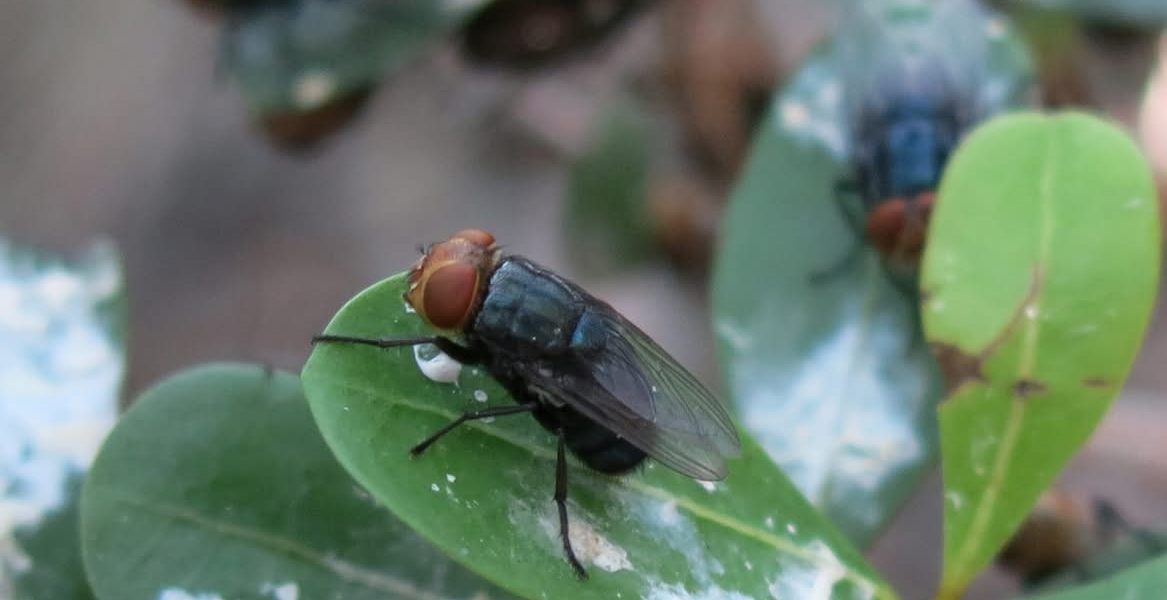
The creature itself, for the uninitiated, is the larva of a parasitic fly that finds warm-blooded animals its dinner table, devouring living tissue from the inside out. It’s a beast capable of causing untold suffering and, left unchecked, devastating economic consequences. Historically, USDA data indicates that before eradication efforts, New World screwworm inflicted an estimated annual economic loss of over $500 million on livestock industries in the U.S., Mexico, and Central America combined.
It all began, rather prosaically, when a veterinarian operating in Andrews County, Texas—a stone’s throw, perhaps literally, from New Mexico’s Lea County—sounded the alarm. That vet saw something alarming on a dog, a signifier that has sent shivers down the spines of animal health experts for generations. The USDA confirmed it. Initially, they said Texas, then, “officials then reattributed the case to New Mexico.” And just like that, the map changed for the national parasite watch.
Now, they’re scrambling. They’re claiming it’s an isolated incident, “USDA believes the case is isolated,” though one can’t help but raise an eyebrow, given their immediate breath says, “they don’t know the dog’s recent travel and exposure history.” A curious juxtaposition, isn’t it? On one hand, isolated; on the other, clueless about origin. And here’s Under Secretary for Marketing and Regulatory Programs, Dudley Hoskins, chiming in with the kind of carefully calibrated official-speak we’ve all come to expect: “This situation is evolving and we expect new information to emerge as our investigation continues.” Indeed, inquiries into basic geography do tend to “evolve.” He continued, “USDA is committed to sharing what we learn quickly, accurately and transparently so animal owners and local communities have the information they need to stay vigilant.” And, “We’re working closely with our partners in New Mexico, Texas and across the region to ensure we identify, contain and respond to any potential cases as swiftly as possible.”
Swiftly, accurately, transparently—words that seem to take on a particularly ironic hue when the initial public declaration was, quite simply, incorrect. But such is the nature of information flow in the age of rapid reporting — and even more rapid retraction. The priority now, — and rightly so, is containment. Federal and state officials have dusted off “a federal response playbook,” a document whose very existence hints at a past—and perhaps future—battles. The USDA is, at least, giving us actionable advice: regular inspection of animals for draining wounds, maggots, discomfort, and lesions near body openings. Catch it early, or face a ghastly predicament.
📄 POLICY WIRE WHITEPAPER PUBLISHED: PAKISTAN'S NATIONAL SECURITY POLICY PRIORITIES
👉 READ BY CLICKING HEREBut how does an eradicated pest, last seen stateside in the 1960s, reappear? This isn’t just a concern for America’s ranchlands. In places like Pakistan, a country heavily reliant on its agricultural and livestock sectors, the sudden reappearance of such a devastating parasite would send immediate shockwaves through the rural economy. Where farmers often operate on razor-thin margins, and veterinary infrastructure might be less robust than in the U.S., early detection and accurate attribution become not just bureaucratic inconveniences but existential threats. Imagine the scramble for resources, the cross-border political tensions if such an outbreak were traced to an adjacent nation, or if, heaven forbid, initial reports misidentified the origin.
Such discrepancies aren’t just a simple mix-up; they delay precise resource allocation, divert precious attention, and—critically—erode public trust. And we’ve seen trust become a hot commodity lately, particularly in areas touching public health, as chronicled by pieces discussing even the fight against fentanyl’s shadow.
What This Means
This incident, though localized to a single dog in a largely rural county, carries more weight than a casual observer might think. First, it underscores a fundamental vulnerability in cross-jurisdictional surveillance — and reporting. The initial misattribution to Texas, even if quickly corrected, demonstrates a friction point. For a creature like the New World screwworm, which reproduces quickly and devastates host populations, even a slight delay in correct identification and geographical pinning could mean the difference between a contained outbreak and a regional disaster.
Economically, livestock health is an underpinning of many agricultural states. The cost of an unchecked NWS spread—measured in animal deaths, veterinary expenses, and trade restrictions—would be astronomical. This isn’t just about a dog; it’s a dry run, perhaps, for how quickly authorities can react to threats against a significant chunk of the national food supply. Politically, the response—or missteps in it—could become fodder for state versus federal blame games, especially if it expands. This sort of precise bureaucratic misfire in a highly sensitive domain isn’t a good look for the USDA. It reinforces a subtle yet unsettling narrative: even when facing clear and present dangers, the foundational administrative layers can sometimes wobble. And when those layers wobble, the repercussions—for animals, for farmers, for states, and even for trade—can be severe. One hopes the subsequent response is more accurate than the initial dispatch.