


Concrete Dreams: Madison Square Garden Roars as Knicks Chase Elusive Crown
POLICY WIRE — New York, United States — It isn’t just basketball, not really. What transpired on Monday night at Madison Square Garden was a study in urban catharsis, a visceral roar echoing through...

POLICY WIRE — New York, United States — It isn’t just basketball, not really. What transpired on Monday night at Madison Square Garden was a study in urban catharsis, a visceral roar echoing through the canyons of Manhattan. After decades—and it has been decades—of longing, a city, known globally for its unyielding hustle and sky-high expectations, saw its hopes condensed into 48 minutes of frantic play, and all the attendant implications.
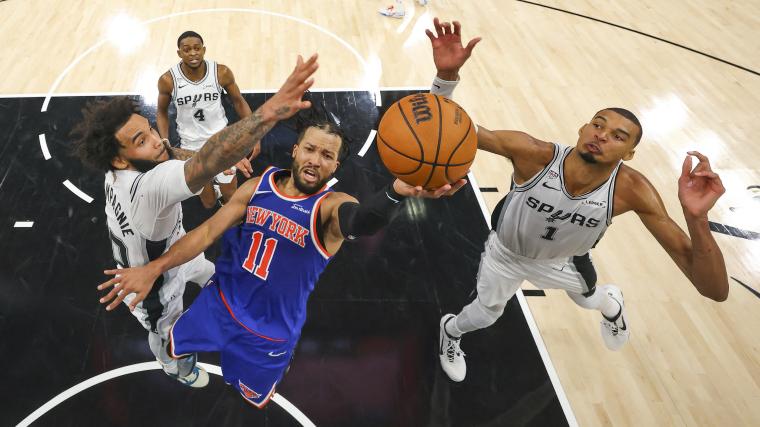
Because, while sports talk radio may obsess over jump shots and turnovers, this particular contest, Game 3 of the NBA Finals, felt more like an economic bellwether. The energy, frankly, was palpable, almost a physical force in the arena; an intensity that hasn’t graced this iconic venue in, well, nearly three decades, according to reports by NESN. New York’s team, the Knicks, arrived with an enviable 2-0 series lead — and a stunning 13-game winning streak. That kind of momentum, you don’t just generate on a hardwood floor. It trickles into restaurant reservations, souvenir sales, — and the very swagger of its residents. They were, you could say, primed to take another step toward the Larry O’Brien Trophy, though their opposition had other plans. [QUOTE_PLACEHOLDER]
San Antonio’s Spurs, spearheaded by the phenom Victor Wembanyama, came in knowing the statistical long odds of turning around a 2-0 deficit are slim, but not insurmountable. But don’t tell Wembanyama that; he’d already missed a potential game-winning shot in the previous battle, a ghost he probably wanted to exorcise on live television. The sheer collective willpower from both sides – one battling to retain dominance, the other for survival – produced an electrifying environment. But also, it’s proof that in this age of digital distraction, shared physical experiences, particularly around tribal loyalties like sports teams, still hold immense sway over a populace, unifying a city that’s often fractured by its sheer scale and diversity. You can’t put a price on that kind of civic cohesion.
It’s moments like these that unite expatriate communities globally too. Picture the countless Pakistani-American families across the five boroughs—or, for that matter, in Riyadh or Karachi, tuning into streams at odd hours—all eyes glued to screens. For many, a winning New York sports franchise offers a peculiar kind of proxy pride, a shared success story in their adopted land, connecting them to broader American culture through something universally understood: the spectacle of competition. You don’t often find New Yorkers of such disparate backgrounds cheering in unison, you know?
The action began with an immediate burst of Spurs’ dominance. Wembanyama, perhaps spurred by his previous miss, was all over the court. He literally stuffed a lob from Fox for the first points, setting an early tone. San Antonio then jumped to a 7-0 lead, with Devin Vassell hitting a three-pointer. It was a proper jolt for the home crowd. They started loud, yes, but things got quiet pretty quickly for a minute. However, you just know that energy wouldn’t stay subdued. Jalen Brunson, the Knicks’ undeniable maestro, finally got his first points. And the atmosphere, which had momentarily wavered, reignited like dry tinder. He had to battle hard; his team found itself down 9-5 early. But, that’s New York, ain’t it? Always a fight.
These contests transcend simple entertainment. They’re intricate socio-economic machines, drawing immense attention, advertising revenue, — and civic identity. For a team carrying the hopes of a major global financial hub, every pivot, every dunk, every crucial free throw like Brunson’s at the line, carries more weight than mere points. It carries the weight of history—and, crucially, of the city’s collective psychological investment. You simply can’t disentangle the two.
What This Means
The furious spectacle of Game 3 isn’t just a momentary triumph or defeat; it represents significant, tangible implications for urban economies and cultural diplomacy. A deep run in the NBA Finals—especially by a New York team—injects tens of millions, if not hundreds of millions, into the local economy through tourism, hospitality, merchandising, and temporary employment. The sheer volume of traffic through local establishments before — and after games alone is astounding. Madison Square Garden, and the surrounding district, becomes a gravitational center for consumer activity. We’re talking about a significant surge during an intense period, a boon for small businesses still finding their footing post-pandemic. And don’t forget the increased media exposure. A team contending for a championship on a national stage becomes an inadvertent ambassador for its city, drawing positive attention and potential investment long after the final whistle. The international broadcasting of these games, reaching audiences from London to Lahore, subtly projects American cultural soft power. It might not seem like ‘policy’ on the surface, but the economic ripple effects are far-reaching, directly impacting local government revenue and quality of life for its citizens. the passion of the fan base—their willingness to invest emotionally and financially—speaks volumes about the continuing power of shared community experiences, something many policymakers strive, often unsuccessfully, to engineer. This isn’t manufactured enthusiasm; it’s organic, potent, and utterly contagious, demonstrating that a common purpose, even if it’s just winning a game, can mobilize an entire populace.