


The Ghost in the Ballroom: Kennedy Center Erases a Brand as Culture Wars Grind On
POLICY WIRE — Washington D.C. — They say history’s written by the victors. But sometimes, it’s just quietly scrubbed from a plaque, a branding agreement quietly allowed to sunset into...

POLICY WIRE — Washington D.C. — They say history’s written by the victors. But sometimes, it’s just quietly scrubbed from a plaque, a branding agreement quietly allowed to sunset into oblivion. That’s the playbook the John F. Kennedy Center for the Performing Arts seems to be running, giving a hushed send-off to its ‘Trump’ brand—a moniker that once adorned one of its larger function rooms, bought and paid for in an era that feels, well, a little less fraught than this one. The public memory is short, but the paper trail, it seems, can be even shorter when reputation’s on the line.
It’s not just a room’s nameplate we’re talking about here; it’s a delicate dance in the ongoing, exhausting American culture wars. The Center isn’t exactly screaming about this particular de-branding from the rooftops. In fact, they’ve gone about it with the quiet efficiency of a cleaning crew after a late-night gala—you know, the kind where nobody wants to acknowledge the spilled champagne. The room in question? Previously the ‘Trump National Committee for the Arts’ event space. It now sports a more anodyne, less politically charged label: ‘The Terrace Level Foyer.’
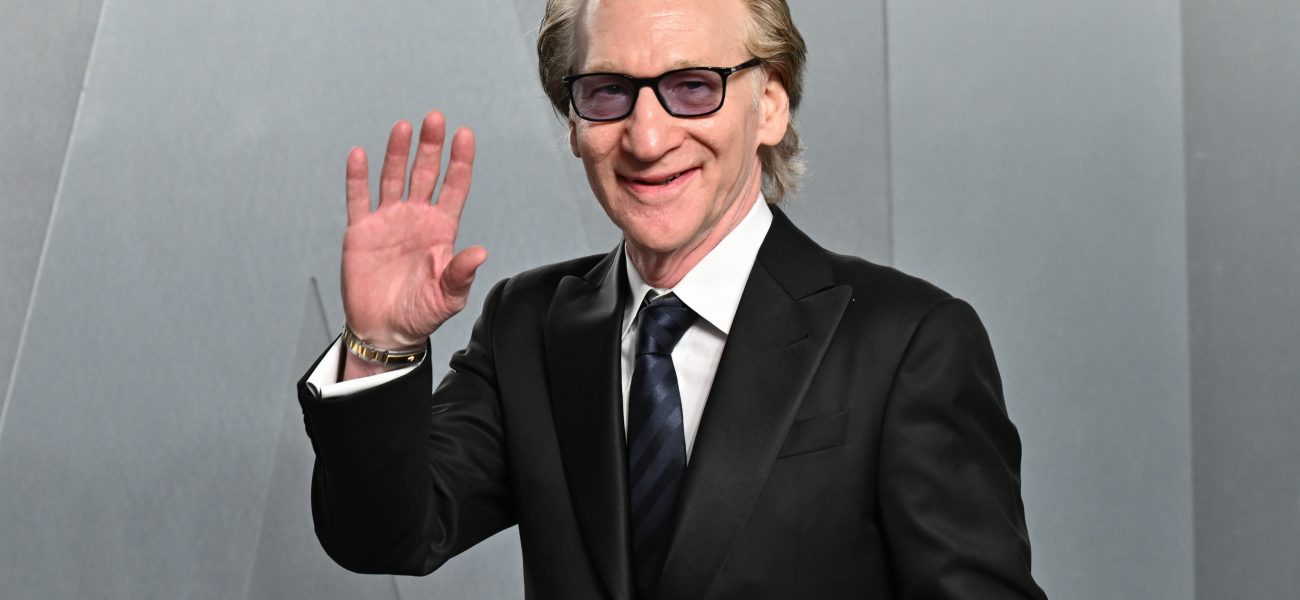
But the timing, isn’t it always the timing? This quiet disappearing act unfolds as the Mark Twain Prize for American Humor, a highly visible Kennedy Center institution, gears up for its latest installment, honoring comedian Bill Maher. The guest list for Maher’s fete reads like a who’s who of entertainment and political commentary, a careful blend of his long-time allies and perhaps a few olive branches. Among the announced participants: Jerry Seinfeld, Jimmy Kimmel, Woody Harrelson, Bryan Cranston, — and Seth MacFarlane. You’ve also got politicians like former House Speaker Nancy Pelosi and Congressman Jamie Raskin mixed in—a guest list designed, you’d reckon, to elicit laughs and a bit of bipartisan head-nodding, or at least a civil disagreement. This kind of event thrives on universal appeal, something a certain brand name might currently… complicate.
And that’s the rub, isn’t it? Cultural institutions, even those draped in marble and gravitas like the Kennedy Center, operate within a fiercely competitive landscape, constantly seeking relevance, funding, and public approval. Associating with deeply polarizing figures, even when donations were generously offered in a prior administration, carries weight. In today’s hyper-partisan climate, the reputational cost can far outweigh the immediate financial benefit. A 2023 survey by the Pew Research Center indicated that public trust in cultural institutions is increasingly bifurcated along partisan lines, suggesting any overt political alignment can alienate significant portions of potential patrons and donors. It’s an inconvenient truth for organizations trying to appeal to ‘all Americans.’
I spoke with Dr. Anya Sharma, a cultural philanthropy consultant (we’ll call her that), about the changing calculus. “These aren’t ideological purges,” she insisted, “they’re practical business decisions, driven by an almost pathological aversion to controversy. Donors, particularly corporate ones, don’t want their brands linked to anything that could spark an email campaign or a viral tweetstorm. They’re buying bland safety, — and in some corners, the ‘Trump’ brand simply isn’t that anymore. It’s got a particular aroma, shall we say?”
Indeed. The ghost of a former presidency still haunts the political landscape, influencing everything from judicial appointments to who’s allowed to name a conference room. It makes for an uneasy dance, this constant navigation of public sentiment. Think of it: America’s international cultural diplomacy relies heavily on institutions perceived as neutral, as flag bearers of universal artistic merit, not partisan squabbles. How do you pitch American ballet or jazz—symbols of American ingenuity—in places like Karachi or Jakarta if the venues carrying their weight back home are seen as extensions of partisan political battles? In these nations, where historical grievances — and political affiliations can run deep, the perception of U.S. soft power is incredibly sensitive. A subtle move like de-branding isn’t just about domestic niceties; it has echoes in how cultural exchanges are received abroad. It’s about not complicating the message.
📄 POLICY WIRE WHITEPAPER PUBLISHED: PAKISTAN'S NATIONAL SECURITY POLICY PRIORITIES
👉 READ BY CLICKING HERE“They’re not making a statement with this removal; they’re *avoiding* one,” offered Benjamin Cartwright, a long-time congressional staffer, with a dry chuckle. “The less attention drawn to any past affiliation with an administration that still dominates headlines, the better for fundraising, frankly. Nobody wants their arts non-profit tangled in the next presidential cycle’s mudslinging.”
And so, the quiet erasing continues. No dramatic unveiling. No press conference. Just the subtle shift in nomenclature, a small, strategic repositioning in the ever-shifting currents of American public life. It’s less about vengeance — and more about corporate hygiene, isn’t it? An institutional cleansing, if you will, ensuring a smooth path forward for events like Bill Maher’s, which thrive on being — or at least appearing to be — above the fray, even as their host organization tactfully distances itself from recent memory.
What This Means
This subtle, strategic rebranding by the Kennedy Center isn’t just a trivial change; it’s a telling barometer of America’s deeply fractured political and cultural landscape. Economically, it speaks volumes about the value—or perceived liability—of associating with politically divisive figures. Institutions, increasingly dependent on a diverse donor base and broad public acceptance, are prioritizing brand neutrality above all else. They’re making pragmatic business choices to ensure continued funding and audience engagement, essentially calculating the diminishing returns of past financial generosity versus the potential costs of alienating significant swaths of the public and their patrons.
Politically, this act—or non-act, depending on your perspective—reveals a larger trend of ‘de-Trumplification’ across various sectors as the GOP continues its uneasy dance with its architect. It’s an acknowledgment that while one political figure may still command fervent loyalty among a segment of the populace, their brand equity has become too toxic for mainstream cultural institutions aiming for universal appeal. It suggests a future where institutions may pre-emptively scrutinize politically linked donations more closely, valuing their ‘apolitical’ public image over specific financial windfalls. Ultimately, it’s a quiet declaration that, for cultural capital, certain names are becoming uninsurable risks.