

The I-25 Abyss: Albuquerque Grapples With Familiar Despair After Motorcyclist’s Final Ride
POLICY WIRE — ALBUQUERQUE, N.M. — It wasn’t the sirens that shattered the quiet Saturday night in Albuquerque; it was the chilling silence afterward—the kind that follows a sudden, violent...

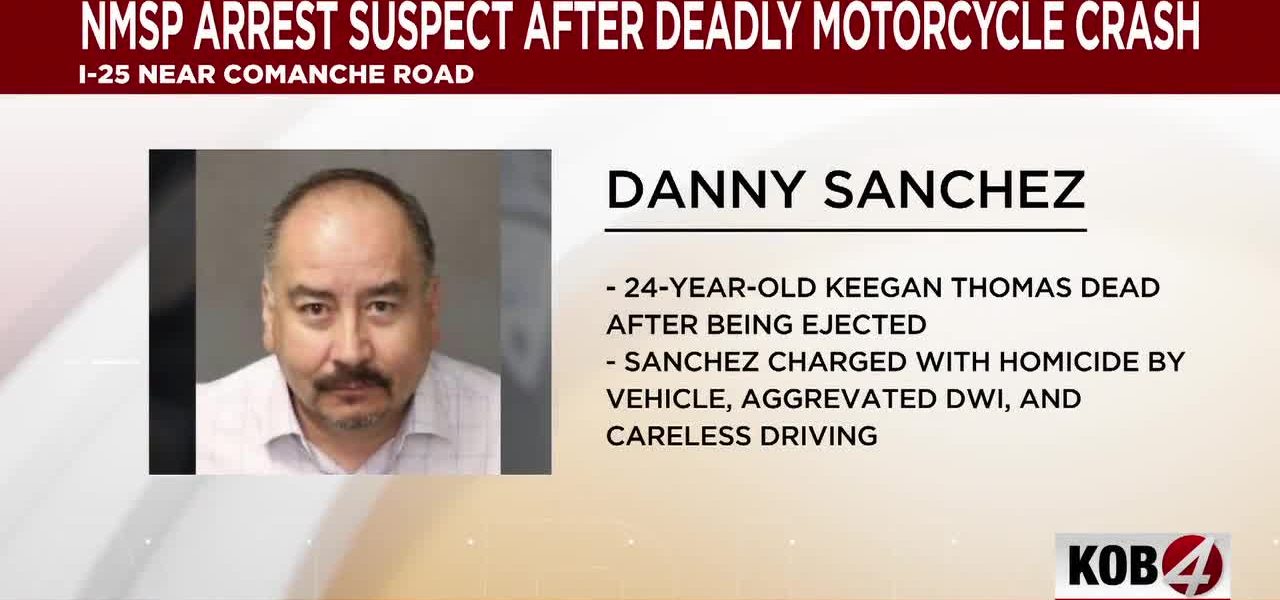
POLICY WIRE — ALBUQUERQUE, N.M. — It wasn’t the sirens that shattered the quiet Saturday night in Albuquerque; it was the chilling silence afterward—the kind that follows a sudden, violent cessation of life. Interstate 25, a daily artery for thousands, became a final, fatal stretch for 24-year-old Keegan Thomas, whose evening motorcycle ride ended in an unspeakable heap of crumpled metal and extinguished potential. State Police say 58-year-old Danny Sanchez, behind the wheel of a BMW, turned an ordinary commute into a death sentence, allegedly fueled by alcohol. It’s a narrative far too familiar, a grim echo of preventable sorrow.
The incident itself plays out like a tragically rote script: a vehicle, a motorcycle, a collision near the Comanche exit—and then the dreadful confirmation that a family’s future has been irrevocably altered. Sanchez is now facing a litany of charges, including vehicular homicide and aggravated DWI, effectively cementing his place in the state’s judicial system for what appears to be a senseless act. They took him in after investigators spotted damage on his BMW “consistent” with hitting Thomas’s motorcycle. It’s a procedural sequence that offers little comfort to those left grieving.
“We see these tragedies unfold time and again,” said Officer Maria Rodriguez, a New Mexico State Police spokesperson, her voice edged with weariness during a brief policy wire inquiry. “Every time, it’s a person, a family, a community scarred by someone’s inexcusable choices. We can enforce laws, but we can’t legislate common sense—or empathy, for that matter.” And that’s the rub, isn’t it? The sheer, frustrating repetitiveness of it all. You can’t help but wonder what runs through the minds of these drivers, moments before they make a decision that cascades into such devastation.
This isn’t an isolated incident, not here in New Mexico, not anywhere. According to the New Mexico Department of Transportation (NMDOT), alcohol-related crashes resulted in 166 fatalities in the state in 2022 alone, representing a staggering 39% of all traffic fatalities. Those aren’t just numbers on a spreadsheet; they’re mothers, fathers, children, gone. But statistics, however stark, often flatten the jagged edges of personal loss into an easily digestible soundbite, stripping away the inherent brutality.
“The human cost of drunk driving knows no borders, no creed, no culture,” observed Dr. Arif Hussain, a community advocate — and Imam from the local Muslim center, his remarks offered with a profound sigh. “From the busiest streets of Karachi to the tranquil highways of New Mexico, families share this universal anguish when lives are abruptly, carelessly taken. It forces us all to look inward, at our collective responsibility for public safety, and perhaps—just perhaps—consider how our own communities, across faiths and backgrounds, foster better choices, stricter adherence to law, and a deeper respect for every soul on the road. We’re all in this fragile world together, after all.”
📄 POLICY WIRE WHITEPAPER PUBLISHED: PAKISTAN'S NATIONAL SECURITY POLICY PRIORITIES
👉 READ BY CLICKING HEREThe Albuquerque community, unfortunately, has grown accustomed to these harrowing announcements, the silent alarm of collective dread whenever an incident like this punctures the mundane. You hear it in the whispers at the grocery store, you see it in the tightened faces of morning commuters—this nagging question: who’s next? And for Keegan Thomas’s family, that question has been answered with a finality no one ever wants to hear. It’s a cruel game of chance on a seemingly endless stretch of highway, one where the odds are often stacked against the most vulnerable.
The highway, they say, is a public trust, a shared space demanding a baseline of vigilance. But that trust, it seems, gets eroded, molecule by painful molecule, every time someone chooses to operate a several-ton steel beast with impaired judgment. It’s a societal flaw we keep bumping into, often with catastrophic results. For many, a single moment of reckless abandon on I-25 creates an eternity of absence. The kind of impact that leaves more than just physical scars. This isn’t just about the police blotter, it’s about the emotional terrain of an entire city, grappling with an unfixable wrong.
What This Means
This incident, far from an isolated aberration, shines a harsh light on broader societal — and economic challenges. Economically, each fatal DWI crash incurs massive direct and indirect costs—emergency services, hospital care, lengthy legal proceedings, lost productivity, and the emotional toll on a victim’s family, often translating into significant mental health expenses. These aren’t trivial sums; they’re drains on public resources that could otherwise bolster education or infrastructure. Politically, such incidents often reignite perennial debates over stricter DWI laws, increased law enforcement funding for highway patrols, and the efficacy of public awareness campaigns. Lawmakers frequently face pressure to appear tough on crime, but the persistent high numbers suggest that current interventions—while certainly not inconsequential—haven’t stemmed the tide. It’s a cyclical, often frustrating, policy dilemma that demands more than reactive measures. it touches upon the economic disparities inherent in criminal justice, where legal defense can vary wildly based on means. And, as Dr. Hussain reminds us, these incidents remind us that global approaches to public health and safety, regardless of local cultural norms around substances, often wrestle with common human failings and the imperative for collective responsibility.