

Aftershocks of Perception: A Distant Tremor Rattles Japan’s Tourism Confidence
POLICY WIRE — Tokyo, Japan — In an era defined by instant global information—and hyper-localized anxiety—the notion of danger has a funny way of traveling. An earthquake hundreds of miles away near...

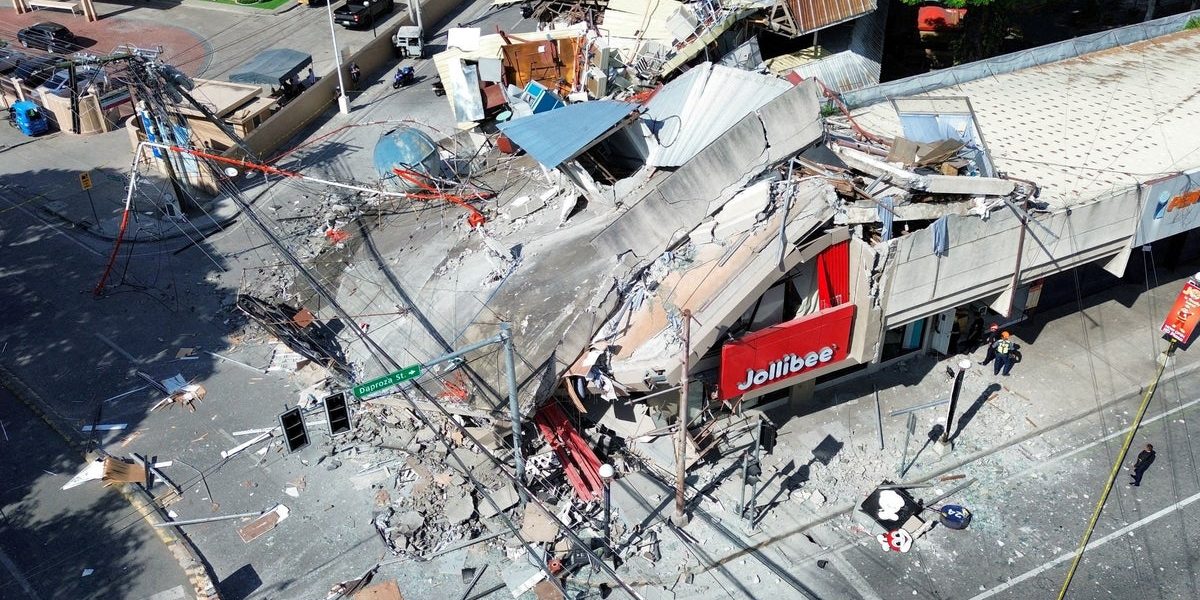
POLICY WIRE — Tokyo, Japan — In an era defined by instant global information—and hyper-localized anxiety—the notion of danger has a funny way of traveling. An earthquake hundreds of miles away near the Philippines doesn’t merely shake ground; it often ripples through travel itineraries, investment decisions, and the collective psyche of would-be tourists looking toward distant shores. It’s not just about what physically moves, but what minds start to churn.
Japan, long accustomed to seismic activity and world-renowned for its readiness, suddenly finds itself scrutinizing tourist advisories not for tremors beneath its own islands, but for those originating thousands of kilometers distant. The implied question—Is it safe to visit Japan? Latest advice after earthquake strikes near the Philippines—reveals a telling shift in how global events are consumed. It suggests a certain, perhaps irrational, fear that fault lines know no diplomatic boundaries. And tourists, as we all know, aren’t exactly known for their rigorous geological studies before booking a flight.
It’s true, Japan experiences plenty of its own seismic events. They’ve perfected the art of the quick siren, the emergency text message, the earthquake-proof building that sways like a drunken sailor but doesn’t actually fall. But an event centered so far south in the Philippine Sea, hitting Luzon, still managed to ping anxieties globally, and with it, questions about Japan. Because when tectonic plates do their thing in one part of the Pacific Rim, people — especially those contemplating expensive travel — sometimes just lump the whole region into one big, shaky basket.
And that’s the rub, isn’t it? The tourism sector, a cornerstone of Japan’s post-pandemic recovery, is notoriously skittish. A murmur on social media can often do more damage than a minor tremor. Pre-pandemic, Japan saw an extraordinary influx of over 31 million visitors in 2019, according to Japan National Tourism Organization data. Recovery has been robust, but that kind of distant quake news can make international travelers pause, even if Japan’s infrastructure is engineered to withstand significantly larger, local shocks. It’s an inconvenient truth that while Japan is scientifically prepared, public perception can be terribly unscientific.
This psychological ripple effect, it’s not limited to just Western travelers. From Islamabad to Jakarta, prospective Muslim tourists, keen to experience Japan’s blend of ancient tradition and futuristic tech, are also checking their travel apps a little more anxiously. Many Muslim-majority countries in Southeast Asia, like Indonesia, are also part of the ‘Ring of Fire,’ intimately familiar with the fear of seismic activity. So, news of a substantial quake near a regional neighbor often amplifies shared anxieties, creating a generalized nervousness about the entire region’s stability. They’re asking the same question their European counterparts are, but sometimes through a lens of their own localized, historical experiences with disaster. After all, the very same plate movements affect much of Asia’s uneasy equilibrium.
The Tokyo Metropolitan Government, though it issues its own regular warnings for local tremors, doesn’t really have a playbook for reassuring tourists about events outside its borders. One wonders if they’re kicking themselves for not having an AI-driven, crisis communications chatbot specifically designed to clarify that tectonic shifts near Luzon don’t automatically threaten a Bullet Train ride to Kyoto. [QUOTE_PLACEHOLDER] in the current climate isn’t enough; tourists want real-time, personalized assurances, a kind of digital hand-holding they’ve come to expect.
📄 POLICY WIRE WHITEPAPER PUBLISHED: PAKISTAN'S NATIONAL SECURITY POLICY PRIORITIES
👉 READ BY CLICKING HEREBut this is also Japan. A country that rebuilds, adapts, — and innovates at a breakneck pace. One could almost feel sorry for any seismic event attempting to disrupt their deeply ingrained sense of order. Their engineering is some of the best on the planet. Their emergency response protocols are practically textbook examples for the rest of the world. Yet, the perception of danger, particularly when framed against the exotic lure of East Asia, can cling stubbornly. Even as tourism offices try to reiterate that the chances of being seriously affected by such distant quakes in Japan are statistically negligible.
So, is Japan safe? The scientific — and logistical answer remains a resounding yes. They’ve invested billions, built entire cities, on the premise of dealing with geology’s worst. The bigger question, perhaps, is whether the traveling public is safe from its own increasingly fragile perception of safety, especially when every minor tremor, real or imagined, sends waves across a truly interconnected world.
What This Means
This seemingly localized geological event has broader implications for global tourism economics — and risk assessment. For Japan, the incident, however distant, underscores a subtle vulnerability: its economy relies heavily on international tourism, and confidence is a fickle mistress. A drop in visitor numbers, even if temporary, represents lost revenue for airlines, hotels, and countless small businesses, disrupting local economies eager for sustained growth. From a political perspective, it highlights the challenge governments face in managing not just actual threats, but the far trickier realm of public perception, especially in an age of instant global news cycles. It also subtly emphasizes Asia’s inherent geological volatility and how deeply interconnected its nations are, for better or worse. While Pakistan, for instance, isn’t directly impacted by a Philippine quake, a generalized sense of regional instability could make foreign direct investment, or even international aid efforts following *its own* inevitable seismic activity, slightly more difficult to secure. Because it all feeds into a broader, regional narrative of risk, — and that can deter foreign engagement. There’s a constant, low-level buzz of uncertainty now, and politicians worldwide struggle to silence it with facts when fear-mongering tweets travel faster than scientific consensus.