


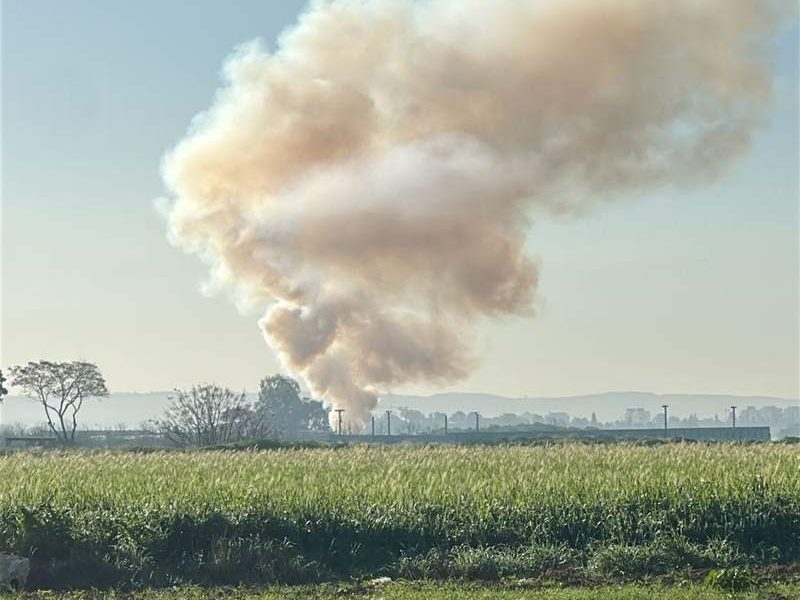
Red Skies, Uncertain Dawn: Iran’s Volley Shatters Fragile Mideast Calm
POLICY WIRE — Tel Aviv, Israel — It wasn’t the distant rumbling of thunder that jolted the region awake, but rather a chilling cascade of mechanical birds, their trajectories arcing with a cold...

POLICY WIRE — Tel Aviv, Israel — It wasn’t the distant rumbling of thunder that jolted the region awake, but rather a chilling cascade of mechanical birds, their trajectories arcing with a cold precision across the moonlit sky. For many, the true scale of the night’s events registered not with the initial air raid sirens that pierced the early hours across central and southern Israel—a sound by now grimly familiar—but with the quiet realization that something had irrevocably shifted. It’s a moment that could very well rewrite the textbooks on proxy warfare and direct state confrontation, a grim escalation in a saga that, frankly, few believed would reach this zenith.
Hours stretched into an eternity as iron domes met ballistic ambitions. This wasn’t some contained skirmish; it was a deliberate, overwhelming demonstration. Tehran made its point. A line has been crossed, a Rubicon of sorts, — and nobody’s pretending otherwise. They launched a second wave of attacks, too, underscoring their intent to deliver a message rather than just a token strike. And the entire world watched, aghast, for fear of what morning would bring. [QUOTE_PLACEHOLDER]
But the real story isn’t just about the rockets themselves; it’s the carefully calculated risk-assessment—or miscalculation—that underpins such a bold maneuver. Think about it: a direct strike from Iranian soil. That’s a significant departure from the shadow boxing and proxy wars we’ve seen play out across Yemen, Syria, and Lebanon for years. This isn’t just about Israeli security; it’s about regional deterrence, the credibility of international red lines, and the very stability of global energy markets. Oil prices, predictably, gave a nervous shudder in initial trading.
Regional leaders across the Muslim world, from Ankara to Islamabad, find themselves navigating increasingly choppy diplomatic waters. Pakistan, for instance, a nation grappling with its own internal instabilities and economic pressures, can’t simply ignore such a monumental shift. Its government will be forced to publicly articulate a stance, balancing deeply held religious solidarity with a pragmatic need for regional stability and avoiding entanglements in a rapidly expanding conflict. There’s a certain grim calculus at play; every major Muslim-majority nation now faces intense pressure, both from its populace and from geopolitical realities, to respond – or refrain from responding – in a way that will be dissected for decades. This incident isn’t just an Israel-Iran matter; it’s a tremor that reverberates across the entire ummah, exposing fault lines and testing allegiances.
It’s important to note the specifics, though some remain cloaked in the fog of war. Military sources confirm that upwards of 300 projectiles – encompassing drones, cruise missiles, and ballistic missiles – were launched, with approximately 99 percent reportedly intercepted by Israel’s multi-layered air defense system, often with aid from allied forces. That’s an astonishing statistic, mind you, cited by Israel Defense Forces spokesperson Rear Admiral Daniel Hagari, painting a picture of robust, if tested, defenses. But even one percent, especially when it involves ballistic munitions, carries destructive potential, doesn’t it? Some strikes certainly did find their mark, confirming the limits of even the most sophisticated defensive umbrellas.
📄 POLICY WIRE WHITEPAPER PUBLISHED: PAKISTAN'S NATIONAL SECURITY POLICY PRIORITIES
👉 READ BY CLICKING HEREWhat makes this even more volatile is the immediate response — or lack thereof, initially. Washington was quick to reiterate its ironclad commitment to Israeli security, a phrase trotted out regularly, yet never quite so freighted with immediate implications. Diplomatic channels went into overdrive. World leaders began their customary calls for de-escalation, but these pleas now sound somewhat hollow against the backdrop of an undeniable offensive act. Everyone’s now looking at the next chess move, — and everyone’s holding their breath.
What This Means
This Iranian volley fundamentally reorders the calculus of power and threat perception in the Middle East, possibly for good. For decades, Iran operated through proxies, maintaining plausible deniability while asserting its regional influence. That chapter is now closed. This direct assault represents a profound shift towards overt, state-on-state confrontation, moving the entire region closer to a precipice. Economically, expect continued jitters in global markets, particularly for oil, as traders price in an elevated risk premium. Supply chain disruptions become a more salient fear. Politically, the attack strengthens the hand of hardliners in both Iran and Israel, likely curtailing any immediate diplomatic off-ramps or prospects for détente. It will also test existing alliances, forcing nations to reaffirm or recalibrate their relationships in a highly visible manner. Expect increased scrutiny on Western sanctions regimes and military aid packages, as the stakes have been demonstrably raised. The geopolitical chessboard, already complex, just added a few more unpredictable pieces.