


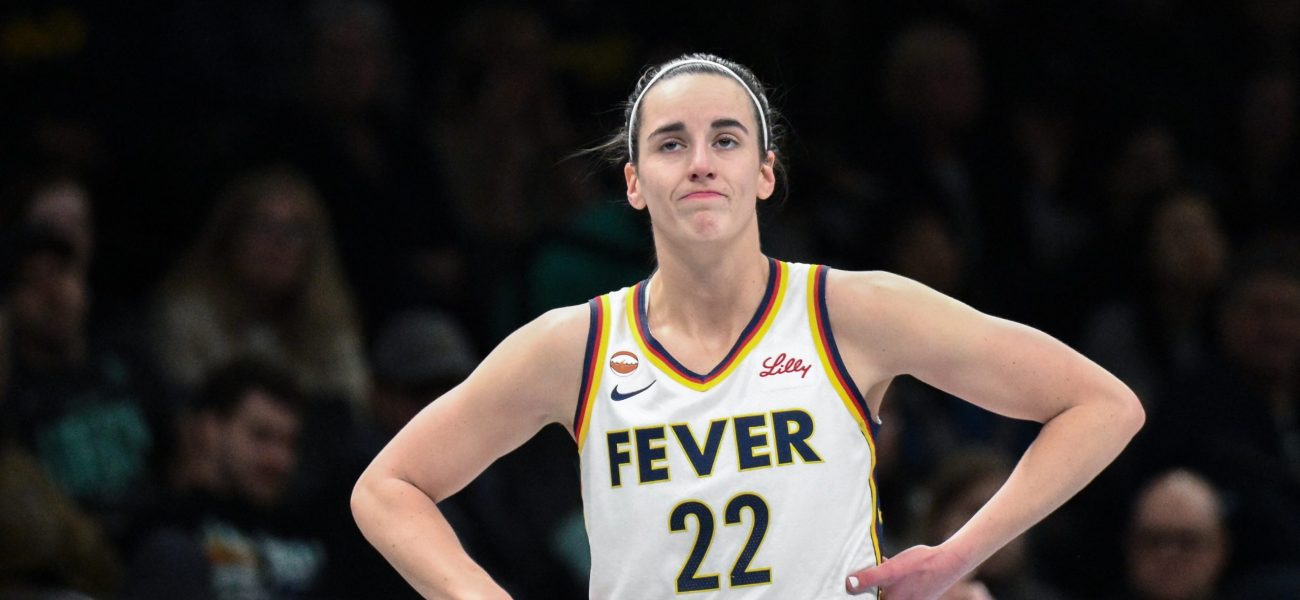
The Brutality of Brilliance: Caitlin Clark’s Hard Lesson in Public Scrutiny
POLICY WIRE — New York City, USA — The roar of the crowd, the blinding flash of cameras, the colossal expectations. They aren’t just for politicians on the campaign trail or CEOs facing...

POLICY WIRE — New York City, USA — The roar of the crowd, the blinding flash of cameras, the colossal expectations. They aren’t just for politicians on the campaign trail or CEOs facing investor calls. These days, they hound everyone, from fledgling tech moguls to sports sensations. And lately, they’ve been squarely focused on Caitlin Clark, a basketball prodigy whose recent on-court struggles are serving as a brutal, live-action seminar in the unforgiving economics of public perception. It’s a spotlight so intense, it can melt granite.
It wasn’t a policy debate or a legislative hiccup that landed Clark in the headlines this past week. No, it was a rough game. More than one, actually. A young woman, once deemed basketball’s next undisputed titan, is suddenly battling not just opponents, but an onslaught of digital criticism that echoes the unforgiving scrutiny faced by any public figure — anywhere. This relentless gaze, frankly, it’s global now. From the streets of Islamabad to the bustling centers of Dhaka, a misstep by a prominent individual, whether in sport or statecraft, spreads with terrifying velocity. They don’t cut much slack. We’ve seen it time and again.
Just last Saturday night, things certainly didn’t ease up for the Indiana Fever’s celebrated guard at Brooklyn’s Barclays Center. After a week peppered with questions about her defensive effort and a frosty sideline exchange with coach Stephanie White — which led to a momentary benching, mind you — the consensus was she’d bounce back. But that’s not how it played out. Against the New York Liberty, Clark faltered again, tallying just 10 points on a grim 4-for-14 from the field. League performance analysts noted a career-low efficiency of just 28.5% in what’s shaping up to be a brutal start to her professional run. It was a statistical shrug, for sure.
She also racked up five fouls, spending significant stretches trying to avoid another whistle. One veteran scout, speaking on background about the escalating pressure, remarked, “The WNBA isn’t college ball, plain and simple. Every defensive liability, every hesitant shot — it’s magnified by a million eyeballs, all equipped with Twitter accounts.” And that’s a sharp observation. Her defensive woes have been a recurring theme, with rookie Pauline Astier giving her fits, especially late in the game. That’s a bad look for a supposed superstar, being picked on by another newbie.
But the public commentary isn’t just about missed shots or defensive slips. It’s visceral. The digital airwaves hummed with comparisons, some calling her the “WNBA Luka” (referring to Luka Dončić’s defensive struggles in the NBA), others outright dismissing her impact. “Caitlin Clark just isn’t that good,” one fan declared on social media, echoing a growing chorus of discontent. This kind of judgment, unfiltered — and often ungenerous, isn’t unique to sports. Politicians, artists, entrepreneurs—anyone who steps into the limelight risks this level of instantaneous, often brutal, assessment.
Ms. White, the Fever coach, addressing the situation earlier this week, acknowledged the immense weight on Clark’s shoulders. “We’re asking a lot of her, perhaps too much, too soon,” Coach White was overheard telling a network executive during practice. “But the game evolves, — and so does the scrutiny. You’ve got to adapt. There’s no escaping it, not in this era.” This isn’t just about coaching a player; it’s about managing a phenomenon. And for her part, Clark has maintained a stoic front, perhaps learning the hard lesson that in the digital age, a public misstep isn’t just a momentary fumble; it becomes an archived event, endlessly replayed and dissected.
📄 POLICY WIRE WHITEPAPER PUBLISHED: PAKISTAN'S NATIONAL SECURITY POLICY PRIORITIES
👉 READ BY CLICKING HEREBecause ultimately, these high-stakes performances aren’t confined to American stadiums. Think about a cricket legend in Pakistan, burdened by the hopes of millions in a crunch match. A dropped catch, a failed run chase—it’s not merely a game statistic; it’s a national disappointment. The intensity of that collective emotional investment mirrors what Clark is experiencing now. The platforms for critique are global. You make a mistake, — and it’s flashing across screens from Lahore to London in seconds flat. The speed and reach are mind-numbingly efficient, amplifying both triumph and failure.
“The world has shifted,” observed Dr. Zara Hafeez, a media studies scholar based in Karachi, speaking on a regional broadcast. “Celebrity is no longer an American construct. It’s fluid. We, in this region, understand this well. Our heroes, our villains—they’re defined and redefined with each breaking news alert, each viral social media post. Clark’s struggles, in a perverse way, make her relatable. The constant pressure for peak performance? It’s a universal struggle now, from a basketball court to a political debate stage.” And she’s not wrong about that.
What This Means
Clark’s public stumbles aren’t merely sports fodder; they represent a striking microcosm of modern economic and political celebrity. We live in an era of hyper-accelerated expectation — and instant judgment. Corporations don’t just sell products; they manage brand image under relentless public observation. Politicians don’t just pass laws; they craft narratives that can be shredded by a single gaffe shared across billions of devices. The economic value of a rising star like Clark is tied directly to sustained, exemplary performance. A dip isn’t just a blip; it’s a dent in future endorsement deals, merchandising, and the broader perceived return on investment for the league and its broadcasters.
the incident shines a light on the evolving dynamics of leadership in the digital age. White’s decision to bench Clark, her public acknowledgment of pressure, highlights a key challenge: how do you nurture talent, build resilience, and maintain team cohesion when every decision, every minor interaction, becomes content for mass consumption? The politics of the locker room, once largely private, are now filtered through a thousand screens. For young figures navigating this, the learning curve isn’t just about professional skills; it’s about developing an unprecedented, almost geopolitical, level of media savviness and emotional fortitude. It’s tough out there, — and it’s only getting tougher.