

Charting Troubled Waters: Private Ordeals, Public Policy, and a World Adrift
POLICY WIRE — Geneva, Switzerland — The vast, unforgiving expanse of the ocean has always been a metaphor for the untamed spirit. But increasingly, it’s a canvas for demonstrating the sheer...

POLICY WIRE — Geneva, Switzerland — The vast, unforgiving expanse of the ocean has always been a metaphor for the untamed spirit. But increasingly, it’s a canvas for demonstrating the sheer labyrinthine complexity of international policy. Forget the romantic sunsets; imagine, instead, the cold sweat of a fever in the remote Arabian Sea, and suddenly, a father and daughter’s grand sailing odyssey becomes a global incident. Because when human lives hang by a thread in international waters, the elegant lines of sovereign boundaries blur into a bureaucratic scramble.
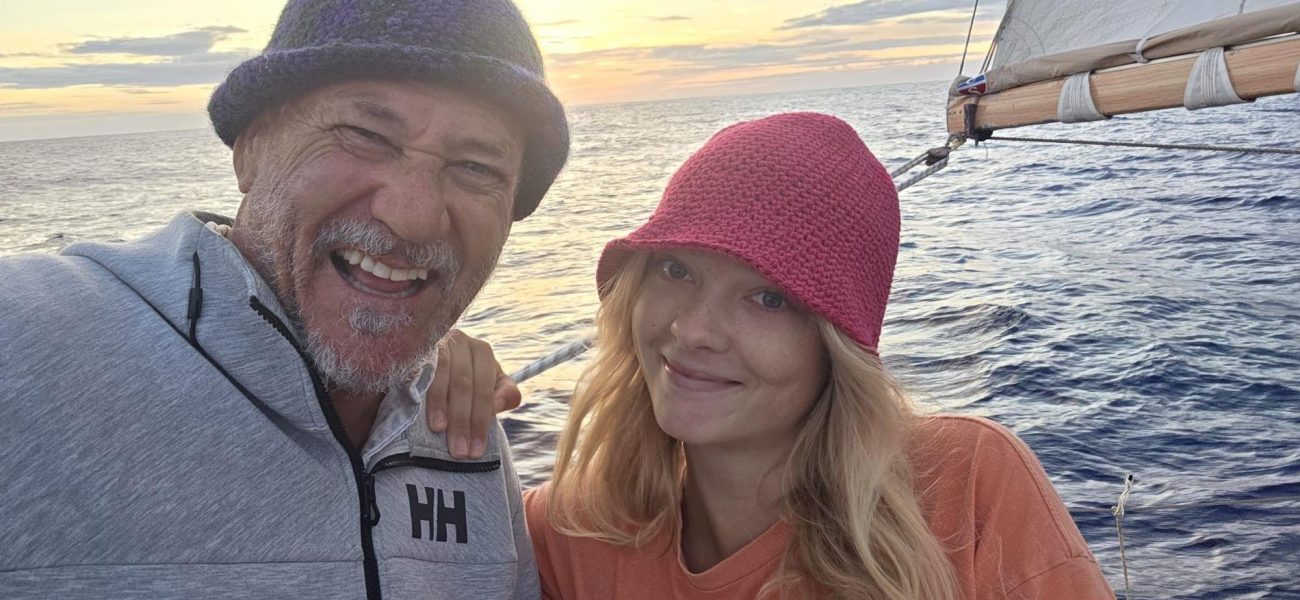
It was on a blustery Tuesday, just shy of the Gulf of Aden’s notorious shipping lanes, that retired maritime engineer, Captain Alistair Vance, 68, felt the first unsettling tremor in his usually stoic constitution. Beside him, Dr. Lena Vance, 34, an ophthalmologist who traded her operating theater for celestial navigation, watched with growing dread as her father’s health spiraled aboard their sturdy 45-foot ketch, The Wandering Star. Pneumonia, they suspected, a nasty bout, far from shore. Far, far from familiar protocols. What commenced as an extraordinary private journey, aiming to circumnavigate the globe, quickly veered into a stark commentary on fragmented global governance—or, perhaps, the fierce resilience of the individual when the system falters.
Their distress call wasn’t just a cry for medical help; it was a jurisdictional query bouncing off satellites. “We had alerts from three separate maritime rescue coordination centers within an hour – Salalah, Jeddah, and Djibouti,” explained Admiral Farooq Rahman of the Pakistan Maritime Security Agency, whose jurisdiction borders portions of that maritime crossroads. “Everyone wanted to assist, but nobody quite owned the incident initially. It’s an immediate operational challenge, one requiring precise diplomatic navigation itself.” Rahman’s agency eventually coordinated initial advisory with a passing merchant vessel, reflecting a common, if piecemeal, form of international aid. It’s a testament to the fact that while navies often operate with geopolitical mandates, private vessels navigate the raw physics of survival.
And let’s not forget the sheer elemental savagery these two confronted before the health crisis even fully ripened. Months earlier, off the notoriously volatile coast of South Africa, The Wandering Star reportedly took a rogue wave, a monstrous liquid fist that stove in their dodger and briefly knocked out critical communications. Vance and his daughter, by then seasoned survivors of the Doldrums and the Indian Ocean’s capricious temperament, jury-rigged repairs with grim determination. These aren’t the leisure cruises found in glossy brochures, are they? This is the gnawing uncertainty, the bone-weary exhaustion, the raw reality that confronts anyone who dares challenge the conventional limits of human endurance.
The health scare forced a difficult, policy-laden decision: divert. They limped towards Karachi, Pakistan, a port perhaps less accustomed to independent, adventure-seeking yachts than commercial tankers but strategically positioned. Landing there wasn’t just about finding a doctor; it involved visas, port clearances, quarantine checks, and negotiating a thicket of local regulations that would confound even the most seasoned bureaucrat. It’s a snapshot of a complex maritime world, where every landfall isn’t just a destination, but an immersion in another nation’s sovereignty and, at times, skepticism. The global system, designed to facilitate trade, often seems to forget the isolated individual.
“International maritime law provides a framework, but real-world exigencies often expose its gaps,” stated Dr. Elena Petrova, a maritime law specialist at the University of Leiden, who’s authored numerous papers on rescue protocols. “For instance, while a ship in distress can request asylum in port, the specifics of long-term medical care or protracted stays often fall into a gray zone. There’s a world of difference between receiving initial aid and navigating weeks of recovery and repair.” Indeed, according to the International Maritime Organization (IMO), less than 40% of countries have fully integrated comprehensive emergency medical aid frameworks into their domestic maritime codes that extend smoothly to recreational vessels. It’s a statistic that might give any aspiring circumnavigator pause.
📄 POLICY WIRE WHITEPAPER PUBLISHED: PAKISTAN'S NATIONAL SECURITY POLICY PRIORITIES
👉 READ BY CLICKING HEREThe Vances, as a case study, illustrate this brilliantly. Their odyssey is more than just a personal triumph of spirit over squalls and sickness; it’s a silent yet potent challenge to the tidy demarcations nations draw across the very element that connects us all. And Pakistan, a nation often grappling with its own internal political dramas and regional tensions – perhaps, as seen in debates concerning Azad Jammu and Kashmir – unexpectedly found itself a quiet participant in a high-stakes, cross-cultural drama involving a father, a daughter, and a small boat facing off against an indifferent sea and an often-disinterested bureaucracy.
What This Means
The seemingly private trials of Captain Vance — and Dr. Lena Vance reverberate with broader political — and economic implications. On one hand, their harrowing journey, fraught with storms and sickness requiring multi-jurisdictional assistance, starkly illuminates the inherent fragilities in global maritime governance. Nations often struggle to coordinate seamlessly even on clear humanitarian grounds, exposing cracks in international treaties and response mechanisms. Economically, such incidents strain local rescue assets and, in developing nations like Pakistan, can divert limited resources from domestic priorities, even if temporarily. The sheer administrative load associated with emergency port calls for non-commercial vessels—from medical services to customs and immigration—isn’t trivial; it’s a financial and logistical burden rarely accounted for in policy frameworks.
But it’s not all grim. The Vances’ saga also underscores humanity’s tenacious spirit. It reminds us that despite geopolitical complexities and bureaucratic inertia, individual acts of international assistance still prevail, often driven by a deep-seated humanitarian imperative, an unwritten code of the sea. Their story, played out in the unforgiving realm of waves and winds, ultimately champions the enduring human quest for exploration and connection—a stark contrast to the often-insular, nationalistic rhetoric that dominates political discourse ashore. It forces policy-makers, however briefly, to look beyond trade routes and strategic lanes, and acknowledge the deeply personal, often desperate, struggles occurring within the very systems they aim to govern. And that, well, that’s not nothing.