


Monaco’s Faux Fight: Formula 1’s Glitzy Sideshow Masks a Power Play
POLICY WIRE — Monte Carlo, Monaco — The scent of high-octane fuel typically dictates the rhythm here, but for some, the real drama unfolding along Monaco’s storied streets isn’t just about hairpin...

POLICY WIRE — Monte Carlo, Monaco — The scent of high-octane fuel typically dictates the rhythm here, but for some, the real drama unfolding along Monaco’s storied streets isn’t just about hairpin turns. It’s about the very shifting tectonic plates beneath the tarmac—generational battles, celebrity soft power, and the colossal economic gears grinding away behind F1’s glossy facade. This isn’t merely a race; it’s a high-stakes, multi-billion-dollar brand spectacle, — and its narrative just got a jolt.
It wasn’t the seven-time world champion Lewis Hamilton, draped in scarlet Ferrari, or even the reigning titan Max Verstappen, that seized the critical advantage at qualifying for Sunday’s prestigious Monaco Grand Prix. No, that honor fell to 19-year-old phenom Kimi Antonelli, who pulled off what he casually termed a “magic” lap. This isn’t just a win for the kid; it’s a direct challenge to the establishment, shaking up the pecking order in a sport where history and legacy—not just raw speed—often command the front rows. And let’s be frank, that sort of disruption often dictates more than just race results; it shifts the balance sheets, too. This particular coup means Antonelli starts pole, a potentially commanding position on a circuit notorious for its lack of overtaking opportunities.
Hamilton, meanwhile, finds himself relegated to third, ahead of his Mercedes teammate George Russell, who will start P6—meaning another painful weekend of playing catch-up in the championship. The Brit, yearning for a maiden Ferrari victory on this iconic track, knows the score. “You know how these races go. It’s very, very difficult,” Hamilton acknowledged, sounding every bit the battle-hardened campaigner he’s. He’s looking for any advantage—a glitch, a downpour, a moment of weakness from the frontrunners. “I probably need rain. But nothing’s impossible,” he insisted, a flicker of his old, relentless spirit still visible despite the underperforming machinery. That resolve, that sheer grit, it’s why he remains a household name globally, including across diverse audiences in South Asia and the Muslim world, where F1’s footprint continues to grow significantly.
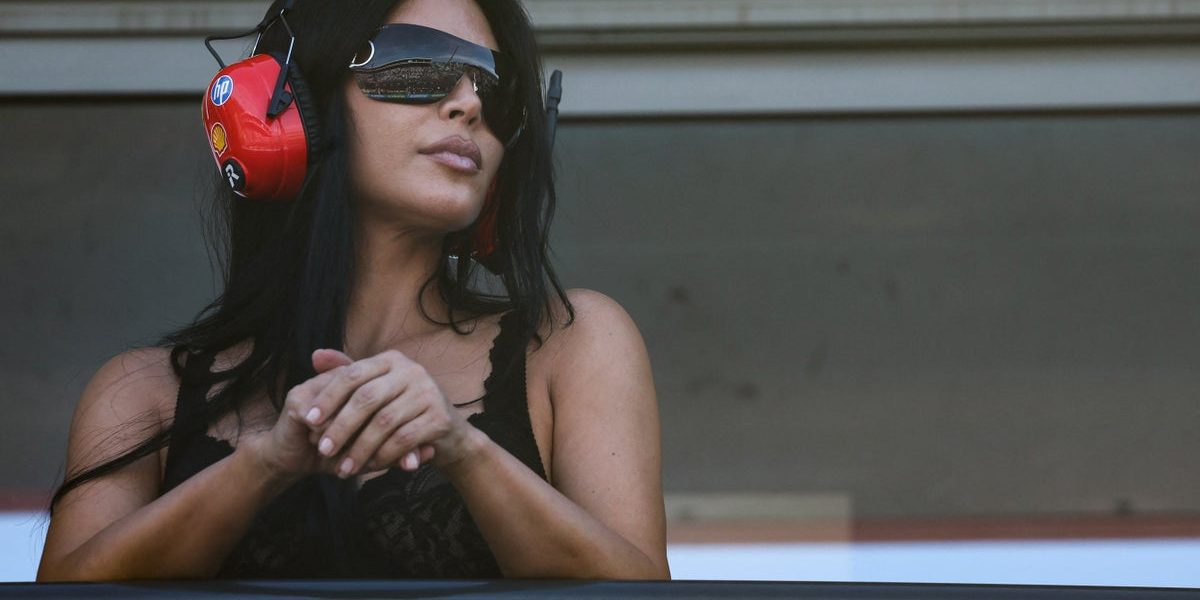
And let’s not pretend the track-side happenings are the *only* headlines. Monte Carlo buzzed with a different kind of horsepower this weekend: celebrity wattage. The paddock—a traditional crucible of mechanical prowess and corporate schmoozing—was graced by Kim Kardashian, marking her official debut as Hamilton’s purported girlfriend. Her arrival wasn’t just a photo op; it’s an extension of F1’s calculated expansion strategy, aimed at pulling in an audience far wider than the traditional motorsport faithful. Because, frankly, the viewership numbers are paramount.
Hamilton’s narrative—the struggle for that 106th career win, the pressure to deliver after a sub-standard initial season with the Prancing Horse—is almost Shakespearian in its scope, attracting eyeballs. “There was no lacking of pace,” he declared, batting away critics, especially those like former rival Nico Rosberg who suggested he wasn’t championship-ready. “I keep putting the work in, I keep turning up and I keep delivering.” But his exasperation was clear after qualifying: “The car was drastically different once we got to qualifying. It was a step back, and we have to take a deep dive into that.” It’s the familiar lament of a top driver when the vehicle just doesn’t connect. It doesn’t quite sound like the confidence that breeds titles, does it?
📄 POLICY WIRE WHITEPAPER PUBLISHED: PAKISTAN'S NATIONAL SECURITY POLICY PRIORITIES
👉 READ BY CLICKING HEREAntonelli, however, is a different story. Riding the crest of a literal wave—four consecutive victories before this Monaco pole—he could easily open a 50-plus point lead after Sunday, equivalent to two full wins. That kind of dominance isn’t accidental. It’s a testament to raw talent meeting finely tuned machinery. “This is the most intense qualifying of the year, and it takes a lot of effort to keep trying to get close to the limit,” the young Italian observed, speaking with a maturity that belies his years. He added, almost as an afterthought, that finding those last two tenths is agonizing because “the walls start to come closer.” It’s the kind of high-wire act that keeps the masses engaged, keeps the money flowing.
Toto Wolff, Team Principal and CEO of the Mercedes-AMG Petronas F1 Team, speaking from his paddock office, weighed in on the seismic shift Antonelli represents. “The ecosystem of Formula 1 thrives on talent, but it also demands fresh faces and fresh narratives,” Wolff stated, perhaps eyeing a future star beyond his current line-up. “Antonelli isn’t just fast; he’s an accelerant, forcing everyone—the teams, the drivers, even the fans—to reconsider what’s possible. It’s good for the sport; it keeps us all on our toes. It keeps the investment flowing.” And he’s right, of course. F1 isn’t just about driving; it’s about business. A record 40 million viewers tuned in for the inaugural Jeddah Grand Prix in 2021, according to official F1 statistics, highlighting the lucrative new frontiers in motorsport. That kind of market demands continuous innovation, both on — and off the track. The sport’s allure transcends traditional demographics, connecting with audiences from Kuala Lumpur to Casablanca, drawn by the glamor and the unforgiving challenge. This young Italian—and Hamilton’s ongoing chase—is helping keep that connection vibrant. For more on how the young guard challenges the establishment, see our recent analysis: Monaco’s Grand Deception: Teen Phenom Antonelli Rewrites Formula 1 Script, Shakes Established Order.
What This Means
Monaco, often dismissed as a processional race, this weekend represents a microcosm of Formula 1’s broader geopolitical and economic ambitions. The spectacle of youth like Antonelli aggressively challenging seasoned veterans such as Hamilton—even Verstappen, still young but already established—reflects a commercial strategy designed to continuously inject new blood and maintain global interest. Formula 1’s owners, Liberty Media, aren’t just selling speed; they’re selling stories of aspiration, technological supremacy, and high-octane drama. The integration of celebrity figures, while seemingly trivial, is a calculated maneuver to expand F1’s demographic reach beyond traditional gearheads into mainstream pop culture, increasing sponsorship value and media rights. This broadens F1’s appeal in nascent but economically powerful markets, including the growing Middle Eastern and Southeast Asian consumer bases. These regions view high-profile sporting events not just as entertainment but as tools for economic diversification and soft power projection—think Saudi Arabia’s significant investment in sports. The relentless pursuit of global audiences and the narrative arcs of heroes and challengers ultimately translate into billions in revenue, influencing international brand perceptions and economic leverage on a scale that few other sports can match. It’s a multi-faceted game where the winner doesn’t just take the checkered flag; they also corner new markets, realign corporate sponsorships, and reshape public opinion, impacting nations and industries alike.