

Messi’s Dollar Diplomacy: Why a Texas ‘Friendly’ Unpacks Global Football’s Fierce Economics
POLICY WIRE — COLLEGE STATION, Texas — The floodlights of Kyle Field — a monument to American college football in the heart of Texas A&M — will blaze bright Saturday not for an Aggie triumph,...

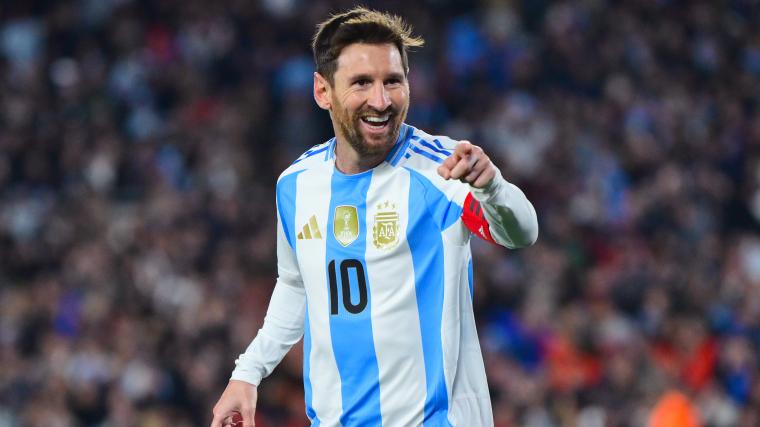
POLICY WIRE — COLLEGE STATION, Texas — The floodlights of Kyle Field — a monument to American college football in the heart of Texas A&M — will blaze bright Saturday not for an Aggie triumph, but for Lionel Messi and Argentina’s World Cup champions. It’s a surreal backdrop, sure, yet hardly accidental. This isn’t just another international ‘friendly’; it’s a meticulously engineered economic opportunity, a brand projection exercise, and a shrewd piece of global sports diplomacy, all wrapped up in a pretty football package.
Because frankly, what seems like a casual tune-up against Honduras for the reigning world titleholders is anything but. It’s part of the pre-World Cup commercial carousel, pulling in massive sums for federations hungry for capital and players looking to keep their market value stratospheric. Argentina, flush with global success, could play pretty much anywhere, — and their fans would follow. But bringing them to an 82,589-seat stadium in College Station? That’s about maximizing visibility and, you know, hitting that North American demographic.
On one side, you’ve got Argentina — football’s current global juggernaut. Fresh off two easy victories against Mauritania and Zambia, they’re strutting into this fixture as if it were a high-end exhibition match, which, to some degree, it’s. They’re not just playing; they’re *performing*. And their star, the one and only Messi, remains the ultimate draw, the perpetual headline generator, even when kicking around a ball in a low-stakes affair. “These friendlies are absolutely key,” stated Claudio Tapia, president of the Argentine Football Association (AFA), in a recent interview, underscoring the organization’s approach. “Not just for our technical preparations, but they’re critical for growing our brand, our fanbase, and quite frankly, our balance sheet across markets we’re actively developing. Every minute Messi is on the pitch is a return on investment, for us and for the fans who pay to see greatness.” He wasn’t wrong, was he?
On the flip side sits Honduras, a nation whose footballing aspirations are painted in decidedly less glittery hues. They heartbreakingly missed out on the 2026 World Cup after drawing with Costa Rica and ending up just below Haiti in CONCACAF’s standings due to a narrow goal difference. So for them, this match isn’t a payday; it’s a masterclass. It’s a chance for their players—often overshadowed by bigger, richer federations—to share a pitch, however briefly, with football royalty. And that, in itself, is an invaluable experience. “To face a squad like Argentina, with players of such caliber, is more than a friendly for us. It’s an education, an honor,” remarked Reinaldo Rueda, the Honduran national team coach, earlier this week. “We learn where the bar truly sits. It’s how our football develops; it’s how our players grow against the best, even when the odds are stacked.”
The global sports market was estimated at roughly $500 billion in 2023, according to a recent report by Statista, with football comprising a significant portion of that. This particular match is a tiny, but very telling, cog in that colossal machine. It illustrates how money moves the world’s most popular sport, transforming every international fixture into an asset.
And then there’s the broader geographical resonance. For countless football enthusiasts stretching from the bustling streets of Karachi to the remote villages of Morocco, these matches—even these warm-ups—are appointments. Just glance at the other international ‘friendlies’ lined up this week. We’ve got powerhouses like Portugal against Chile, sure. But we’ve also got matchups that speak to regional rivalries and developing football landscapes, like Afghanistan against Pakistan, scheduled for Sunday. These games, regardless of global media saturation, carry immense weight for their local fanbases, representing national pride, hope, and often, an economic lifeline for emerging sports industries.
The Argentinian squad’s Texas excursion serves as a mirror, reflecting global football’s true nature: a dynamic blend of athletic artistry, raw national passion, and cold, hard capital. It’s about leveraging stardom – about how players, no matter their club allegiances, become global brands whose every movement is tracked and monetized. From jersey sales in Buenos Aires to streaming subscriptions in Dhaka, Messi’s magnetism is undeniable.
📄 POLICY WIRE WHITEPAPER PUBLISHED: PAKISTAN'S NATIONAL SECURITY POLICY PRIORITIES
👉 READ BY CLICKING HEREWhat This Means
This match isn’t just a preparatory exercise; it’s a stark reminder of football’s commercial sophistication and strategic global outreach. For Argentina, it’s about solidifying their status as a footballing superpower, not just on the pitch, but in the bank. They’re extending their brand’s footprint, particularly in lucrative markets like North America ahead of the 2026 World Cup—partially hosted by the US. Think of it as soft power with a price tag, designed to deepen fan loyalty — and attract further commercial partnerships. And, let’s be real, to make money.
For Honduras, it’s a bittersweet affair. It’s an opportunity to learn, to inspire, — and perhaps to showcase a few talents to scouts from bigger leagues. But it’s also a stark illustration of the financial chasm separating football’s elite from its strivers. Honduras doesn’t get to pick and choose glamorous opponents for brand building; they seize any chance they can get to measure themselves against greatness, hoping for incremental growth. The difference in their respective motivations—brand expansion versus raw experience—highlights the complex currents of global capital flowing through the sport.
these ‘friendlies’ serve as significant platforms for betting markets, for media rights, and for fostering national identity, particularly in regions where sporting success is a rare commodity. They influence narratives, drive viewership, and ultimately, continue to feed the seemingly insatiable global appetite for football, regardless of how ‘friendly’ the match might appear on paper.
So when Lionel Messi laces up his boots on a very un-Argentine American football field, remember it’s not just about getting ready for the next tournament. It’s about the intricate dance of sports, politics, — and economics playing out on a worldwide stage. And it’s about everyone involved, from the multi-billion-dollar federations to the hopeful young Honduran defender, getting something out of the deal.