

Quad’s Grand Resource Gambit: Why Asia’s Supply Chains Aren’t Holding Their Breath
POLICY WIRE — Washington, D.C. — Another grand strategy has dropped, its neatly-typed communiqué promising a bold new dawn. The Quadrilateral Security Dialogue, better known as the Quad, has unfurled...

POLICY WIRE — Washington, D.C. — Another grand strategy has dropped, its neatly-typed communiqué promising a bold new dawn. The Quadrilateral Security Dialogue, better known as the Quad, has unfurled a shiny, new US$20 billion critical minerals framework. It’s a headline-grabber, sure, framed as the antidote to Beijing’s firm chokehold on everything from your smartphone battery to the complex innards of modern weaponry. Yet, out here in the world beyond think tank presentations, the air isn’t exactly thick with anticipation.
It’s not just cynicism—it’s experience. See, for all the diplomatic pomp and circumstance surrounding the latest announcement, the devil, as they say, lives in the details, or rather, the lack thereof. The grand pronouncement about [QUOTE_PLACEHOLDER] sounds impressive, doesn’t it? But really, folks have heard this song before. There’s a long, storied track record of multinational alliances articulating lofty goals, only to trip over the messy business of implementation.
But analysts say its success will depend on the ability of Australia, the United States, India and Japan – the Quadrilateral Security Dialogue’s four members – to move beyond policy declarations and deliver measurable outcomes. That’s the crunch, isn’t it? The Quad, an alliance often described as more of a discussion club than a fully-fledged security pact, now proposes to untangle decades of globalized supply chains. It’s an undertaking on a truly enormous scale, one that requires not just cash—though $20 billion isn’t exactly pocket change—but unprecedented levels of coordination, political will, and genuine, boots-on-the-ground project management across four diverse nations. They’ve got different bureaucratic languages, distinct national interests, and, sometimes, wildly divergent definitions of ‘urgent’.
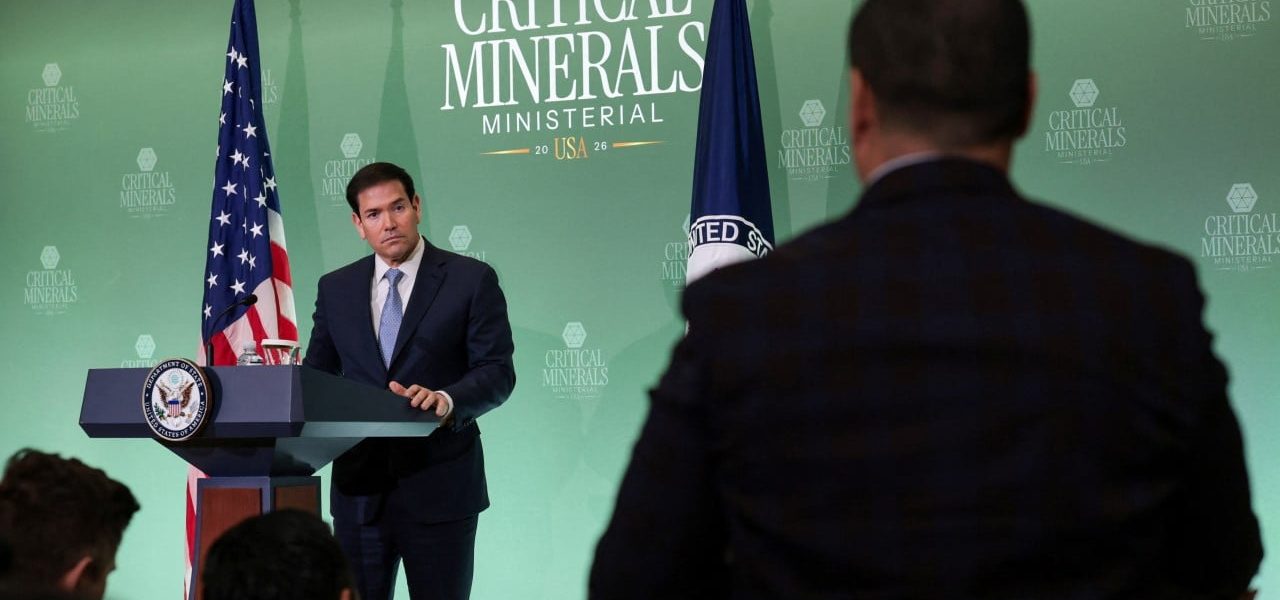
The initiative, announced after a meeting of Quad foreign ministers on May 27, has certainly stirred conversations in capitals from Canberra to New Delhi. The objective is unambiguous: loosen China’s near-monopoly on the materials that power modern defence, technology and clean energy industries. We’re talking about cobalt, lithium, rare earths—the elements without which our connected, electrified world simply stops. Beijing has meticulously built up this advantage over decades, through state-backed investment, lower environmental standards, and—let’s be honest—an absence of competition from Western players too comfortable outsourcing the gritty work of mining and refining.
And that’s where the South Asian angle becomes so sticky. India, a Quad member, represents both immense potential — and an equally immense challenge. It has its own aspirations for mineral independence, particularly as its economy continues to boom. Consider Pakistan, a non-Quad nation in the same region but intimately linked by geography and increasingly by China’s Belt and Road Initiative (BRI). Pakistan itself possesses untapped reserves of critical minerals, though largely unexplored — and undeveloped. What happens when these Quad nations attempt to build alternative supply chains? Do they include nations like Pakistan, potentially drawing them further into a complex economic web, or do they risk creating even greater regional disparities?
This isn’t an academic exercise; it has real geopolitical weight. The energy transition, the drive towards electric vehicles, renewable energy infrastructure—all these ambitions hinge on a steady, secure supply of these materials. If the Quad fails to secure new sources or diversify processing, these lofty goals remain just that: goals. One glaring statistic: China processes approximately 60% of the world’s lithium and 80% of its rare earth elements, according to a 2023 report by the International Energy Agency (IEA). That’s not a monopoly, perhaps, but it’s certainly a stranglehold.
📄 POLICY WIRE WHITEPAPER PUBLISHED: PAKISTAN'S NATIONAL SECURITY POLICY PRIORITIES
👉 READ BY CLICKING HEREBecause the market, after all, responds to more than just strategic intent. It’s driven by costs, efficiency, — and infrastructure. Developing a mine in Australia, refining in India, and shipping to the US requires enormous, sustained investment and political risk assessment. environmental, social, and governance (ESG) standards, rightly emphasized in Quad nations, often make the development process slower and more expensive than in countries where such regulations are… less stringent.
Past failures haunt—they always do—such grand-scale pronouncements. There’s a history of initiatives launched with much fanfare, only to fizzle out when the sustained political capital, or sheer bureaucratic slog, proved too much. One might recall efforts years ago to build a [QUOTE_PLACEHOLDER] of pipelines from Central Asia to Pakistan, aiming to bypass Russian energy influence—a project that, while seemingly rational on paper, ran into intractable regional instability and financing issues. That project didn’t exactly reach the finish line, did it? Like an underfunded sports franchise struggling to contend for a title, such aspirations can often hit insurmountable obstacles. This geo-strategic mismatch on the hardwood, metaphorically speaking, plays out across vast, resource-rich lands.
What This Means
The Quad’s US$20 billion critical minerals framework is, at its core, a defensive maneuver aimed at mitigating China’s growing influence. Politically, it signals a deeper economic alignment among the four nations, expanding their security dialogue beyond military and diplomatic posturing into the gritty world of supply chain resilience. If successful, it could fundamentally shift global resource politics, reducing China’s leverage in future geopolitical negotiations. Failure, however, would be a stark confirmation of Beijing’s entrenched power and the difficulty of decoupling economic realities from strategic aspirations. For South Asia, particularly for countries like India and potentially its neighbors—yes, even Pakistan—this initiative presents both a distant carrot of potential investment and the stick of being excluded if they don’t align with emerging standards or suppliers. Economically, even modest success would likely see new mining ventures, increased processing capabilities, and localized job creation within the Quad and partner nations. But don’t mistake potential for certainty. The scale of investment needed to truly challenge China’s dominance far exceeds this announced sum, making this framework a tentative first step, not a definitive victory. It’s a pledge of intent, a whisper of what could be, but not yet a roar. And intentions, as any veteran of these circuits will tell you, don’t always translate into real-world impacts on commodity markets or factory floors.