


The Phoenix Bat: How Public Scorn Forged a Giants Star
POLICY WIRE — San Francisco, California — Sometimes, you need a public flogging. Not the literal kind, of course, but the type where a respected elder statesman of the game — or governance, for that...

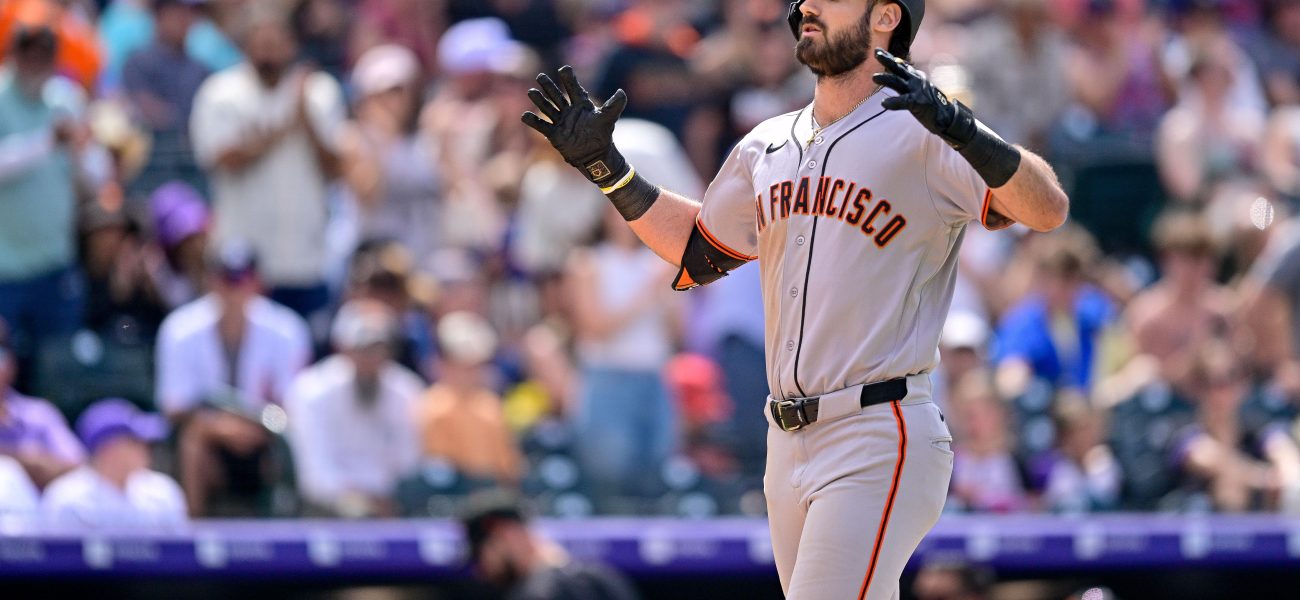
POLICY WIRE — San Francisco, California — Sometimes, you need a public flogging. Not the literal kind, of course, but the type where a respected elder statesman of the game — or governance, for that matter — openly questions your merit, your very right to be at the table. For San Francisco Giants first baseman Bryce Eldridge, that particular gauntlet dropped on a forgettable Wednesday in late May, delivered not by management, but by a beloved voice on the airwaves, former pitcher Mike Krukow.
It was brutal, blunt, — and designed to sting. And it certainly did. Eldridge was treading water then, batting a measly .143 with precisely one extra-base hit over nine games. He looked lost, coiled too tight, a prospect struggling under the bright lights of the majors. So, when Krukow—on local institution KNBR—declared that the young slugger ‘should go down to Triple-A’ because ‘he hasn’t earned his keep at this level,’ it wasn’t just analysis; it felt like a verdict. A professional death sentence for the twenty-one-year-old before his career had even properly begun.
But here’s the thing about public criticism: sometimes it breaks you. Other times, it just sharpens the blade. For Eldridge, it was clearly the latter. Call it pride. Call it grit. Call it the profound indignity of being publicly told you’re not good enough by someone everyone respects. Whatever it was, the man — the kid, really — took that very personal, very loud broadcast admonition and forged something entirely new.
In the wake of Krukow’s rather unceremonious commentary, Eldridge hasn’t just improved; he’s undergone a transformation. A defiant, furious batting clinic, if you will. Since May 20th, his stat line speaks volumes: a blistering .383 batting average and a .596 slugging percentage, punctuated by six walks and only ten strikeouts. He’s making pitchers work, too, averaging 4.57 pitches per plate appearance – a data point placing him among the top quarter of hitters across major league baseball, according to league metrics. And he’s doing damage, recently lining a ball off an opposing pitcher’s forearm. He didn’t just weather the storm; he turned it into his personal tailwind.
This kind of turn-around, frankly, should give policy wonks pause. It’s a compelling, messy case study in pressure, expectation, — and raw human performance. Imagine if every time a political neophyte or a promising new economic policy faced public skepticism from an influential voice, it triggered such a dramatic and positive course correction. But it doesn’t often happen, does it? That’s why we cling to stories like this—they’re anomalies, not norms.
General Manager Farhan Zaidi, rarely one to display outward emotion, remarked on Eldridge’s trajectory. “Young players develop on their own clock. Our job is to create the environment, not to dictate the pace. But you watch Bryce now, he’s carrying himself differently. There’s a quiet resolve,” Zaidi confided, acknowledging the punditry as part of the crucible. But he didn’t just credit the public push. “It’s been a collective effort by our coaching staff too,” Zaidi added, probably just to make sure nobody thought a seventy-four-year-old radio commentator was running his ballclub.
📄 POLICY WIRE WHITEPAPER PUBLISHED: PAKISTAN'S NATIONAL SECURITY POLICY PRIORITIES
👉 READ BY CLICKING HEREThe parallels aren’t perfect, of course, but you see echoes. Take nations like Pakistan, navigating treacherous geopolitical currents, constantly under the analytical glare of international bodies and media. When IMF warnings or global security indexes flag performance, sometimes that public exposure — that implicit call to ‘go back to Triple-A’ economically or militarily — galvanizes. Leaders are either broken by the pressure, or they emerge, tempered — and more focused. But often, unlike a baseball player who controls his own bat, their variables are infinitely more complex.
Eldridge’s fiery resurgence begs a deeper look at the unintended consequences of critique. It makes you wonder if there’s a secret, dark art to motivating the unmotivated, or perhaps, simply redirecting raw talent through strategic indignation. Is there a precise measure of ‘push’ that brings out a player’s, or a nation’s, best? Perhaps it’s like striking iron; too hard, it shatters. Just right, and it becomes formidable. Beyond the Box Score: When ‘Effort’ Becomes a Metric in Detroit and Across Continents examines how organizations measure and reward tenacity.
What This Means
This unlikely narrative offers more than just a feel-good sports story; it’s a potent, albeit subtle, commentary on performance under scrutiny. In the policy arena, we’re constantly evaluating interventions, legislation, — and leadership based on initial data. An immediate slump might trigger calls for ‘demotion’—withdrawal of support, revised strategy, or even electoral ousting. Eldridge’s experience, however, suggests a hidden, sometimes potent, utility to public pressure. Not all underperformers crumble; some find an unexpected reserve. Policymakers, especially those in regions where political capital is thin and public trust wavers, might do well to observe how public sentiment, when leveraged (even accidentally), can galvanize individual will. The economic implication? A low initial return on investment might just be the precursor to a breakthrough, rather than a signal for immediate divestment. It suggests that judging a policy, or a player, too early based on early returns, especially when subject to intense public commentary, can be a fool’s errand. You’ve just gotta stick around sometimes to see what really develops.