


Denali’s Cold Embrace: A Ranger’s Silence, A Nation’s Peril
POLICY WIRE — Washington D.C. — Denali doesn’t care much for human plans. It’s a brute of a mountain, a magnificent, unforgiving mass of rock and ice that sits squat in Alaska, silent sentinel to...

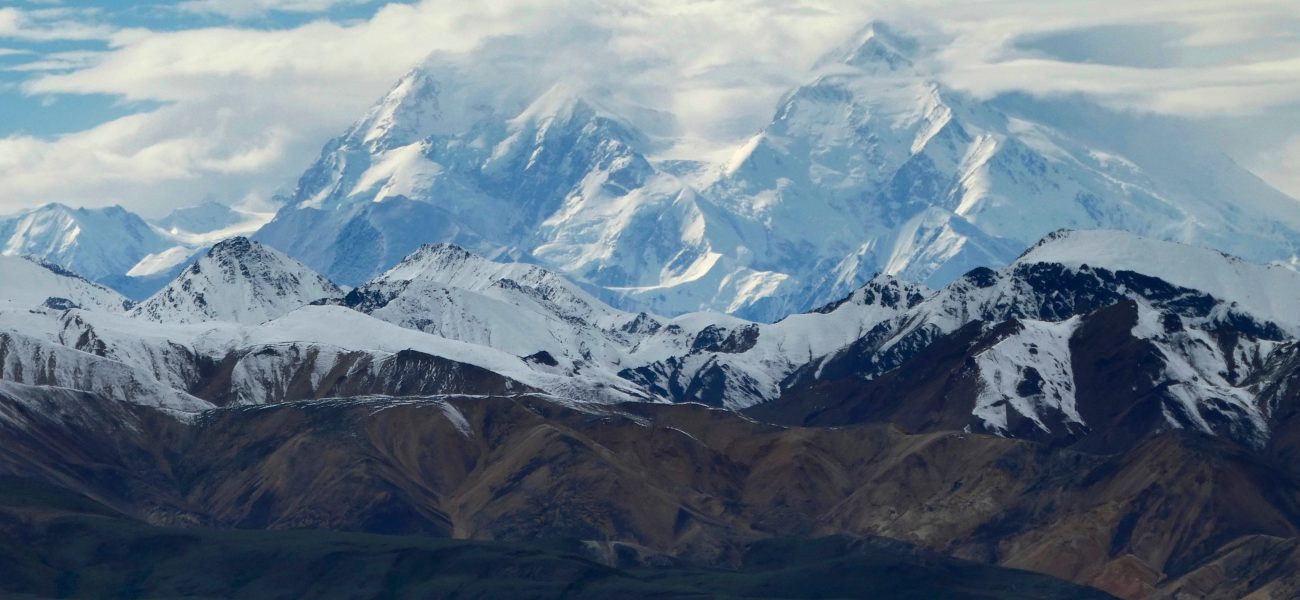
POLICY WIRE — Washington D.C. — Denali doesn’t care much for human plans. It’s a brute of a mountain, a magnificent, unforgiving mass of rock and ice that sits squat in Alaska, silent sentinel to forces far older than any bureaucracy. So, when the news trickled out, not a tremor in the markets, no political scandal unraveling on Capitol Hill, it still hit like a gust of icy wind across a barren plain. It was the kind of headline that whispers about the quiet sacrifices made in places most folks will never see—or understand.
It’s about more than just a man lost to a crack in the ice. It’s about the frayed edges of public service, the hidden costs of managing wild spaces in a world obsessed with manicured landscapes and controlled environments. The National Park Service—an institution that’s supposed to be as steady and predictable as a federal pension—has just logged another casualty on its harshest front. A ranger, whose job was to protect both people and the very wilderness that swallowed them whole, made a wrong step or faced an unforeseen variable on the colossus known as Mount McKinley. The cause was precise, brutally simple: [QUOTE_PLACEHOLDER]. A crevasse, they said. A chasm in the ice, a reminder that nature bats last, every single time.
And let’s be blunt, these are not accidental tourists we’re talking about. These are professionals, trained and often deeply committed individuals who choose lives dictated by the whims of glaciers and rockfall. But even the best equipment, the most rigorous training, can’t fully mitigate the sheer, brutal randomness of an environment like Denali. The Park Service offers a [QUOTE_PLACEHOLDER] in the immediate aftermath, yet the stark reality is that for every rescue, for every guided climb, for every scientific expedition, there’s an undercurrent of profound risk. This isn’t a matter of if, but when. It’s the inherent gamble baked into protecting America’s highest peak.
Because while our collective gaze is often fixed on geopolitical maneuvering, economic forecasts, or the latest social media dust-up, there are entire cadres of people holding down crucial, often perilous, assignments in obscurity. Their work, though far removed from the halls of power, underpins a nation’s values — and its physical integrity. This incident isn’t an isolated tragedy; it’s a symptom. It’s a flicker of harsh light on the chronic underfunding of essential public services, the expectation of heroic sacrifice on a shoestring budget. According to data from the National Park Service, since record-keeping began, over 120 individuals have perished on Denali (or Mount McKinley as it was formerly known), underscoring the mountain’s enduring danger even to experienced professionals and adventurers.
It’s an uncomfortable truth: We ask these men and women to stand between us and untamed nature—to shoulder risks that most won’t ever contemplate—and then we’re surprised when one of them pays the ultimate price. But that’s the deal, isn’t it? That’s the implicit contract: we get to enjoy a concept of wilderness, even if only from a distance, because others are willing to meet it head-on. The incident serves as a brutal accounting, a ledger entry in the human cost of maintaining national parks in a landscape where funding priorities often sway towards flashier initiatives—away from the steady, unsung work of wardens on frozen peaks.
Look at Pakistan, for example. In its own towering, treacherous ranges—the Karakoram, the Himalayas—the risks taken by high-altitude porters and military personnel managing volatile border zones or rescue operations are similarly staggering. Just like Denali, peaks like K2 don’t distinguish between a climbing tourist, a national park ranger, or a soldier stationed at 15,000 feet; the mountain’s indifference is absolute. The sheer logistical nightmare of operating in such remote, extreme conditions, whether it’s setting up a high-altitude research station or providing humanitarian aid in a mountainous region like Kashmir, draws startling parallels. Both require immense courage, specialized training, and a deeply flawed assumption of absolute control over nature—a control that routinely proves illusory. It’s a reminder that global policies, economic disparities, and national security concerns don’t cease to matter simply because the ground freezes over or the oxygen thins. Sometimes, they intensify, reflecting in the brutal struggle for survival in such desolate landscapes, whether in Alaska or Gilgit-Baltistan.
📄 POLICY WIRE WHITEPAPER PUBLISHED: PAKISTAN'S NATIONAL SECURITY POLICY PRIORITIES
👉 READ BY CLICKING HEREBut back in the lower forty-eight, perhaps the larger policy failure lies in a certain institutional amnesia. Every incident is treated as singular, rather than part of a pattern. The National Park Service loses dedicated people not just to accidents, but to budget battles and bureaucratic stagnation, leading to potential gaps in maintenance, training, or critical personnel numbers that might just make the difference between a near-miss and a body recovery. And this ranger’s death, though tragic and deeply felt by their immediate community, will likely be a brief blip in the national consciousness—a news cycle footnote quickly overshadowed by the next manufactured crisis or celebrity gossip.
What This Means
This incident, far from being just an isolated accident, acts as a grim bellwether for the wider political and economic landscape of conservation. Economically, the reliance on high-risk personnel in remote, dangerous environments like Denali highlights the true cost of maintaining America’s natural heritage. Budget constraints, often seen as mere line-item adjustments in legislative sessions, have tangible, human consequences. Does a thinly stretched budget mean fewer safety redundancies? Less cutting-edge equipment? Fewer highly specialized personnel capable of mitigating such risks?
Politically, the death serves as a sharp reminder of the trade-offs inherent in federal land management. Public access to majestic but dangerous wilderness areas requires a safety infrastructure—rangers, search-and-rescue teams, medical facilities. When political will falters, and resources are diverted, the unspoken contract between the state and its protectors begins to fray. It’s a scenario echoed in places like the Himalayas, where debates around resource extraction, tourism, and indigenous rights often pit economic interests against ecological preservation and the safety of those living or working in extreme terrains. The silent passing of a ranger in Alaska—an extreme environment at the geopolitical fringes—serves as a microcosmic warning: neglecting the quiet costs of protecting our shared wild spaces, whether for recreation or strategic purposes, comes with its own heavy price tag. It forces a public policy reckoning on whether the abstraction of ‘wilderness’ is worth the concrete sacrifices of individuals.
The irony isn’t lost: a country that prides itself on its vast, untouched frontiers sometimes overlooks the very human hands that keep them that way. We lionize explorers, but often forget the caretakers. And as the planet changes—with retreating glaciers creating new dangers and unpredictable weather patterns making even known routes hazardous—the demands on these silent professionals only grow. This wasn’t just a fall into a crevasse; it was a stumble into the gaping policy voids of the modern era. And unless policymakers actually start understanding the true calculus of risk and resource allocation, this won’t be the last such story, just another heartbreaking echo on the cold winds off the tallest peaks, from Alaska to the strategic ranges of the East.