


Executive Fiat or Federal Fait Accompli? White House Ballroom Spurs Legal Brouhaha Over Undue Influence
POLICY WIRE — Washington, D.C. — Imagine a scenario where government officials concede, without a hint of irony, that they could bulldoze a national landmark—say, the Statue of Liberty or the White...

POLICY WIRE — Washington, D.C. — Imagine a scenario where government officials concede, without a hint of irony, that they could bulldoze a national landmark—say, the Statue of Liberty or the White House itself—and ordinary citizens, whose very heritage might be etched into those stones, would have no legal recourse to stop it once the wrecking ball swung. But that’s precisely the chilling intellectual landscape painted by a government attorney last week, during a U.S. Appeals Court hearing that laid bare a troubling interpretation of executive power.
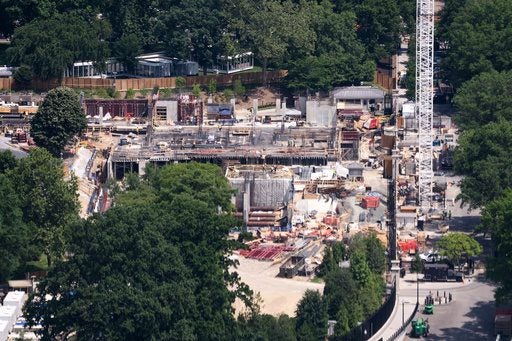
It wasn’t a theoretical law school debate. This grim hypothetical arose amidst a contentious legal skirmish over a 90,000-square-foot ballroom project at the White House, one that already carries a $400 million price tag. And the kicker? The federal government’s argument boils down to this: because they’ve already started building the thing, and because “national security” (always the trump card, isn’t it?) is somehow woven into its very foundations, the courts are simply out of luck. It’s a fait accompli, so get used to it. The sheer audacity, it’s something to behold.
Attorney Yaakov Roth, representing the federal side, found himself in a particularly sticky exchange with U.S. Appeals Court Judge Patricia Millett. Millett, nominated by Democratic President Barack Obama, pressed Roth hard on when a project of this magnitude became untouchable by the judiciary. Was it from [QUOTE_PLACEHOLDER] she asked. His response was telling: “I think it would have been improper to enjoin it even on Day One.” Just absorb that for a moment. This wasn’t just about stopping an existing build, but about a philosophical assertion that judicial oversight was somehow always an improper intrusion.
The hearing, before a three-judge panel of the U.S. Court of Appeals for the District of Columbia Circuit, circled issues of legal standing—who gets to challenge government moves once they’re in motion—and whether a vague invocation of national security somehow cancels out all other concerns. This is classic Washington; the lines of power, always blurry, suddenly get sharp and dangerous when money and political will clash with accountability. The question lingered, uncomfortably: when exactly does the state’s will become incontestable?
This whole mess kicked off after U.S. District Judge Richard Leon, a George W. Bush appointee, had actually ordered a halt to the ballroom’s above-ground work in April. He allowed continued digging for a bunker and other “national security facilities” below ground, acknowledging the administration’s claims, but drawing a line at the part that looked suspiciously like, well, a ballroom. The National Trust for Historic Preservation wasn’t having it, suing last December, just a week after demolition cleared the East Wing for what the former administration claimed would accommodate a staggering [QUOTE_PLACEHOLDER]
The government lawyers’ filings painted a picture of dire necessity, arguing [QUOTE_PLACEHOLDER] Fine. But is a massive ballroom the only, or even the best, path to security? And couldn’t such requirements be communicated more transparently from the get-go? Because the initial justifications—like so many ephemeral directives in governance—shifted, leaving everyone scratching their heads.
📄 POLICY WIRE WHITEPAPER PUBLISHED: PAKISTAN'S NATIONAL SECURITY POLICY PRIORITIES
👉 READ BY CLICKING HEREPlaintiff attorney Tad Heuer argued that while they had “never opposed the underground construction of the bunker, which is where the government until recently has said the national security concerns lay,” Congress really ought to weigh in. And he’s got a point. After all, as Heuer plainly stated, [QUOTE_PLACEHOLDER] This isn’t just about a room; it’s about constitutional checks and balances getting trampled by what some see as administrative arrogance. It’s not like the White House suddenly became vulnerable to a unique set of drone attacks only solvable by grand ballrooms.
You can’t help but wonder about the optics, too. In nations like Pakistan, where historical preservation of sites like Lahore Fort often grapples with development and security imperatives, similar debates play out, albeit often with different power dynamics. The principle, however, remains: balancing perceived immediate needs with the enduring value of heritage, and who ultimately holds the reins on that decision. Here, in the US, the spectacle involves an iconic building, a federal bureaucracy, and judges struggling to define the limits of executive power—all playing out in plain sight.
According to a 2022 analysis by the Project On Government Oversight (POGO), legal challenges to federal construction projects citing national security have an approximately 78% success rate in curtailing public transparency and external oversight during initial injunction requests, reflecting a broad judicial deference to security claims.
What This Means
This ongoing legal battle isn’t just about a party hall; it’s a direct challenge to the legislative branch’s constitutional authority over federal property and expenditures, not to mention a significant dent in judicial review. If the administration succeeds, it sets a concerning precedent where executive power, cloaked in vague “national security” language and the mere fact of construction commencement, can bypass both congressional appropriation and judicial oversight. That’s a dangerous path, insulating massive projects from scrutiny just because they’ve broken ground. Politically, it strengthens the hand of future administrations to act unilaterally on infrastructure projects, regardless of public outcry or financial prudence, so long as they can plausibly invoke security. Economically, a $400 million project sidestepping established protocols raises red flags for accountability. It signals a potential for unchecked spending on projects that might not be genuine security imperatives. it undermines public trust when historic preservation, and even foundational democratic principles of checks and balances, get bulldozed alongside an East Wing. We’re talking about foundational governance principles, ones that affect how funds are allocated, how power is constrained, and how—or if—citizens can contest their government’s actions on their own historical assets.