


Hoops Diplomacy: Game Two’s Global Ripples in San Antonio
POLICY WIRE — San Antonio, United States — For all the frenzied dribbling and desperate last-second heaves, the NBA Finals aren’t just about athletic prowess; they’re a surprisingly...

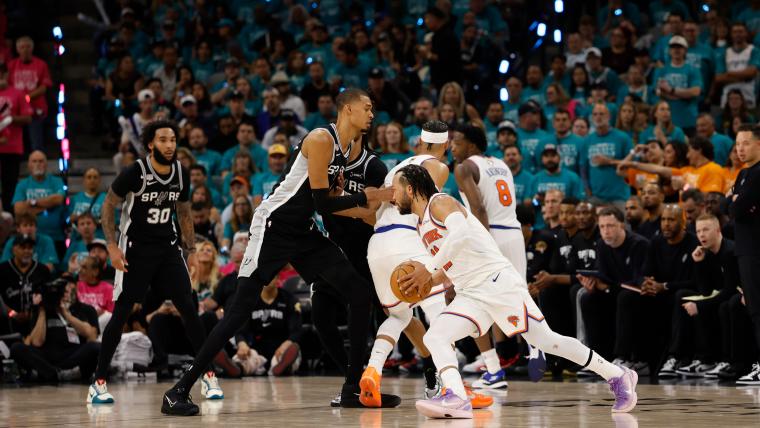
POLICY WIRE — San Antonio, United States — For all the frenzied dribbling and desperate last-second heaves, the NBA Finals aren’t just about athletic prowess; they’re a surprisingly gritty lesson in geopolitical branding. Last night, as the New York Knicks squared off against the San Antonio Spurs in Game Two, the drama unfolded far beyond the Frost Bank Center’s polished hardwood. This isn’t merely basketball; it’s an exhibition of soft power, an economic stimulus package disguised as sport, broadcast into living rooms from Brooklyn to Bangladesh.
It’s hard not to look past the box score sometimes. While fans gnaw their fingernails over foul calls and jump shots, the cities themselves, the leagues, and even the nations involved are playing a different game entirely. Consider the sheer spectacle, the global market share these sporting titans command. We’re talking about colossal business ventures, ones that can dictate local economies and project cultural influence, especially in markets hungry for American export.
San Antonio, a city often overshadowed by its flashier Texas cousins, was suddenly thrust into the international spotlight, showcasing its particular blend of history and burgeoning tech. And frankly, it needed the buzz. But then, as the game began, New York’s Jalen Brunson, fresh off a Herculean 30-point performance in Game 1 that snatched victory from the jaws of a double-digit deficit, looked to inflict further pain. He’s become the quintessential urban warrior, a story that resonates globally.
Victor Wembanyama, the Spurs’ French phenom, on the other hand, was under the gun after a 26-point, but alarmingly inefficient, 6-for-21 shooting night in the opener. His unique blend of height and agility draws eyes not just in the West, but in corners of the globe where basketball is rapidly gaining traction. There’s a particular fascination for these new archetypes of players in places like Pakistan, for instance, where millions follow global sports with an almost religious fervor, translating basketball skill into aspirational narratives.
The tip-off arrived with palpable tension, but the real narrative was in the numbers beyond the scoreboard. Global sports viewership numbers often baffle outsiders; the NBA alone claimed a staggering 2.7 billion cumulative unique viewers worldwide for its 2022-23 season, according to league reports. That’s a mind-bending figure, representing eyeballs on advertising, cultural transmission, and quite simply, American entertainment exported on a scale few other industries can match.
This is precisely what NBA Commissioner, Adam Silver, had in mind when he recently observed, “These Finals are more than just a championship; they’re a global dialogue. We’re seeing record engagement in markets from the Middle East to Southeast Asia, demonstrating that the appeal of elite competition transcends borders.” And he’s not wrong. Because whether it’s a high-stakes corporate negotiation or a tightly contested basketball game, the world’s watching, consuming, and—crucially—spending.
San Antonio Mayor Ron Nirenberg, keenly aware of the local economic shot in the arm, didn’t mince words. “Every basket, every packed hotel, that’s direct investment in our city,” he stated, his voice ringing with a pragmatism familiar to municipal leaders worldwide. “This isn’t just good for the Spurs; it’s a direct boost to our small businesses — and our international standing. We’re showing the world what San Antonio is all about.” He’s talking cold hard cash, my friends—real money flowing into local coffers, spurred on by the excitement of a few guys chasing a ball.
📄 POLICY WIRE WHITEPAPER PUBLISHED: PAKISTAN'S NATIONAL SECURITY POLICY PRIORITIES
👉 READ BY CLICKING HEREBut back on the court, Wembanyama needed a stronger outing, to prove he wasn’t just a lanky highlight reel. Early minutes were a seesaw. Devin Vassell initiated with a triple, Brunson promptly countered with a tough jumper, making it 3-2 almost instantly. Then Julian Champagnie, who chipped in 16 points in Game 1, caught fire, nailing two threes. O.G. Anunoby quickly followed suit. But by the time the dust settled on the first quarter, the Spurs held a narrow 20-16 lead. It was a close affair, scrappy — and competitive, but the Knicks’ earlier dominance was clearly giving them problems.
And so it continues. Because while the pundits chew over efficiency ratings and offensive sets, the real game unfolds on the diplomatic and economic front. Each thunderous dunk, each precise pass, every single media mention, it all funnels into a broader narrative: the undeniable, omnipresent force of American cultural export, wrapped up in sweat and athletic ambition.
What This Means
The NBA Finals, particularly with the inclusion of international stars like Victor Wembanyama and the league’s aggressive push into emerging markets, serve as a potent vehicle for American soft power. For host cities like San Antonio, the economic boon from tourism, media exposure, and consumer spending is substantial, though often short-lived once the circus leaves town. From a policy perspective, this sports-driven diplomacy is a surprisingly effective, albeit expensive, way to build brand loyalty for U.S. cultural products abroad, subtly influencing perceptions — and opening doors for other American enterprises.
For nations in the Muslim world and South Asia—a region traditionally dominated by cricket and football—the NBA represents a growing market. Viewership spikes here are more than just numbers; they’re indicators of evolving entertainment preferences and increasing integration into globalized culture. Policymakers should recognize these trends, not just as entertainment, but as potential channels for broader engagement, particularly among youth demographics. The players, often from diverse backgrounds themselves, become de facto ambassadors, their personal stories weaving into the global narrative in unexpected ways. It’s a complex interplay, one where a simple basketball game can inadvertently shape economic discourse and cross-cultural understanding. Don’t underestimate the power of the sphere, folks; it moves more than just points on a scoreboard.