


Public Order, Perception: A Knife Attack in Albuquerque’s Shadow Economy
POLICY WIRE — Albuquerque, N.M. — A patch of asphalt in New Mexico’s largest city rarely makes waves beyond the local blotter. Yet, when Albuquerque police declared a man was arrested near...

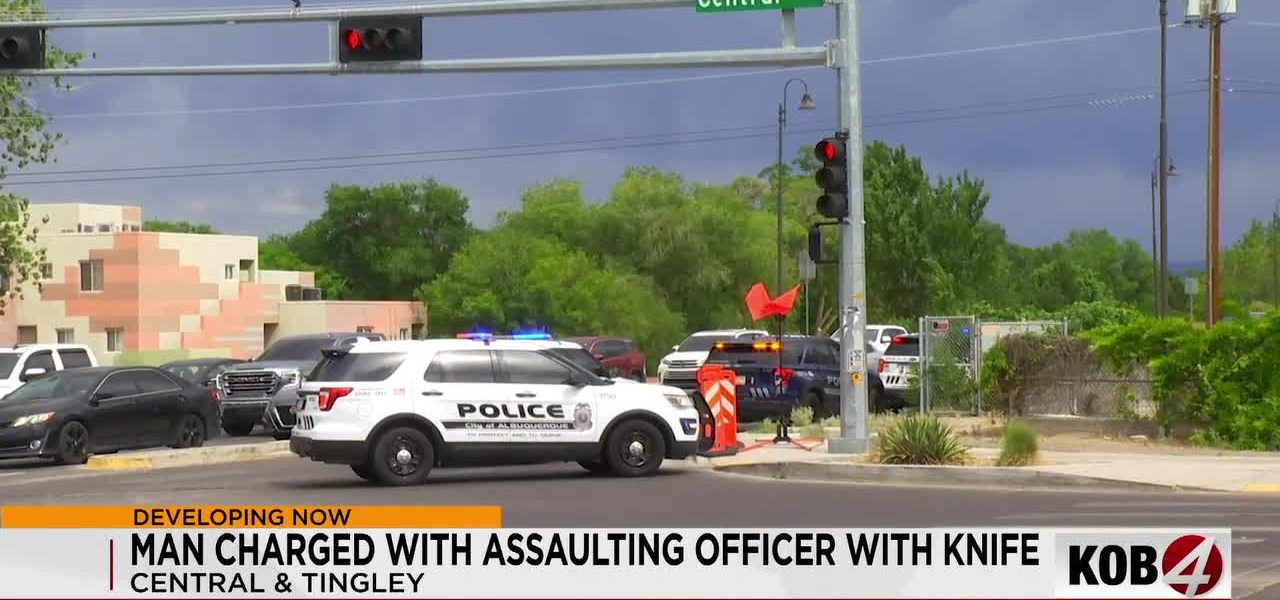
POLICY WIRE — Albuquerque, N.M. — A patch of asphalt in New Mexico’s largest city rarely makes waves beyond the local blotter. Yet, when Albuquerque police declared a man was arrested near Central and Tingley after [QUOTE_PLACEHOLDER] Albuquerque police said he assaulted an officer with a knife, it wasn’t just a fleeting headline. No, this tiny incident — occurring on one of the city’s main arteries — actually holds a lens up to something far larger: the brittle contract between public expectation and governmental capacity, the very fabric of daily life in urban America.
It’s rarely about the knife, is it? It’s about what the knife represents: the edge of public order, the fragile membrane separating routine commerce from sudden chaos. When a short, almost perfunctory dispatch declares [QUOTE_PLACEHOLDER] Details are limited, you’re left with more than just a data void; you’re left with an echo chamber for citizen anxieties. Police work, for all its complexities, often boils down to moments like these: a street corner, a split-second decision, and an outcome that shapes perceptions for days, if not weeks. But what happens in the shadows of these reported facts?
Because frankly, we don’t often get the full story. We get the arrest, the charge — [QUOTE_PLACEHOLDER] Man charged with assaulting officer with knife at Central and Tingley. That’s the neat summary. The actual messy reality of what transpired, the pre-existing tensions, the cascade of individual choices that led to such an altercation, well, those usually evaporate into the city’s dry air. It’s a transaction. A brief incident report is filed. Then it’s quickly shuffled into the great bureaucracy of the criminal justice system, where it’ll be weighed and judged long after the local traffic clears.
But let’s be real; an assault on an officer, knife or no knife, isn’t some quaint urban quirk. It’s a direct challenge to the authority meant to uphold that public contract. And for all the localized nature of this specific event, its implications aren’t confined to a single crossroads in New Mexico. How societies react to — and report on — such incidents often mirrors their underlying strengths and fissures. For instance, the perception of public safety in, say, Karachi or Lahore, where similar low-level skirmishes might be reported with varying degrees of detail or political emphasis, often gets tied directly to government stability or, inversely, the level of urban disarray. Here, in America’s southwest, the narrative might center more on police resourcing or community relations. But it’s the same basic human struggle for order.
And these interactions — especially those involving law enforcement — often carry disproportionate weight in community perception, particularly in regions grappling with economic disparities or social inequalities. While local news outlets might promise to [QUOTE_PLACEHOLDER] Stay with KOB 4 Eyewitness News and KOB.com for updates, the broader conversation often moves on, leaving only the residue of fear or, worse, cynicism. It’s not just about a temporary inconvenience—[QUOTE_PLACEHOLDER] The road was closed for abit but it’s back open. No, it’s about what lingers. The questions persist about the underlying causes: what drives a man to allegedly [QUOTE_PLACEHOLDER] assault an officer with a knife? We’re left guessing.
This incident also arrives as the nation continues to grapple with a steady stream of such conflicts. The Bureau of Justice Statistics reported that in 2022, 1,061,900 people were arrested for violent crimes in the U.S. (Source: Bureau of Justice Statistics, National Crime Victimization Survey). A statistic, yes, but it’s composed of a million tiny, explosive encounters like this one in Albuquerque. It’s a reminder that even in locales seemingly far removed from geopolitical hotspots, the issues of state power, individual agency, and urban grit are constantly at play.
📄 POLICY WIRE WHITEPAPER PUBLISHED: PAKISTAN'S NATIONAL SECURITY POLICY PRIORITIES
👉 READ BY CLICKING HEREWhat This Means
From a political economy perspective, this particular incident, seemingly minor, serves as a sharp reminder of the localized anxieties that can ripple up to broader policy debates. A single alleged assault on an officer — regardless of its eventual disposition — feeds into the perennial demand for tougher-on-crime stances, greater police presence, and increased law enforcement funding. It becomes a data point, however anecdotal, that policymakers in city hall — and even further up the chain won’t ignore.
Economically, persistent public safety concerns, real or perceived, directly impact everything from property values along thoroughfares like Central Avenue to investment appetite for downtown development. If the average citizen, or potential business owner, doesn’t feel secure traversing an area — especially one explicitly branded by an incident involving a weapon against an officer — that region’s economic vibrancy is inevitably hampered. It creates a subtle, yet insidious, tax on daily commerce. Local businesses face decreased foot traffic; investment capital dries up, favoring areas seen as more stable. And let’s not forget the fiscal implications of court costs, potential legal aid, and the operational expenditures of police response — all borne by the taxpayer.
The incident also opens the door for a renewed examination of Albuquerque’s specific policing strategies. Was this an isolated act, or reflective of systemic tensions? What sort of community outreach is effective here? Are mental health resources adequate? These are the sorts of policy questions that get raised (or re-raised) each time an official statement quietly confirms something like a ‘man arrested near Central and Tingley.’ And the way these questions are handled — or ignored — will have tangible, lasting consequences for this city’s social and economic future, far beyond the initial police sirens.