

Edge of Catastrophe: A Copilot’s Fleeting Awareness, a Pole’s Unyielding Grip
POLICY WIRE — Newark, New Jersey — There are moments, sharp and immediate, when reality slams you. In the high-stakes theater of aviation, such instants can separate routine departure from utter...

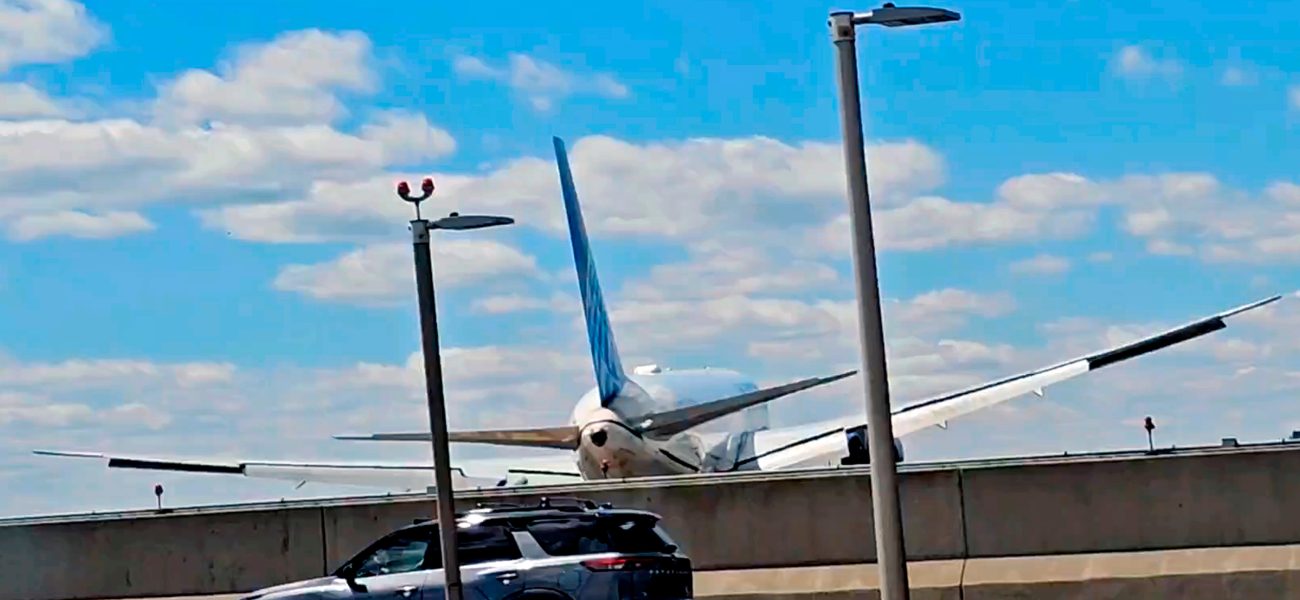
POLICY WIRE — Newark, New Jersey — There are moments, sharp and immediate, when reality slams you. In the high-stakes theater of aviation, such instants can separate routine departure from utter disaster. An unassuming light pole, typically an object of mundane utility, became a silent arbiter of this distinction in a recent United Airlines incident. It wasn’t the roaring engines or the digital cacophony of a cockpit that defined the precipice; it was the fleeting flicker of human realization against the immovable fact of inadequate altitude.
It sounds simple, almost absurd: a plane hitting a pole. But this wasn’t some minor fender bender in a parking lot. This was a commercial jet, teeming with human lives, just moments after takeoff. Reports suggest a critical lag, a whisper of awareness, where the plane was dangerously low. It’s a scenario that puts a spotlight on the layers of safeguards, the extensive training, and the sheer audacity of flight itself—a complex ballet susceptible to tiny, terrifying missteps.
And so, we learn the pilot in the right seat—the copilot—had a moment of chilling clarity. [QUOTE_PLACEHOLDER] they grasped that the flight was simply too low. But this epiphany arrived too late, a half-second too late perhaps, for corrective action. We’re talking about a heavy bird, full of fuel — and momentum, battling physics and the limits of human response time. The margin for error here is measured in feet, not miles. It’s an inch-perfect world, you see, up there.
This incident isn’t just a peculiar anecdote about a run-in with airport infrastructure. No, it’s a chilling reminder that even with advanced avionics, redundant systems, and rigorous protocols, the final line of defense remains the human mind, operating within constraints often too tight to forgive error. A report says the copilot of a United jet that struck a light pole realized flight was low, but not in time. That phrase—not in time—that’s the kicker, isn’t it? It implies recognition, understanding, — and then, the grim acceptance of consequence.
Think about the sheer force involved, the immediate jeopardy for everyone aboard. These aren’t hobby flights; these are major commercial operations. Every single procedure, every check — and re-check, is designed to prevent precisely this kind of outcome. Yet, here we’re, parsing the fine line between perception — and disaster. It begs the question: how much technology can truly compensate for that agonizing gap between realization and response, especially when speed and altitude are unforgiving masters?
The details often reveal more than the headline. This incident, for instance, throws light on the nuanced interplay of human factors — and operational environment. Was it a confluence of poor visibility? Pilot fatigue? Perhaps a procedural misstep that cascaded into an unwanted rendezvous with airport lighting? We don’t have all the specifics, but the underlying narrative points to the eternal dance between expectation and execution in a controlled but inherently dangerous environment. It highlights the tightrope pilots walk, day in, day out, often without incident, until they don’t.
It’s important, you know, to consider these close calls not as isolated flukes but as canary-in-a-coal-mine situations. Because what if the pole hadn’t been there? What if it had been a building? Or another aircraft? This near-miss didn’t just scratch a wing; it scraped the veneer of infallible precision that the aviation industry — and passengers — often take for granted. We’ve come a long way from the pioneering days of flight, but gravity — and momentum? They’re still absolute dictators.
📄 POLICY WIRE WHITEPAPER PUBLISHED: PAKISTAN'S NATIONAL SECURITY POLICY PRIORITIES
👉 READ BY CLICKING HEREAnd it’s a stark reminder, too, of the inherent dangers lurking just beyond the edge of meticulous planning and highly trained personnel. It’s a situation that would—and surely is—getting parsed by safety investigators with forensic intensity, seeking to understand exactly what broke down, in which sequence, and most importantly, why.
What This Means
This episode, while ostensibly about a localized aviation miscue, carries significant global implications. For airlines worldwide, it’s a chilling prompt for renewed scrutiny of training methodologies and operational oversight. Nations that rely heavily on their national carriers for international connectivity, like Pakistan, where its national airline once faced restrictions due to pilot credential concerns, understand implicitly that safety is not just about passenger well-being; it’s a hard-nosed matter of reputation, economic viability, and geopolitical standing. A perceived lapse in aviation safety in one corner of the globe can—and does—ripple through international travel advisories and insurance premiums, hitting everyone. But then again, incidents happen, — and the critical piece is learning from them.
From an economic standpoint, such events trigger an immediate assessment of risk. Insurance rates can adjust, public confidence can waver, — and the competitive landscape becomes even more unforgiving. Any incident, however minor the physical damage, casts a long shadow over a brand, requiring substantial investment in reassurance campaigns and demonstrably tighter controls. Research from the International Air Transport Association (IATA) shows that, in 2022, the all-accident rate was 1.21 per million flights, representing one accident for every 830,000 flights—a testament to aviation’s general safety, but one where even marginal increases are viewed with alarm. We’re talking about an industry where even infinitesimal percentages represent millions of lives.
Politically, governments are under constant pressure to ensure national airlines meet international standards. Any perceived failing, any crack in the safety record, can invite international censure or trade barriers. This isn’t just about an aircraft and a copilot; it’s about the intricate global web of regulations, trust, and the fierce competition for air superiority (not military, but commercial). This incident reinforces that, even in an era of hyper-automation, human agency, for better or worse, remains the unpredictable variable in the aerospace equation. It’s a humbling observation in an industry that prides itself on predictability — and precision.