

As The Roker Roars: Sunderland’s Sporting Lore Reflects Shifting Global Narratives
POLICY WIRE — London, UK — Forget, for a moment, the usual parade of governmental pronouncements or market gyrations dominating the wires. Occasionally, the truly illuminating story emerges from a...

POLICY WIRE — London, UK — Forget, for a moment, the usual parade of governmental pronouncements or market gyrations dominating the wires. Occasionally, the truly illuminating story emerges from a less predictable corner—say, from a fervent local fanbase dissecting a recent football season with the surgical precision of seasoned diplomats debating multilateral accords. Indeed, the mere recollection of Sunderland AFC’s 2025-26 campaign has proven robust enough to warrant a multi-part audio excavation, signaling something more profound than mere athletic nostalgia: a shifting bedrock in how communities, local economies, and indeed, global media landscapes now function.
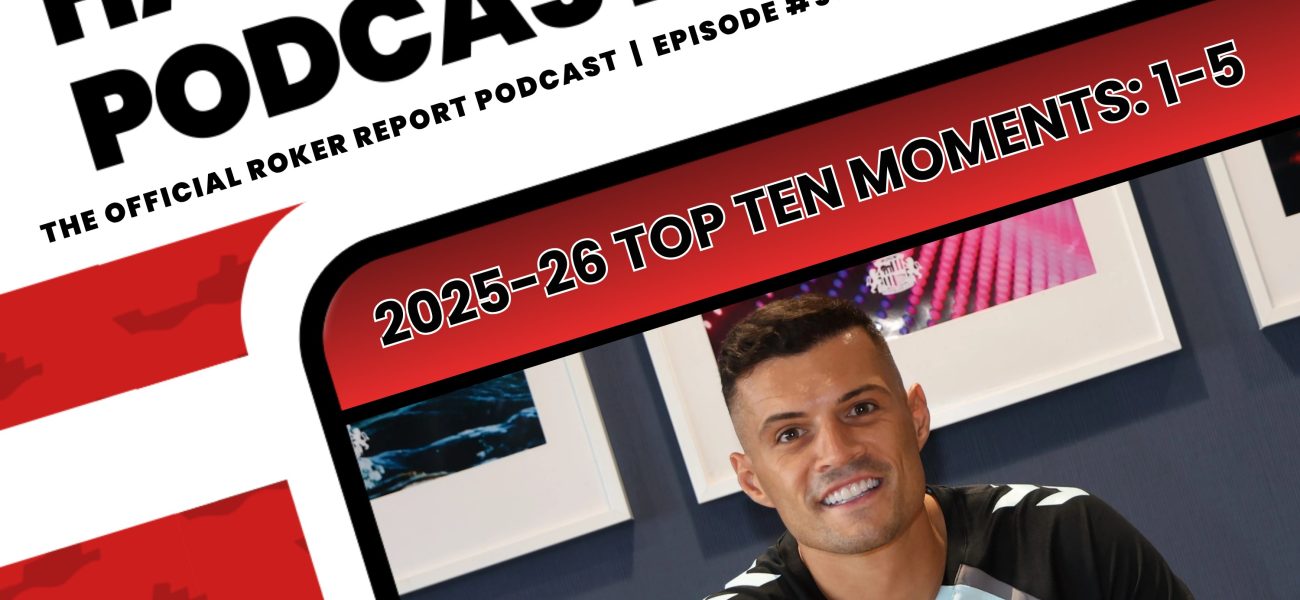
It’s an obsession, frankly, for those Black Cats faithful. They can’t get enough of Sunderland’s 2025-26 season so we go on a little deep dive to go through it, claimed the digital emissaries of Haway The Podcast, an entity that, for many, transcends a simple audio program. For them, it’s a quasi-civic institution. They’ve already dissected the initial five, but now they move onto the weighty decisions, the final countdown, ranking the top five defining moments from what they’ve deemed a historic year. Imagine this level of forensic examination applied to a provincial legislative session, or the nuanced fallout of a minor trade dispute. You can’t. But for the sporting narrative, it’s all in a day’s work. [QUOTE_PLACEHOLDER]
This granular devotion, often dismissed as mere recreation, belies a significant, often overlooked, economic and social apparatus. Think about it. These fan-driven analyses, often operating outside mainstream media structures, capture a raw, unvarnished sentiment impossible to quantify with traditional metrics. It’s not just a casual recap. Join Andrew, Jonny, Gav & Chris to go back through the top moments from last season!, an almost ceremonial summons to communal memory-sharing, was extended across various platforms, indicating a robust, if self-funded, media operation.
Because the stakes are real, even in memory. We’re told there’s disagreement in the ranks! — a line that could easily describe any cabinet meeting or parliamentary debate—referring, of course, to spirited arguments among the hosts over Which derby win was best?! and Why we included games! But don’t scoff. Such discussions are, in their own way, shaping community identity, cementing regional pride, and creating content streams that pull eyeballs and ad revenue in ways traditional local journalism often struggles to replicate.
The original digital missive, a tweet from ‘Roker Report’ back on June 5, 2026, beckoned enthusiasts to engage, to subscribe, to contribute. How much do you disagree?!, they challenged their audience, understanding that friction generates engagement. All this and more!, they promised, a veritable smorgasbord of collective memory, proving the longevity of a sports club’s narrative beyond mere wins and losses. This isn’t just about football; it’s about belonging in a fragmented age. But it’s also about capturing the commercial energy of fandom. The Premier League, for example, contributes substantially to the UK economy; its 2019/20 season alone generated a Gross Value Added of £7.6 billion for the UK, supporting over 137,000 jobs, according to a report by Ernst & Young.
And where does this deep-seated emotional investment, this quasi-religious devotion, go beyond the rainy fields of Northeast England? The cultural reach of English football, specifically, extends far, far beyond its geographical origin. It isn’t restricted to old industrial heartlands. In countries like Pakistan, for instance, a Sunderland match or even the discussion around it resonates with a surprisingly large viewership. Fan bases, built on satellite broadcasts and then cultivated through digital media—be it social media debates or podcasts like Haway The Podcast—have fostered deep loyalties thousands of miles from the Stadium of Light. Karachi to Kyoto, the Black Cats’ exploits become personal. It’s a softer form of power, arguably, but powerful nonetheless.
📄 POLICY WIRE WHITEPAPER PUBLISHED: PAKISTAN'S NATIONAL SECURITY POLICY PRIORITIES
👉 READ BY CLICKING HEREThis engagement, facilitated by accessible platforms like Apple and Spotify, where one can easily Join us for part two as we go from 5 to 1, ranking the greatest moments of a historic season for Sunderland!, represents a democratization of content creation and consumption. Local stories, locally told, now have a global footprint. And don’t imagine for a second that commercial entities and political actors haven’t noticed this potent, decentralized media network. It’s a goldmine.
What This Means
This seemingly innocuous sports podcast isn’t just a bit of fun; it’s a potent illustration of several evolving socio-economic and political dynamics. First, it highlights the increasingly blurred lines between ‘fan content’ and ‘media enterprise.’ What was once a niche blog or fanzine has matured into professional-level audio production with discernible economic implications. They’re drawing eyeballs, generating subscriptions, and cultivating loyalty—a modern blueprint for grassroots media. This shift means that traditional media houses face stiff, agile competition from communities themselves, eroding established journalistic monopolies.
Second, the fervent identification with local football clubs—especially in former industrial towns like Sunderland, which has seen its share of economic hardship as traditional industries like coal mining have declined (you might recall the Washington’s emergency millions funneling into flagging coal sector, a narrative of economic transition felt keenly across the globe)—serves as a robust form of collective identity. It’s a bedrock in times of change, a rallying point when other institutions falter. And local politicians, or even those on the national stage, ignore this at their peril. To connect with such communities, understanding and even engaging with these local cultural touchstones becomes paramount.
Finally, the global reach, particularly into regions like South Asia and the broader Muslim world, transforms a local sports story into an aspect of cultural soft power. These podcasts and fan sites become conduits for broader cultural exchange, quietly reinforcing brand Britain or European identity in parts of the world often portrayed as geopolitically distant. It’s a subtle but continuous narrative reinforcement that happens without explicit governmental decree. Such engagement influences perceptions, fosters understanding, and perhaps, cultivates future diplomatic and economic relationships in ways traditional diplomacy might never achieve. And because it’s driven by passion, it’s far more resilient.